Tamil Nadu in the 1810s
21 events, 1812 to 1819.
1812
College of Fort St. George founded
Francis Whyte Ellis founded the College of Fort St. George in Madras to train officials in South Indian languages.
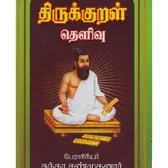
Tirukkural appears in print for the first time
The first known printed edition of the Tirukkural was produced in 1812, together with the Naladiyar.
1813
Renewing the Company's charter, Parliament abolished its India trade monopoly, admitted missionaries and funded education.
Channar revolt over the upper cloth
Nadar women in southern Travancore, including today's Kanyakumari district, struggled for decades for the right to cover their upper bodies.
1814
John Binny establishes Binny & Co in Madras
Merchant John Binny, in Madras since 1797, established the firm of Binny & Co, one of the city's oldest mercantile houses.
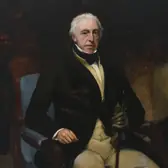
Hugh Elliot becomes Governor of Madras
Diplomat Hugh Elliot, earlier Governor of the Leeward Islands, governed the Madras Presidency from 1814 to 1820.
Church Missionary Society begins work in Madras
After the Charter Act of 1813 allowed missionaries into India, the Church Missionary Society placed its first missionaries at Madras in 1814.
1815
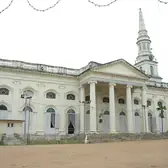
St. George's Church built in Madras
St. George's Church on the Choultry Plain was opened in 1815 and later became the cathedral of the Diocese of Madras.
Birth of Tamil scholar Meenakshi Sundaram Pillai
Tamil poet and teacher Meenakshi Sundaram Pillai, later the teacher of U. V. Swaminatha Iyer, was born near Tiruchirappalli.
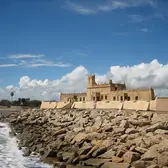
Tranquebar handed back to Denmark
Britain returned Tranquebar (Tharangambadi), occupied since 1808 during the Napoleonic Wars, to Danish rule on 20 September 1815.
1816
Ellis publishes the Dravidian Proof
Francis Whyte Ellis argued that the South Indian languages form a family separate from Sanskrit.
Abbe Dubois's account of south Indian customs published
Abbe J. A. Dubois's account of south Indian customs and institutions appeared in London in an English translation.
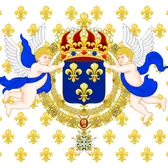
Pondicherry and Karaikal restored to France
After the Napoleonic Wars, Britain returned Pondicherry, Karaikal and the other French settlements in India to France in 1816.
1817
Madras Literary Society founded
In 1817 a learned society and library, the Madras Literary Society, was established in Madras.
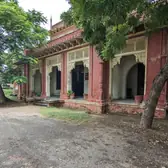
Madras Regulation VII of 1817 on temple endowments
The Madras government passed Regulation VII of 1817, the first explicit Company legislation on the management of temple endowments.
1818
Ellis orders new wells during the Madras water shortage
During a severe drinking water shortage in Madras, Collector Francis Whyte Ellis had 27 wells dug, one bearing a Tamil inscription honouring Thiruvalluvar.
LMS seminary moves to Nagercoil
Charles Mead shifted the London Missionary Society's seminary from Mylaudy to Nagercoil, where it grew into Scott Christian College.
1819
Madras Eye Infirmary established
The Madras Eye Infirmary, now the Egmore Eye Hospital, was founded and is regarded as the oldest eye hospital in Asia.
John Sullivan explores the Nilgiris
Coimbatore Collector John Sullivan set out to explore the Nilgiri hills, leading to the founding of Ootacamund.

Tamil scholar F. W. Ellis dies at Ramnad
Francis Whyte Ellis, Collector of Madras and founder of the College of Fort St. George, died of cholera on 10 March 1819 at Ramnad.
Death of Nawab Azim-ud-Daula; Azam Jah succeeds
Azim-ud-Daula, the Nawab of the Carnatic who had signed away his civil administration to the Company in 1801, died and was succeeded by Azam Jah.