LanguageEast India Company rule

Ellis publishes the Dravidian Proof

· Chennai

Francis Whyte Ellis argued that the South Indian languages form a family separate from Sanskrit.

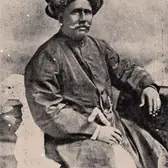
In 1816 Francis Whyte Ellis published a note to the introduction of A. D. Campbell's Telugu grammar, printed by the College of Fort St. George press. In it he set out what became known as the Dravidian Proof, arguing that Telugu, Tamil, Kannada and Malayalam share a common non-Sanskritic origin. Ellis is regarded as the first scholar to classify the Dravidian languages as a separate family. Robert Caldwell later acknowledged his work, and the idea became central to Tamil linguistic and cultural identity.
Related events

  1. 1812

    1. 1812ChennaiLiterature

      Tirukkural appears in print for the first time

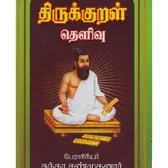
      The first known printed edition of the Tirukkural was produced in 1812, together with the Naladiyar.

  2. 1817

    1. 1817ChennaiCulture

      Madras Literary Society founded

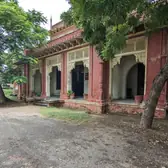
      In 1817 a learned society and library, the Madras Literary Society, was established in Madras.

  3. 1868

    1. 1868ChennaiLiterature

      Damodaram Pillai prints Tolkappiyam with Senavaraiyar's commentary

      C. W. Damodaram Pillai published the Sollathikaram of the Tolkappiyam with the medieval commentary of Senavaraiyar, an early printed edition of the grammar.

  4. 1885

    1. 1885ChennaiLiterature

      C. W. Damodaram Pillai publishes Tolkappiyam commentary

      C. W. Damodaram Pillai published the Porulatikaram of the Tolkappiyam with Nachinarkiniyar's commentary, part of his revival of ancient Tamil texts.

  5. 2004

    1. Oct 2004ChennaiLanguage

      Tamil declared a classical language

      The Government of India declared Tamil the first classical language of India.

  6. 2008

    1. May 2008ChennaiLanguage

      Central Institute of Classical Tamil moves to Chennai

      The Union government's Centre of Excellence for Classical Tamil moved from Mysore to Chennai and became the Central Institute of Classical Tamil.

Open in the timeline explorer