A history of modern Tamil Nadu, in order
1041 events from 1800 to today: the Polygar wars and colonial rule, the freedom struggle and the Dravidian movement, language politics, governments and their schemes, industry, culture and disasters. Each one cites its sources.
Search and filter everything in the explorer, or start with an era below.
Eras
- 1800 to 1857East India Company rule112
At the start of the nineteenth century the East India Company completed its hold over the Tamil country. The Polygar wars ended, the Carnatic and Thanjavur passed under Company control, and the Vellore Mutiny of 1806 shook the Madras Army.
- 1858 to 1915British Crown rule138
After 1858 the British Crown governed the Madras Presidency directly. Railways, ports, canals and dams changed the economy, while the Great Famine of 1876 to 1878 showed how fragile rural life remained.
- 1916 to 1947National and Dravidian movements169
From 1916 the Justice Party, the Self-Respect Movement and the Indian National Congress competed to shape the future of the Madras Presidency. Reservation in public jobs, temple entry, women's rights and the place of Tamil all became public questions.
- 1947 to 1966Madras State (Congress era)95
In independent India the Madras State was governed by the Congress, first under leaders such as Rajaji and then under K. Kamaraj, whose years are remembered for schools, noon meals, dams and industry.
- 1967 to 1976Rise of Dravidian rule76
In 1967 the DMK under C. N. Annadurai formed the first non-Congress government, and in 1969 the state was renamed Tamil Nadu. After Annadurai's death M. Karunanidhi became Chief Minister.
- 1977 to 1988MGR era77
M. G. Ramachandran led the AIADMK to power in 1977 and remained Chief Minister until his death in December 1987. His governments are remembered especially for the nutritious noon meal scheme.
- 1989 to 2016DMK-AIADMK alternation249
From 1989 to 2016 power alternated between the DMK under M. Karunanidhi and the AIADMK under J. Jayalalithaa. Both governments launched large welfare programmes, from free electricity for farmers to subsidised food and health insurance.
- 2017 to nowContemporary Tamil Nadu125
After Jayalalithaa's death in December 2016 the state went through a period of political change, from the Marina jallikattu protests of 2017 and the Thoothukudi police firing of 2018 to the death of Karunanidhi the same year.
Turning points
89 events that changed the course of the state's history.
1800
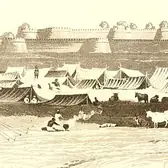
One year after Kattabomman was executed, a broad coalition of Tamil palayakkarars and their allies revolted against the East India Company.
1801
Carnatic Treaty transfers the Carnatic to the Company
Nawab Azim-ud-Daula signed the Carnatic Treaty, handing the civil and military administration of the Carnatic to the East India Company.
Execution of the Maruthu brothers
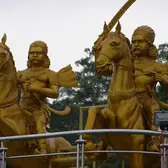
Periya Marudhu and Chinna Marudhu, rulers of Sivaganga and leaders of the 1800-01 rising, were hanged at Tiruppathur fort.
1806
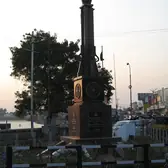
Indian sepoys of the Madras Army rose against the East India Company at Vellore Fort over new dress regulations.
1820
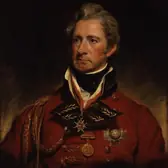
Thomas Munro becomes Governor of Madras
Thomas Munro served as Governor of Madras, establishing revenue and administrative systems that lasted into the twentieth century.
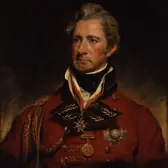
Ryotwari system adopted in Madras Presidency
Under Thomas Munro the ryotwari land revenue system, dealing directly with cultivators, became the main settlement in Madras.
1852
Madras Native Association founded
One of India's earliest Indian political bodies, the Madras Native Association, was set up by Gazulu Lakshminarasu Chetty.
1856
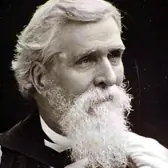
Caldwell's Comparative Grammar of the Dravidian languages
With his Comparative Grammar, Robert Caldwell showed that the Dravidian languages make up a separate language family.
First train in South India, Royapuram to Wallajah Road
The Madras Railway opened South India's first railway line, from Royapuram in Madras to Wallajah Road near Arcot.
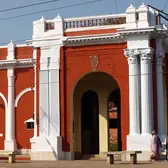
1857
An act of the Legislative Council incorporated the University of Madras, among the first three modern universities in India.
1858
Crown takes over the government of India
Following the Government of India Act 1858, a proclamation by Queen Victoria declared direct Crown rule over British India, the Madras Presidency included.
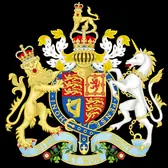
1861
Indian Councils Act restores Madras legislative powers
Through the Indian Councils Act 1861, the Madras Presidency regained law-making powers and gained an advisory Madras Legislative Council.
1862
Crown Letters Patent created the High Court of Judicature at Madras in place of the Supreme Court of Madras.
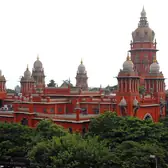
1876
Brought on by drought, a severe famine hit the Madras Presidency and other regions of India, killing millions.
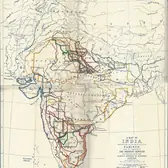
1878
Founded in Madras as a weekly, The Hindu was started by the Triplicane Six, among them G. Subramania Iyer and M. Veeraraghavachariar.
1887
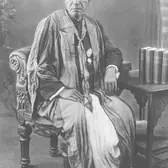
U. V. Swaminatha Iyer publishes Jeevaka Chintamani
U. V. Swaminatha Iyer published Jeevaka Chintamani, the first of his editions of classical Tamil works recovered from palm-leaf manuscripts.
1895
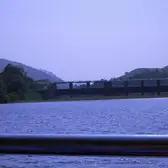
The Periyar dam, built under John Pennycuick between 1887 and 1895, began diverting water east to the Madurai region of the Madras Presidency.
1906
V. O. Chidambaram Pillai founds the Swadeshi Steam Navigation Company
To compete with British lines on the Tuticorin-Colombo route, V. O. Chidambaram Pillai registered an Indian-owned shipping firm.
1908
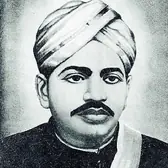
Subramania Bharati goes into exile in Pondicherry
Facing an arrest warrant, the poet and journalist Subramania Bharati moved to French-ruled Pondicherry, where he lived for about ten years.
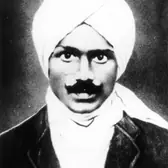
Arrest of V. O. Chidambaram Pillai and Tirunelveli unrest
The arrest of V. O. Chidambaram Pillai and Subramania Siva on sedition charges set off unrest in Tirunelveli and Tuticorin.
1911
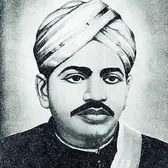
Assassination of Collector Robert Ashe
Vanchinathan shot dead Robert Ashe, Collector of Tinnevelly, at Maniyachchi railway station and then killed himself.
1916
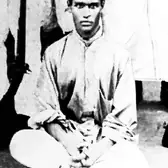
Annie Besant launches the Home Rule League at Adyar
Annie Besant founded the All India Home Rule League at Adyar, Madras, to campaign for self-government within the British Empire.
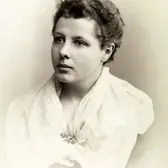
South Indian Liberal Federation (Justice Party) founded
Non-Brahmin leaders including C. Natesa Mudaliar, T. M. Nair and P. Theagaraya Chetty founded the South Indian Liberal Federation, later known as the Justice Party.
1919
Gandhi conceives the Rowlatt hartal in Madras
While staying with C. Rajagopalachari in Madras, Gandhi conceived a nationwide hartal against the Rowlatt Act, observed on 6 April 1919.
Government of India Act 1919 introduces dyarchy
Based on the Montagu-Chelmsford Report, the Act introduced dyarchy in the provinces, including Madras, transferring some subjects to elected ministers.
1920
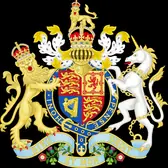
Justice Party wins first Madras Legislative Council election
The Justice Party won the first election held under the Montagu-Chelmsford dyarchy reforms in the Madras Presidency.
1921
First Communal Government Order on reservation
The Justice Party government issued the first Communal Government Order, reserving government posts for different communities.
1924
A satyagraha in Travancore demanded that people of oppressed castes be allowed to use the roads around the Vaikom temple; E. V. Ramasamy took part.
1925
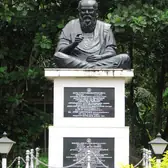
Periyar leaves Congress and starts the Self-Respect Movement
After his resolution on communal representation was not allowed at the Kanchipuram conference, E. V. Ramasamy left the Congress and began the Self-Respect Movement.
1926
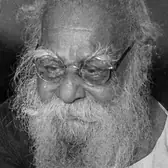
Muthulakshmi Reddy becomes first woman legislator in India
Doctor and reformer Muthulakshmi Reddy was nominated to the Madras Legislative Council, becoming the first woman legislator in British India.

1929
First Provincial Self-Respect Conference at Chengalpattu
The first provincial conference of the Self-Respect Movement at Chengalpattu passed resolutions against caste and for women's rights.
1930
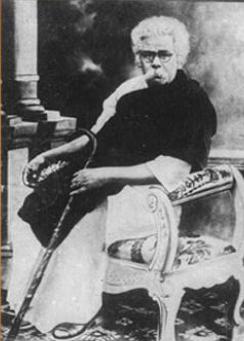
C. Rajagopalachari led a march from Tiruchirappalli to Vedaranyam to break the salt law, the Tamil counterpart of the Dandi March.

1934
The Mettur Dam across the Cauvery was completed, creating the Stanley Reservoir and expanding irrigation in the delta.

1937
C. Rajagopalachari forms first Congress ministry
C. Rajagopalachari became Premier of Madras at the head of the first Congress government in the Presidency.

Compulsory Hindi order and first anti-Hindi agitation
The Rajaji government's move to make Hindi compulsory in schools triggered a large anti-Hindi agitation led by Periyar, the Justice Party and Tamil scholars.
1939
Dalits enter Madurai Meenakshi Temple
A. Vaidyanatha Iyer led a group of Dalits and Nadars into the Meenakshi Amman Temple, Madurai, defying orthodox opposition.

1944
Justice Party becomes Dravidar Kazhagam at Salem
Meeting at Salem, the Justice Party, now led by Periyar, took the name Dravidar Kazhagam and gave up contesting elections.

1947
India becomes independent; Madras Province
India gained independence and the Madras Presidency became Madras Province of the Dominion of India; Periyar called it a day of mourning.

1949
Dravida Munnetra Kazhagam founded
Breaking away from Periyar's Dravidar Kazhagam, C. N. Annadurai and his associates formed the DMK in Madras.

1950
Madras State established under the Constitution
With the Constitution of India in force, the Madras Province became Madras State, a Part A state of the Indian Republic.

1951
Supreme Court strikes down the Communal G.O. in Champakam Dorairajan case
Madras State's caste-based Communal Government Order on college admissions was struck down by the Supreme Court.

First Amendment enables reservation for backward classes
Parliament passed the First Amendment, allowing special provisions for socially and educationally backward classes.

1953
Rajaji's Modified Scheme of Elementary Education
Rajaji's two-shift school scheme, criticised as Kula Kalvi Thittam (hereditary education), triggered protests and was later dropped.
Andhra State carved out of Madras State
The Telugu-speaking northern districts were separated from Madras State to form Andhra State, with Madras city remaining in Madras State.

1954
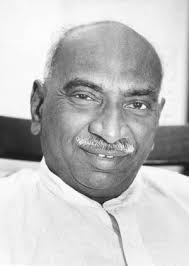
K. Kamaraj becomes Chief Minister
After Rajaji's resignation, K. Kamaraj became Chief Minister of Madras State and served for over nine years.
French India transferred de facto to India after the Kizhoor referendum
After the Kizhoor referendum, Pondicherry, Karaikal, Yanam and Mahe passed de facto from France to the Indian Union.

1956
Kamaraj expands free schooling and midday meals
The Kamaraj government opened thousands of schools, extended free education and expanded free midday meals for schoolchildren.
States Reorganisation redraws Madras State
Malabar and South Canara left Madras State while Kanyakumari district and Shenkottai taluk were added, leaving a Tamil-majority state.

1964
Kamaraj becomes Congress president and 'kingmaker'
As president of the Indian National Congress, K. Kamaraj guided the selection of two Prime Ministers.
1965
Student-led protests against Hindi becoming the sole official language turned into statewide riots, with police firing and self-immolations.
1967
DMK wins the 1967 Assembly election
A DMK-led alliance defeated the Congress, ending Congress rule in Madras State; Kamaraj lost his own seat.
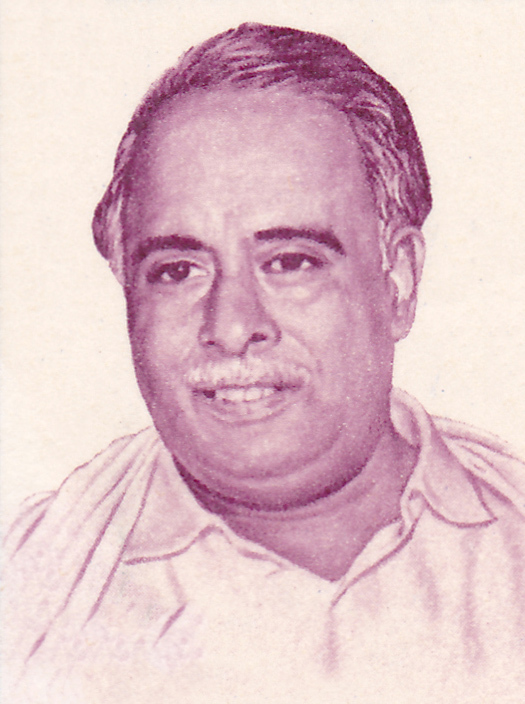
C. N. Annadurai becomes Chief Minister
C. N. Annadurai was sworn in as the first non-Congress Chief Minister of Madras State since independence, heading a DMK government.
1968
Assembly adopts the two-language policy
The Madras Legislative Assembly scrapped the three-language formula and removed Hindi from the school curriculum, adopting Tamil and English.
Around 44 Dalit agricultural labourers' family members, mostly women and children, were burnt to death at Kilvenmani in Thanjavur district.

1969
Madras State renamed Tamil Nadu
With the Madras State (Alteration of Name) Act, 1968 in force, the state officially took the name Tamil Nadu.

Chief Minister C. N. Annadurai died of cancer; his funeral was recorded as one of the largest ever attended.

M. Karunanidhi becomes Chief Minister
M. Karunanidhi succeeded Annadurai as Chief Minister of Tamil Nadu and later became president of the DMK.

1971
Reservation raised to 49 percent
The DMK government raised the backward classes quota from 25 to 31 percent and the SC/ST quota from 16 to 18 percent.
1972
MGR expelled from DMK; AIADMK founded
After demanding that DMK ministers declare their assets, M. G. Ramachandran was expelled and launched the Anna DMK.

1973
Death of Periyar E. V. Ramasamy
Periyar E. V. Ramasamy, founder of the Self-Respect Movement and leader of the Dravidar Kazhagam, died in Vellore aged 94.

1974
Expiry of the 1924 Kaveri agreement
The 50-year Madras-Mysore agreement of 1924 on Kaveri waters expired, opening a long inter-state dispute with Karnataka.

Assembly adopts state autonomy resolution
Chief Minister Karunanidhi moved a resolution in the Assembly demanding state autonomy, based on the Rajamannar Committee's recommendations.
1975
Indira Gandhi's government declared a national Emergency; the DMK government in Tamil Nadu opposed it.

1976
Karunanidhi government dismissed; President's rule imposed
During the Emergency the Union government dismissed the DMK ministry and imposed President's rule in Tamil Nadu.
1977
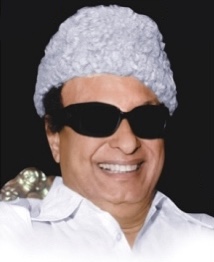
AIADMK wins assembly election, M. G. Ramachandran becomes Chief Minister
The AIADMK-led alliance won the 1977 assembly election and M. G. Ramachandran was sworn in as Chief Minister.
1980
Income ceiling withdrawn, backward class quota raised to 50%
After electoral setbacks, the MGR government withdrew the income ceiling and raised the backward class quota from 31% to 50%.
1982
Nutritious Noon Meal Scheme launched
MGR's government expanded the school midday meal into a universal Nutritious Noon Meal Scheme for children across Tamil Nadu.

1983
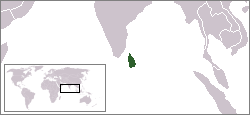
Black July and the arrival of Sri Lankan Tamil refugees
Anti-Tamil pogroms in Sri Lanka in July 1983 sent the first large wave of Sri Lankan Tamil refugees to Tamil Nadu.
1987
Chief Minister M. G. Ramachandran died in office in Madras; he was buried at Marina Beach next to the Anna memorial.
1989
DMK returns to power, Karunanidhi Chief Minister again
After 13 years in opposition, the DMK won the January 1989 assembly election and M. Karunanidhi became Chief Minister for the third time.
1991
Assassination of Rajiv Gandhi at Sriperumbudur
Former Prime Minister Rajiv Gandhi was killed by an LTTE suicide bomber at an election rally in Sriperumbudur.

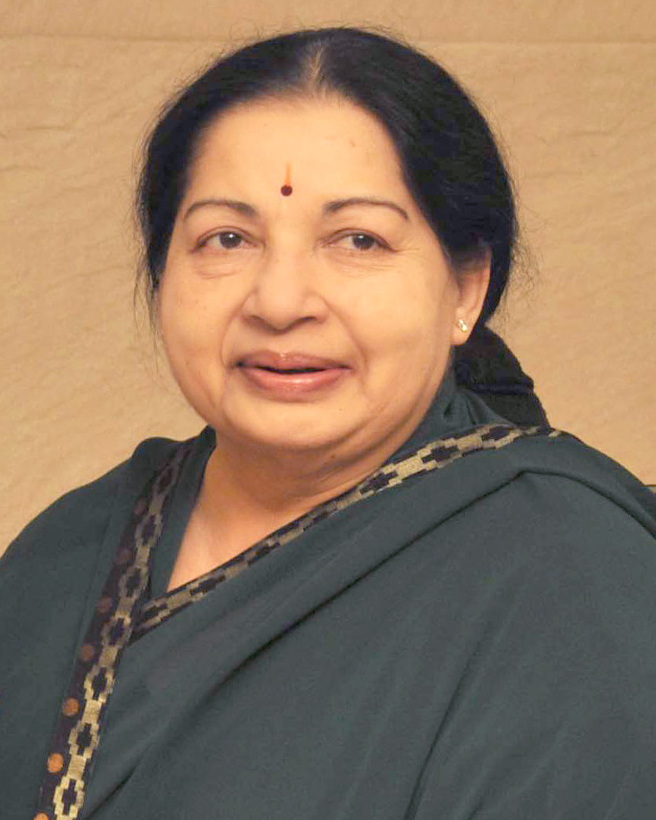
Jayalalithaa becomes Chief Minister for the first time
The AIADMK-Congress alliance swept the June 1991 election and J. Jayalalithaa became Chief Minister, the youngest in the state's history at the time.
1994
69% reservation Act placed in the Ninth Schedule
Through the 76th Amendment, the Constitution's Ninth Schedule came to include Tamil Nadu's 1993 law that kept reservation at 69%.
1996
DMK-TMC alliance wins 1996 election
The DMK-TMC alliance won 221 of 234 assembly seats and all 39 Lok Sabha seats; M. Karunanidhi became Chief Minister for the fourth time.
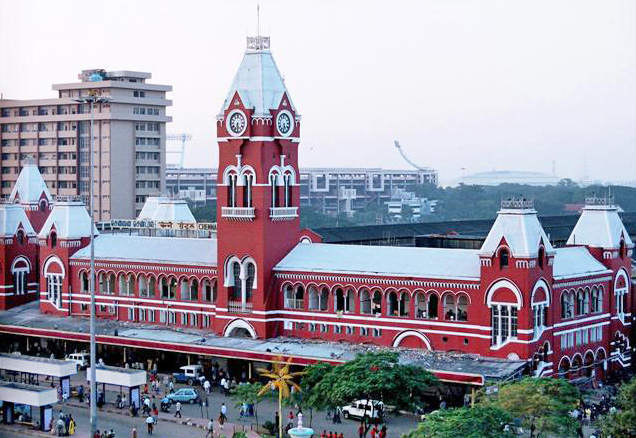
Madras officially renamed Chennai
The Tamil Nadu government officially changed the capital's name from Madras to Chennai.
1998
Twelve bombs exploded across Coimbatore, killing 58 people, ahead of a campaign meeting by BJP leader L. K. Advani.
2004
Tamil declared a classical language
The Government of India declared Tamil the first classical language of India.

2004 Indian Ocean tsunami strikes the Tamil Nadu coast
The tsunami after the Sumatra earthquake killed about 8,000 people in Tamil Nadu, with Nagapattinam the worst-hit district.

2014
Jayalalithaa convicted in disproportionate assets case
A Bengaluru special court convicted Jayalalithaa, forcing her to resign; the Karnataka High Court acquitted her in 2015 and she returned as Chief Minister.
2015
Extremely heavy north-east monsoon rains flooded Chennai, Kancheepuram, Tiruvallur and Cuddalore, killing hundreds of people.

2016
Chief Minister J. Jayalalithaa died at Apollo Hospital, Chennai, after a 75-day hospitalisation; O. Panneerselvam was sworn in the same night.
2017
Pro-jallikattu protests at Marina Beach
Mass protests led largely by students and youth at Marina Beach forced an ordinance and then a state law allowing jallikattu.

Sasikala convicted; Edappadi K. Palaniswami becomes Chief Minister
After the Supreme Court restored V. K. Sasikala's conviction, AIADMK legislators chose Edappadi K. Palaniswami as Chief Minister.

2018
Thoothukudi anti-Sterlite police firing
Police fired on protesters marching against the Sterlite copper smelter in Thoothukudi, killing 13 people; the state ordered the plant closed.
Former Chief Minister and DMK president M. Karunanidhi died in Chennai and was buried at Marina Beach after a High Court ruling.
2020
COVID-19 pandemic reaches Tamil Nadu
Tamil Nadu reported its first COVID-19 case in March 2020; the pandemic brought lockdowns and two severe waves.
2021
DMK wins 2021 election; M. K. Stalin becomes Chief Minister
The DMK-led alliance won the 2021 Assembly election and M. K. Stalin was sworn in as Chief Minister for the first time.

2025
Supreme Court rules against Governor's withholding of bills
The Supreme Court held that Governor R. N. Ravi acted illegally in withholding assent to ten re-passed bills and set timelines for Governors.
2026
TVK wins most seats in 2026; Vijay becomes Chief Minister
In its first election the TVK became the largest party with 108 seats, and C. Joseph Vijay was sworn in as Chief Minister with the support of allies.

By theme
- Politics152
- Governance77
- Education70
- Infrastructure59
- Culture58
- Welfare47
- Sports44
- Conflict42
- Law Justice41
- Environment40
- Social Reform37
- Religion36
- Industry35
- Literature34
- Protest34
- Agriculture32
- Health30
- Cinema30
- Diplomacy28
- Disaster28
- Economy24
- Science Technology22
- Legislation21
- Language20
Frequent topics
- chennai city217
- dmk139
- tamil120
- education115
- heritage112
- british rule105
- aiadmk100
- administration98
- chief minister89
- congress84
- infrastructure80
- welfare scheme77
- policy72
- election68
- literature66
- women63
- freedom struggle62
- tamil identity60
- first in india59
- east india company58
- industry58
- caste56
- dravidian movement53
- religion52
All topics · Places · People · Decades