Madras State (Congress era)
In independent India the Madras State was governed by the Congress, first under leaders such as Rajaji and then under K. Kamaraj, whose years are remembered for schools, noon meals, dams and industry.
At the same time the Dravida Munnetra Kazhagam grew from a movement into an electoral force. Language politics reached a peak in the anti-Hindi agitation of 1965, and the state's borders took their present shape after 1956.
95 events, 1947 to 1966; 12 marked as turning points.
1947
Madras Devadasis (Prevention of Dedication) Act enacted
The Madras legislature outlawed the dedication of girls to temples as devadasis, ending a long reform campaign.

1948
Pudukkottai princely state merges with the Indian Union
Pudukkottai, the princely state of the Thondaimans, joined India and was made a division of Tiruchirappalli district.

Central Leather Research Institute founded in Madras
The Central Leather Research Institute was founded in Madras as a laboratory of the Council of Scientific and Industrial Research.

C. Rajagopalachari becomes Governor-General of India
C. Rajagopalachari succeeded Lord Mountbatten as Governor-General, the only Indian to hold the office.

Central Electrochemical Research Institute founded at Karaikudi
A national laboratory for electrochemistry under the CSIR was founded at Karaikudi in Sivaganga district.

Ashok Motors (later Ashok Leyland) founded in Madras
Raghunandan Saran founded Ashok Motors in Madras to assemble cars; it became Ashok Leyland in 1955.

Ceylon Citizenship Act leaves Indian Tamils stateless
Passed soon after Ceylon became independent, a citizenship law shut out most Indian Tamil plantation workers, descendants of migrants from the Madras Presidency.
1949
Subramania Bharati's works nationalised
The Madras government nationalised the writings of poet Subramania Bharati, the first such step for any poet in India.

State emblem designed by R. Krishna Rao
Designed in 1949, the Madras government's emblem combined a temple gopuram with the Lion Capital of Ashoka.

P. S. Kumaraswamy Raja becomes Premier of Madras
P. S. Kumaraswamy Raja succeeded O. P. Ramaswamy Reddiyar as Premier and later became the first Chief Minister of Madras State.

Dravida Munnetra Kazhagam founded
Breaking away from Periyar's Dravidar Kazhagam, C. N. Annadurai and his associates formed the DMK in Madras.

1950
Madras State established under the Constitution
With the Constitution of India in force, the Madras Province became Madras State, a Part A state of the Indian Republic.

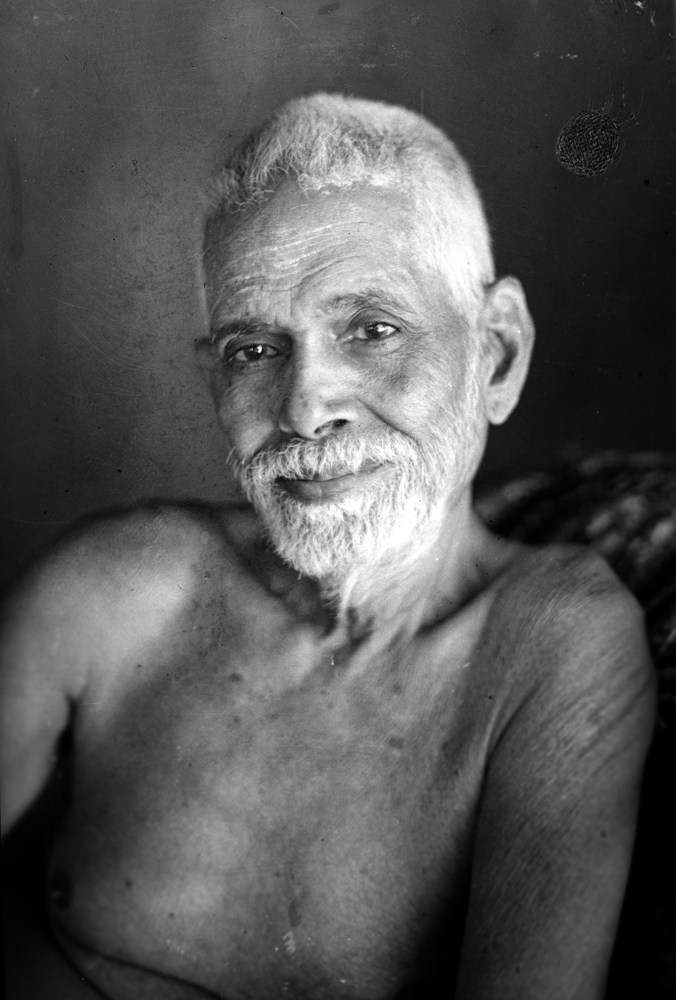
Death of Ramana Maharshi at Tiruvannamalai
The sage Ramana Maharshi died at Sri Ramanasramam, Tiruvannamalai, where he had lived for over five decades.
1951
Standard Motor Products begins car production in Madras
Standard Motor Products of India completed its first locally built Standard Vanguard cars at Vandalur near Madras.
PSG College of Technology founded in Coimbatore
PSG and Sons Charities started an engineering college at Peelamedu, Coimbatore, on the campus of its 1926 industrial institute.

Supreme Court strikes down the Communal G.O. in Champakam Dorairajan case
Madras State's caste-based Communal Government Order on college admissions was struck down by the Supreme Court.

First Amendment enables reservation for backward classes
Parliament passed the First Amendment, allowing special provisions for socially and educationally backward classes.

1952
India's first Test cricket victory at Chepauk
At Chepauk in Madras, India defeated England by an innings and 8 runs, winning a Test for the first time in its 25th match.

First general election; Rajaji forms government
After the first general election left Congress short of a majority, C. Rajagopalachari was sworn in as Chief Minister of Madras State.
The film Parasakthi, written by M. Karunanidhi and marking Sivaji Ganesan's debut, was released and sparked controversy.
Potti Sriramulu dies fasting for Andhra State
Potti Sriramulu died in Madras after a long fast demanding a separate Telugu-speaking state, prompting the creation of Andhra State.

1953
Rajaji's Modified Scheme of Elementary Education
Rajaji's two-shift school scheme, criticised as Kula Kalvi Thittam (hereditary education), triggered protests and was later dropped.
Kallakudi agitation against the name Dalmiapuram
The DMK protested at Kallakudi against the renaming of the town as Dalmiapuram after an industrialist.

Andhra State carved out of Madras State
The Telugu-speaking northern districts were separated from Madras State to form Andhra State, with Madras city remaining in Madras State.

1954
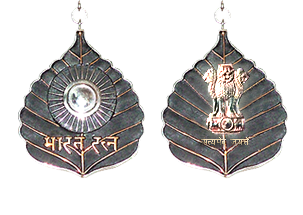
Rajaji and C. V. Raman among first Bharat Ratna recipients
C. Rajagopalachari and the physicist C. V. Raman, both from Tamil Nadu, were among the three first recipients of the Bharat Ratna.
First passenger terminal built at Meenambakkam airport
Meenambakkam got the first passenger terminal of Madras airport, which then served as a customs airport handling a few international flights.

Cancer Institute (WIA) established at Adyar
The Women's Indian Association, led by Muthulakshmi Reddy, set up the Cancer Institute at Adyar in Madras.

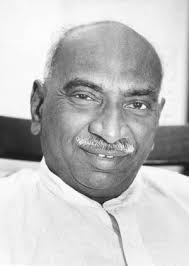
K. Kamaraj becomes Chief Minister
After Rajaji's resignation, K. Kamaraj became Chief Minister of Madras State and served for over nine years.
Travancore Tamil agitation for merger with Madras
Tamils in southern Travancore-Cochin campaigned under Marshal Nesamony for the merger of Tamil-majority taluks with Madras State.
French India transferred de facto to India after the Kizhoor referendum
After the Kizhoor referendum, Pondicherry, Karaikal, Yanam and Mahe passed de facto from France to the Indian Union.

Death of writer Kalki Krishnamurthy
Kalki R. Krishnamurthy, journalist and author of popular Tamil historical novels, died in Madras.

1955
Lower Bhavani (Bhavanisagar) Dam completed
Work was completed on the Bhavanisagar Dam over the Bhavani river, the first major irrigation project of independent India.

First Sahitya Akademi Award for Tamil
R. P. Sethu Pillai received the first Sahitya Akademi Award for Tamil for his essay collection Tamil Inbam.
Enfield India set up to build the Bullet in Madras
Enfield India was formed with Madras Motors to assemble the Royal Enfield Bullet motorcycle in Madras.

Madras win their first Ranji Trophy
Madras beat Holkar by 46 runs in the final at Indore to win the Ranji Trophy for the first time.
Congress adopts 'socialistic pattern of society' at Avadi
Meeting at Avadi near Madras, the Indian National Congress adopted a socialistic pattern of society as its stated aim.
Integral Coach Factory founded at Perambur
The Integral Coach Factory, a railway coach manufacturing unit of Indian Railways, was established at Perambur in Madras.

1956
Neyveli Lignite Corporation established
A central public sector company was set up to mine lignite and generate power at Neyveli in South Arcot district.

Kamaraj expands free schooling and midday meals
The Kamaraj government opened thousands of schools, extended free education and expanded free midday meals for schoolchildren.
Gandhigram Rural Institute founded near Dindigul
Following Gandhian ideas of education, G. Ramachandran and T. S. Soundaram established the Gandhigram Rural Institute.

Sankaralinganar fasts to death for renaming the state Tamil Nadu
Gandhian Sankaralinganar began a fast in Virudhunagar demanding that Madras State be renamed Tamil Nadu and died after 76 days.
States Reorganisation redraws Madras State
Malabar and South Canara left Madras State while Kanyakumari district and Shenkottai taluk were added, leaving a Tamil-majority state.

A train fell into the Marudaiyaru river near Ariyalur after a bridge collapsed in heavy rain, killing over 150 passengers.
1957
The Amaravathi Dam was built across the Amaravathi river near Udumalpet for irrigation and flood control.

DMK contests its first election
Won by Kamaraj's Congress, the 1957 Assembly election was the first in which the DMK took part after its founding.
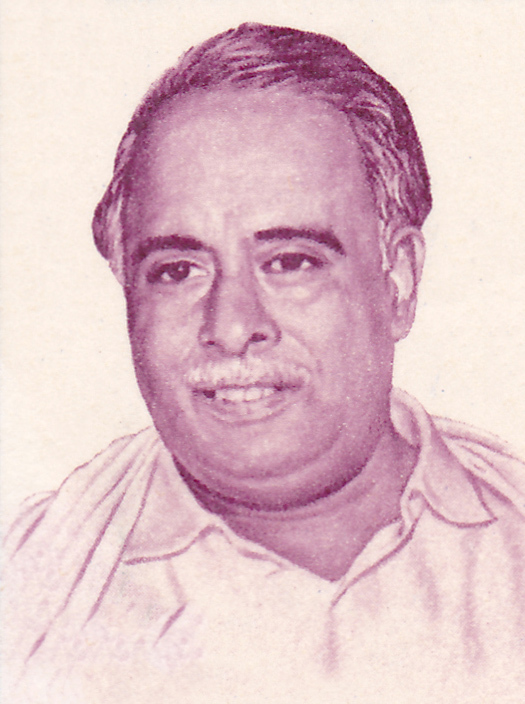
Violent caste clashes broke out in Ramanathapuram district between Thevar and Dalit communities after the 1957 elections.
Madras State Electricity Board formed
The Madras State Electricity Board, later the Tamil Nadu Electricity Board, took over power generation and distribution in the state.
Dalit leader Immanuel Sekaran murdered
Immanuel Sekaran, a Dalit activist and former soldier, was murdered amid caste tensions in Ramanathapuram district.

Krishnagiri Reservoir Project dam opened
Chief Minister K. Kamaraj inaugurated the Krishnagiri dam across the Thenpennai river.

1958
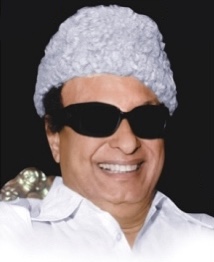
M. G. Ramachandran directed, produced and starred in Nadodi Mannan, a major hit that boosted his popularity and DMK symbolism.
The Sathanur Dam across the Thenpennai river near Tiruvannamalai became operational under the Second Five Year Plan.

Manimuthar Dam built in Tirunelveli
The Manimuthar Dam was built near Kallidaikurichi in Tirunelveli district to store monsoon water for irrigation.

1959
Chief Minister K. Kamaraj inaugurated the Vaigai Dam, which supplies irrigation and drinking water to Madurai and the southern districts.

Gandhi Memorial Museum opens in Madurai
Jawaharlal Nehru inaugurated the Gandhi Memorial Museum in the Rani Mangammal palace at Madurai.

Veerapandiya Kattabomman released
Sivaji Ganesan's historical film opened in cinemas and went on to earn him Best Actor at Cairo's Afro-Asian Film Festival in 1960.
Rajaji founds the Swatantra Party
Leaving the Congress, C. Rajagopalachari launched the Swatantra Party, which went on to ally with the DMK against Congress.

Indian Institute of Technology Madras founded
Classes started at IIT Madras in Guindy, the third IIT, which was set up with West German help.

1960
Hindustan Photo Films incorporated at Ooty
The public sector Hindustan Photo Films was incorporated to make photographic and X-ray films at Udhagamandalam.
Sivaji Ganesan wins Best Actor at Afro-Asian Film Festival
For Veerapandiya Kattabomman, Sivaji Ganesan was named Best Actor at Cairo's Afro-Asian Film Festival, the first such win by an Indian actor.

Tiruttani transferred from Andhra Pradesh to Madras State
Under the Andhra Pradesh and Madras (Alteration of Boundaries) Act, Tiruttani and nearby areas joined Madras State.

Ramanathan Krishnan reaches the Wimbledon semi-finals
Seeded seventh, Ramanathan Krishnan reached the Wimbledon singles semi-finals, where he lost to the champion Neale Fraser.

Madras Rubber Factory incorporated to make tyres
Madras Rubber Factory, begun as a balloon maker at Tiruvottiyur, was incorporated to manufacture tyres.

1961
Heavy Vehicles Factory set up at Avadi
Battle tanks became the business of the Heavy Vehicles Factory, which the Ordnance Factory Board set up at Avadi.

Madras State Housing Board formed
The City Improvement Trust of 1947 was expanded into a statewide housing board, later the Tamil Nadu Housing Board.
E. V. K. Sampath leaves the DMK and forms the Tamil National Party
E. V. K. Sampath split from the DMK and founded the Tamil National Party with the poet Kannadasan.
Manuel Aaron becomes India's first International Master
Madras chess player Manuel Aaron became the first Indian to earn the FIDE title of International Master.

1962
Annadurai demands self-determination in the Rajya Sabha
In his Rajya Sabha speeches, C. N. Annadurai stated the DMK case for the right of self-determination for the Dravidian south.
Sundaram Clayton founded by the TVS group
Formed with the UK firm Clayton Dewandre to build brakes and vehicle components, Sundaram Clayton laid the groundwork for TVS Motor.
DMK becomes main opposition in 1962 election
Congress under Kamaraj retained power in 1962, while the DMK won 50 seats to become the principal opposition party.
Madras State starts an old-age pension scheme
A monthly pension for destitute old people was introduced by the state, decades ahead of the national old-age pension of 1995.
Neyveli lignite thermal power station commissioned
The first units of the Neyveli Thermal Power Station, burning lignite from the Neyveli mines, were commissioned.

De jure transfer of the French settlements to India
Once France ratified the Treaty of Cession, Pondicherry and the other former French settlements legally became part of India.
Aliyar Dam of the Parambikulam-Aliyar Project inaugurated
Prime Minister Nehru inaugurated the Aliyar Dam, part of the inter-state Parambikulam-Aliyar irrigation project.

Velankanni shrine raised to a minor basilica
Pope John XXIII raised the Marian shrine of Our Lady of Good Health at Velankanni to a minor basilica.

1963
Parliament passed the Official Languages Act to allow continued use of English alongside Hindi after 1965.
Kamaraj Plan; M. Bhaktavatsalam becomes Chief Minister
Kamaraj resigned as Chief Minister under his plan for senior leaders to work for the party, and M. Bhaktavatsalam succeeded him.

Death of Muthuramalinga Thevar
Forward Bloc leader U. Muthuramalinga Thevar, an influential figure in southern Tamil Nadu, died on the eve of his birthday.

DMK drops demand for a separate Dravida Nadu
After the Sino-Indian War and the anti-secession Sixteenth Amendment, the DMK abandoned its demand for an independent Dravida Nadu.
1964
Kamaraj becomes Congress president and 'kingmaker'
As president of the Indian National Congress, K. Kamaraj guided the selection of two Prime Ministers.
Regional Engineering College founded at Tiruchirappalli
The Regional Engineering College at Tiruchirappalli, now NIT Tiruchirappalli, was established jointly by the Union and state governments.
Exodus of Tamils and other Indians from Burma
More than 300,000 Indians, most of them Tamils, left Burma after General Ne Win's expulsions and the 1964 nationalisation of private business.
Chinnasamy self-immolates against Hindi imposition
DMK member Chinnasamy set himself on fire at Tiruchi, the first of the language martyrs of the second anti-Hindi struggle.
Bharathidasan, the rationalist Tamil poet influenced by Subramania Bharati and Periyar, died in Madras.

C. Subramaniam becomes Union Food and Agriculture Minister
Under the leadership of C. Subramaniam of Madras, high-yielding seeds were introduced, starting the Green Revolution.

Sirima-Shastri Pact on people of Indian origin in Ceylon
India and Ceylon agreed that 525,000 stateless people of Indian origin, mostly Tamil plantation workers, would be repatriated to India.

BHEL incorporated to run the Tiruchirappalli plant
Bharat Heavy Electricals Limited came into being to set up heavy electrical factories, among them the boiler plant at Tiruchirappalli.

Rameswaram cyclone destroys Dhanushkodi
Pamban Island was hit by a super cyclonic storm whose surge drowned the town of Dhanushkodi and killed many people.

1965
Madras Refineries formed as a joint venture
Madras Refineries Limited was formed by the Government of India, Amoco and the National Iranian Oil Company to build a refinery at Manali.
Student-led protests against Hindi becoming the sole official language turned into statewide riots, with police firing and self-immolations.
Tamil Nadu Industrial Development Corporation established
The state government set up the Industrial Development Corporation (TIDCO) to promote large industrial projects.
Dharmapuri district carved out of Salem
Dharmapuri became the first district created in the state after independence, split from Salem district.

1966
Madurai University, renamed Madurai Kamaraj University in 1978, was established as the main university of southern Tamil Nadu.
M. S. Subbulakshmi sings at the United Nations
On UN Day 1966, Carnatic vocalist M. S. Subbulakshmi sang at the United Nations General Assembly, the first Indian to do so.

Madras Fertilizers incorporated
A Government of India and Amoco joint venture, Madras Fertilizers, was incorporated to produce fertilisers at Manali.
Krishnan leads India to the Davis Cup Challenge Round
Led by Ramanathan Krishnan, India reached the Davis Cup Challenge Round for the first time and lost to Australia.