Heritage
112 events, 1805 to 2025; 2 marked as turning points.
1805
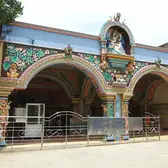
Serfoji II sets up a Devanagari press at Thanjavur
At Thanjavur, Serfoji II founded the Nava Vidya Kalasala press, the first in South India to print Devanagari.
1812
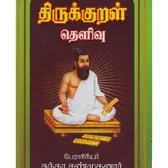
Tirukkural appears in print for the first time
The first known printed edition of the Tirukkural was produced in 1812, together with the Naladiyar.
1815
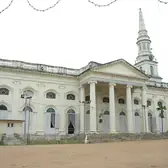
St. George's Church built in Madras
St. George's Church on the Choultry Plain was opened in 1815 and later became the cathedral of the Diocese of Madras.
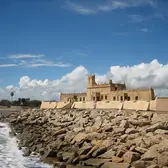
Tranquebar handed back to Denmark
Britain returned Tranquebar (Tharangambadi), occupied since 1808 during the Napoleonic Wars, to Danish rule on 20 September 1815.
1817
Madras Literary Society founded
In 1817 a learned society and library, the Madras Literary Society, was established in Madras.
1818
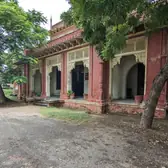
Ellis orders new wells during the Madras water shortage
During a severe drinking water shortage in Madras, Collector Francis Whyte Ellis had 27 wells dug, one bearing a Tamil inscription honouring Thiruvalluvar.
1821
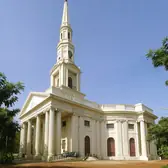
St. Andrew's Church (the Kirk) consecrated
Built in Egmore for the Scots of Madras, St. Andrew's Church was consecrated in 1821.
1827
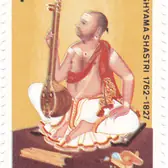
Death of composer Syama Sastri
Syama Sastri, the eldest of the Trinity of Carnatic music, died in 1827.
1829
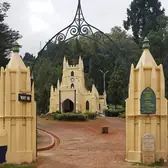
St. Stephen's Church founded at Ooty
St. Stephen's Church at Ootacamund, whose foundation stone Governor Stephen Lushington laid, opened for worship in 1831.
1832
Death of Serfoji II of Thanjavur
Serfoji II, Thanjavur's scholarly ruler who had handed its administration to the Company in 1799, passed away.

Shivaji II becomes Raja of Thanjavur
Shivaji, son of Serfoji II, was crowned at the Durbar Hall of Tanjore Fort and became the last Raja of Thanjavur.
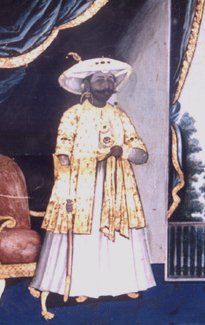
Founded for Europeans only, the Madras Club is among the oldest gentlemen's clubs in India.
1835
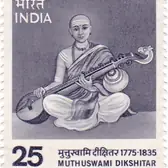
Death of composer Muthuswami Dikshitar
Muthuswami Dikshitar, one of the Trinity of Carnatic music, died at Ettayapuram on Deepavali day.
1839
Equestrian statue of Thomas Munro unveiled
Francis Chantrey's bronze equestrian statue of Governor Thomas Munro was ceremonially opened on the Island in Madras.

1842
Ice House built on the Madras beach
Frederic Tudor built the Ice House facing the sea at Madras to store ice shipped from America; it is now Vivekanandar Illam.
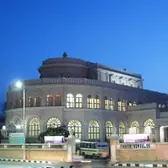
Pachaiyappa's Central Institution opens
Funded by the bequest of merchant Pachaiyappa Mudaliar, Pachaiyappa's Central Institution opened in Madras.
1844
Higginbotham's bookshop founded in Madras
Abel Joshua Higginbotham founded Higginbotham's on Mount Road, regarded as India's oldest bookshop still in existence.
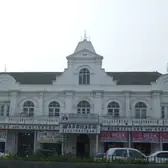
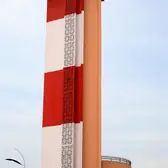
Madras's first standalone lighthouse begins operation
A granite Doric column built north of Fort St. George began working as Madras's lighthouse on 1 January 1844.
1845
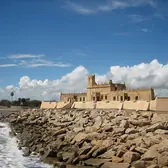
Denmark sells Tranquebar to the British
Denmark sold its settlement of Tranquebar (Tharangambadi) to the East India Company, ending Danish rule on the Tamil coast.
1847
Tyagaraja, the most celebrated composer of the Carnatic Trinity, died at Thiruvaiyaru on the banks of the Kaveri.

1848
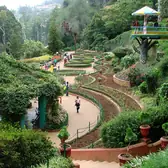
Government Botanical Garden laid out at Ooty
William Graham McIvor of Kew laid out the Government Botanical Garden at Ootacamund.
1850
Surgeon Alexander Hunter founded a private art school in Madras, today's Government College of Fine Arts.
1851
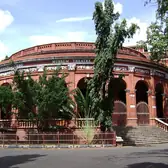
Government Museum, Madras founded
Built on collections donated by the Madras Literary Society, the Madras Government Museum, India's second oldest, was founded.
1854
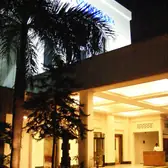
Imperial Hotel opens in Madras
The Imperial Hotel, later the Connemara, opened in 1854 and is the oldest functioning hotel in Chennai.
1855
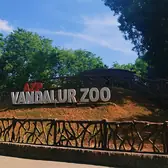
Madras Zoo begins at the Government Museum
Edward Balfour started a zoological park in the Government Museum premises, the origin of today's Vandalur zoo.
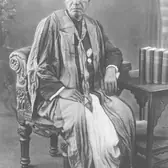
Birth of U. V. Swaminatha Iyer
U. V. Swaminatha Iyer, later famed for recovering and printing many lost classical Tamil texts, was born near Kumbakonam.
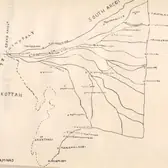
Thanjavur annexed under the Doctrine of Lapse
After Raja Shivaji died without a male heir, the Company annexed the titular Maratha principality of Thanjavur.
1858
Lawrence Asylum founded at Lovedale in the Nilgiris
A Lawrence military asylum for the children of British soldiers opened at Lovedale near Ooty; it became the Lawrence School.
1862
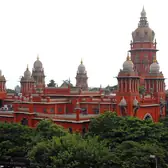
Crown Letters Patent created the High Court of Judicature at Madras in place of the Supreme Court of Madras.
1863
Robert Bruce Foote finds Palaeolithic tool at Pallavaram
Geologist Robert Bruce Foote discovered a Palaeolithic hand axe at Pallavaram near Madras, the first conclusive find of its kind in India.
1867
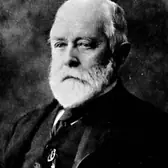
Vallalar opens the Sathya Dharma Salai at Vadalur
At Vadalur, Ramalinga Swamigal opened a free kitchen for the needy of every caste and lit a stove that was never to be put out.
1868
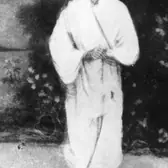
Damodaram Pillai prints Tolkappiyam with Senavaraiyar's commentary
C. W. Damodaram Pillai published the Sollathikaram of the Tolkappiyam with the medieval commentary of Senavaraiyar, an early printed edition of the grammar.

1869
Napier Bridge built over the Cooum
Planned by Governor Lord Napier, a cast iron lattice bridge went up over the Cooum's mouth, joining Fort St. George to the Marina side.
1870
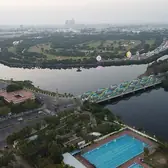
Presidency College moves to its Marina building
Presidency College, Madras moved into its new building opposite Marina Beach, on today's Kamaraj Salai.
1872
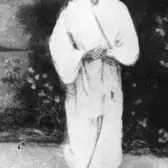
Vallalar opens the Sathya Gnana Sabhai at Vadalur
At Vadalur, Ramalinga Swamigal (Vallalar) opened the Sathya Gnana Sabhai, which taught compassion for every living being regardless of caste.
1873
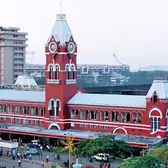
Madras Central railway station built
Designed by George Harding and later altered by Robert Chisholm, Madras Central station was put up by the Madras Railway as its terminus in the city.
1874
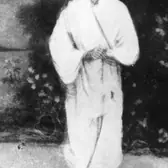
Ramalinga Swamigal shut himself in a room and told followers not to open it; when officials broke in that May, nobody was inside.
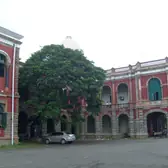
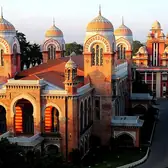
Senate House of the University of Madras completed
Built from 1874 to 1879 to a design by Robert Chisholm, the Senate House on the Marina was an early Indo-Saracenic landmark.
1876
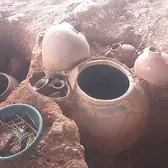
The ancient burial site of Adichanallur near Tirunelveli drew attention in 1876 and was excavated by Alexander Rea between 1899 and 1905.
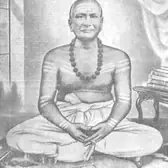
Death of Tamil scholar Meenakshi Sundaram Pillai
The poet Mahavidwan Meenakshi Sundaram Pillai, teacher of U. V. Swaminatha Iyer, died and left behind a large hoard of palm-leaf manuscripts.
1881
Caldwell's History of Tinnevelly published
The Madras government published Bishop Robert Caldwell's history of Tirunelveli district, drawn from manuscripts, Sangam texts and his own digs.
1882
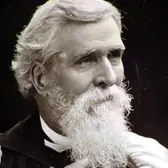
Theosophical Society moves headquarters to Adyar
Helena Blavatsky and Henry Steel Olcott moved the headquarters of the Theosophical Society to Adyar in Madras.
1883
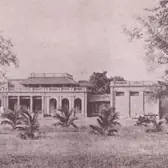
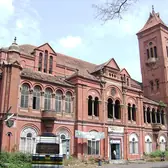
Victoria Public Hall built in Madras
The foundation stone of Victoria Public Hall, the town hall of Madras, was laid in 1883; it was named after Queen Victoria in 1888.
1884
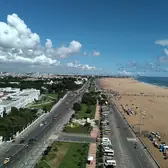
Governor Grant Duff creates the Marina promenade
Governor Mountstuart Elphinstone Grant Duff laid out a promenade along the Madras beach in 1884 and named it the Marina.
1885
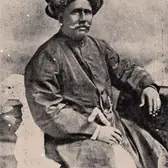
C. W. Damodaram Pillai publishes Tolkappiyam commentary
C. W. Damodaram Pillai published the Porulatikaram of the Tolkappiyam with Nachinarkiniyar's commentary, part of his revival of ancient Tamil texts.
1887
U. V. Swaminatha Iyer publishes Jeevaka Chintamani
U. V. Swaminatha Iyer published Jeevaka Chintamani, the first of his editions of classical Tamil works recovered from palm-leaf manuscripts.
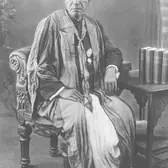
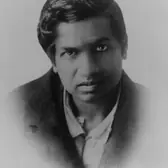
Birth of mathematician Srinivasa Ramanujan
Erode was the birthplace of Srinivasa Ramanujan, the self-taught mathematician famed for his work in number theory and infinite series.
1888
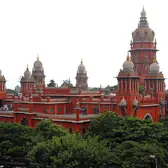
Construction of the Madras High Court building begins
Construction started in George Town, Madras, on the Indo-Saracenic High Court complex, designed by J. W. Brassington and opened in 1892.
1889
Victoria Technical Institute opens in Madras
Marking Queen Victoria's golden jubilee, the Victoria Technical Institute opened on Pantheon Road in Egmore.
1892
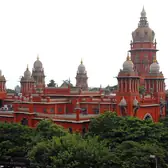
Madras High Court building inaugurated
After three decades in temporary quarters, the Madras High Court moved into its Indo-Saracenic complex, inaugurated on 12 July 1892.
1894
U. V. Swaminatha Iyer publishes Purananuru
After years of manuscript research, U. V. Swaminatha Iyer published an edition of the Sangam anthology Purananuru with notes.
1896
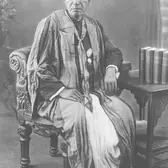
Connemara Public Library opens
The Connemara Public Library, founded in 1890 by Governor Lord Connemara, opened to the public in Madras in 1896.
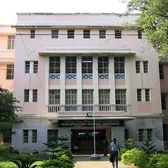
Ramana Maharshi arrives at Tiruvannamalai
Aged sixteen, Venkataraman, afterwards known as Ramana Maharshi, left Madurai for Arunachala hill at Tiruvannamalai and remained there until his death.
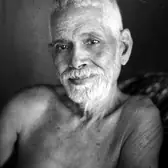
San Thome Cathedral rebuilt and consecrated
The church over the traditional tomb of St Thomas at Santhome, Madras, was rebuilt in neo-Gothic style and consecrated on 1 April 1896.
1897
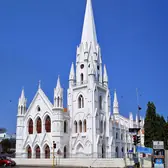
Swami Vivekananda visits Madras
Returning from the West, Swami Vivekananda stayed at the Ice House on the Madras beach from 6 to 14 February 1897.
1899
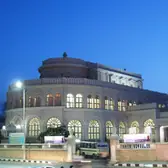
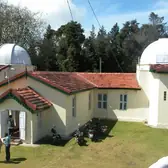
Kodaikanal Solar Observatory founded
Solar research moved from the Madras Observatory to a new observatory at Kodaikanal, where the Evershed effect was discovered in 1909.
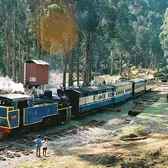
Nilgiri Mountain Railway opens to Coonoor
In June 1899 the Nilgiris rack railway between Mettupalayam and Coonoor was finished and began carrying traffic.
1900
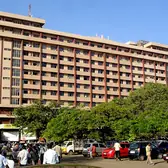
Moore Market completed in Madras
Completed in 1900 beside Madras Central, Moore Market was an Indo-Saracenic building meant to accommodate the hawkers of Broadway.
1901
Pandithurai Thevar founds the Fourth Tamil Sangam in Madurai
Pandithurai Thevar, a member of the Ramnad royal family, founded the Madurai Tamil Sangam, known as the Fourth Tamil Sangam, to promote Tamil learning.
1907
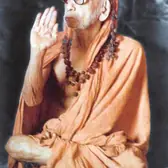
Chandrasekharendra Saraswati becomes head of the Kanchi Matha
On 13 February 1907 Swaminathan was installed as the 68th pontiff of the Kanchi Kamakoti Peetham, taking the name Chandrasekharendra Saraswati.
1908
Madras Egmore station building opens
The Indo-Saracenic terminal of Egmore station, Madras terminus of the South Indian Railway, was opened on 11 June 1908.
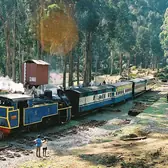
Nilgiri Mountain Railway reaches Ooty
The rack railway from Mettupalayam, opened to Coonoor in 1899, was extended to Udhagamandalam (Ooty) in 1908.
1912
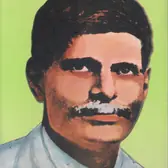
R. Venkaiah opens the Gaiety cinema in Madras
Film pioneer Raghupathi Venkaiah Naidu built the Gaiety in 1912, one of the first permanent cinema theatres in Madras.
1913
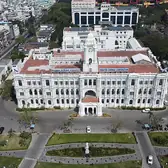
Ripon Building becomes home of the Madras Corporation
The Madras Municipal Corporation moved into the newly completed Ripon Building in 1913; Lord Minto had laid its foundation stone in 1909.
1917
Abraham Pandithar publishes Karunamirdha Sagaram
Abraham Pandithar published Karunamirdha Sagaram, a large study of the history and theory of Tamil music.
1918
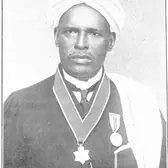
Saraswathi Mahal Library opened to the public
The manuscript library of the Thanjavur Maratha rulers, enriched by Serfoji II, was opened to the public in 1918.
1921
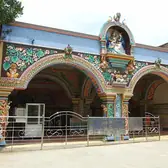
Thyagaraja memorial temple at Thiruvaiyaru consecrated
Bangalore Nagarathnamma built a temple over the samadhi of the composer Thyagaraja at Thiruvaiyaru, the site of the annual Aradhana festival.
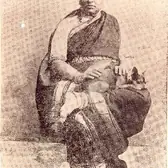
Gandhi adopts the loincloth at Madurai
During a tour of the Madras Presidency, Mahatma Gandhi gave up his full attire and began wearing only a loincloth at Madurai.
1928
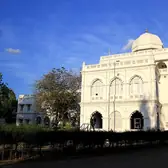
The Music Academy was founded in Madras following the 1927 Congress session and became a leading institution for Carnatic music.

1932
Proposal to rename sadir as Bharatanatyam
E. Krishna Iyer moved a resolution at the Madras Music Academy to rename the dance form sadir as Bharatanatyam.
1934
First Test match in Madras at Chepauk
Chepauk in Madras hosted its first Test match, between India and England.

First Ranji Trophy match played at Chepauk
The opening match of the first Ranji Trophy, India's national first-class cricket championship, was played at Chepauk in Madras.
1935
Rukmini Devi's first public Bharatanatyam performance
At the Theosophical Society's Diamond Jubilee convention, Rukmini Devi Arundale danced Bharatanatyam in public for the first time.

1936
Vedanthangal declared a bird sanctuary
Vedanthangal near Madurantakam was officially declared a wildlife sanctuary, the oldest in India.

Kalakshetra founded by Rukmini Devi Arundale
Rukmini Devi Arundale founded Kalakshetra at Adyar, Madras, an academy for Bharatanatyam and the arts.
1943
Tamil Isai Movement and Tamil Isai Sangam
The Tamil Isai Sangam was founded in Madras to promote the singing of Tamil compositions in Carnatic concerts dominated by Telugu and Sanskrit songs.
1944
Kalki begins Sivagamiyin Sapatham
Kalki Krishnamurthy began serialising Sivagamiyin Sapatham, a historical novel set in the Pallava period.

1949
Subramania Bharati's works nationalised
The Madras government nationalised the writings of poet Subramania Bharati, the first such step for any poet in India.

State emblem designed by R. Krishna Rao
Designed in 1949, the Madras government's emblem combined a temple gopuram with the Lion Capital of Ashoka.

1950
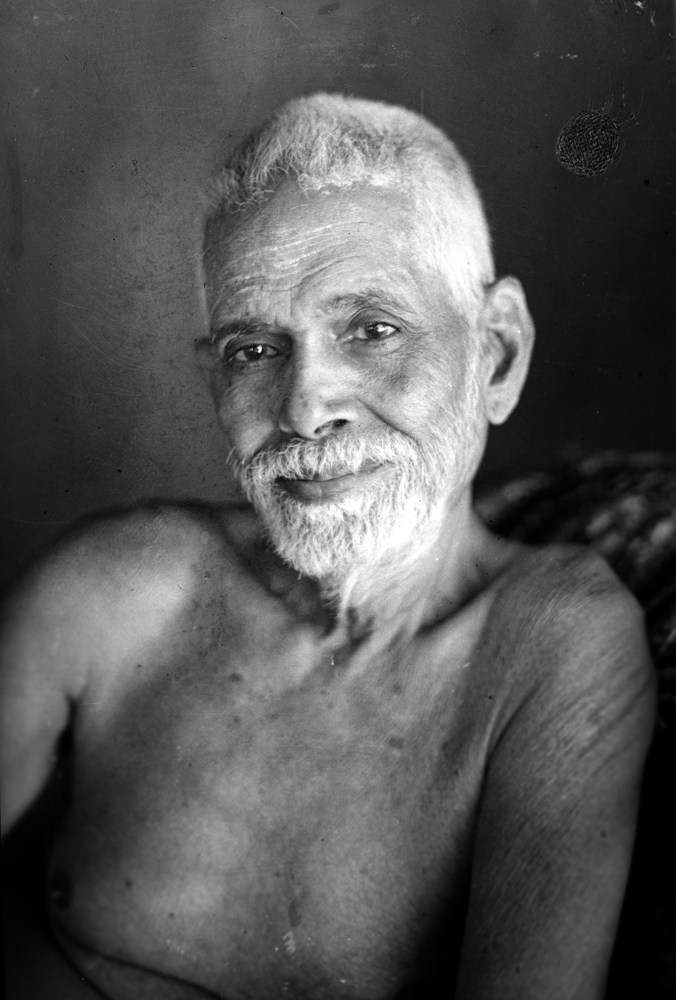
Death of Ramana Maharshi at Tiruvannamalai
The sage Ramana Maharshi died at Sri Ramanasramam, Tiruvannamalai, where he had lived for over five decades.
1959
Gandhi Memorial Museum opens in Madurai
Jawaharlal Nehru inaugurated the Gandhi Memorial Museum in the Rani Mangammal palace at Madurai.

Veerapandiya Kattabomman released
Sivaji Ganesan's historical film opened in cinemas and went on to earn him Best Actor at Cairo's Afro-Asian Film Festival in 1960.
1962
Velankanni shrine raised to a minor basilica
Pope John XXIII raised the Marian shrine of Our Lady of Good Health at Velankanni to a minor basilica.

1967
Point Calimere Wildlife Sanctuary created
To shelter blackbuck and vast flocks of waterbirds, a sanctuary was established at Point Calimere on the Palk Strait.
1968
Auroville inaugurated near Pondicherry
The experimental international township of Auroville was inaugurated in Viluppuram district with delegates from 124 nations.

1970
Vivekananda Rock Memorial opened at Kanyakumari
A memorial to Swami Vivekananda was completed on a rock off the coast of Kanyakumari after a nationwide fundraising campaign.

1974
Anaimalai Wildlife Sanctuary notified
The forests of the Anaimalai hills in the Western Ghats were notified as a wildlife sanctuary, later the Anamalai Tiger Reserve.

1976
The Valluvar Kottam memorial to the poet Thiruvalluvar, begun under the DMK government, was inaugurated in Madras during President's rule.

1981
Fifth World Tamil Conference held in Madurai
The fifth World Tamil Conference, a gathering of Tamil scholars from many countries, was held in Madurai.
Tamil University founded at Thanjavur
The Tamil University was established in Thanjavur as a research university devoted to the Tamil language and culture.

1984
Mahabalipuram monuments declared a UNESCO World Heritage Site
The Pallava-era Group of Monuments at Mahabalipuram became Tamil Nadu's first UNESCO World Heritage Site.
1986
Gulf of Mannar Marine National Park declared
Twenty-one islets lying offshore between Thoothukudi and Dhanushkodi were designated the Gulf of Mannar Marine National Park.

1987
Brihadisvara Temple, Thanjavur, declared a World Heritage Site
The 11th-century Brihadisvara Temple built by Rajaraja I at Thanjavur was inscribed as a UNESCO World Heritage Site.

Srirangam temple Rajagopuram completed
The 73-metre main gateway tower of the Ranganathaswamy temple at Srirangam was completed after centuries.

1990
MGR memorial on the Marina inaugurated
The memorial to M. G. Ramachandran on Marina Beach, begun in 1988, was inaugurated by his widow V. N. Janaki Ramachandran.

1995
Eighth World Tamil Conference held in Thanjavur
The eighth World Tamil Conference was hosted in Thanjavur by the Tamil Nadu government.
2000
Thiruvalluvar Statue unveiled at Kanyakumari
A 133-foot stone statue of the poet Thiruvalluvar was unveiled on a rock off Kanyakumari on the millennium day.

2004
Madras Day, held each 22 August, was first celebrated in Chennai, recalling the 1639 acquisition of the land where the city developed.

2005
Kanchipuram silk registered as a geographical indication
Kanchipuram silk saris were one of the earliest Tamil Nadu products to gain registration as a geographical indication.

Nilgiri Mountain Railway added to UNESCO World Heritage list
UNESCO added the Nilgiri Mountain Railway as an extension of the Mountain Railways of India World Heritage Site.

2010
Millennium celebrations of the Thanjavur Big Temple
Thanjavur marked 1,000 years of the Brihadisvara Temple with cultural events, including a performance by 1,000 Bharatanatyam dancers.
2012
Western Ghats inscribed as a UNESCO World Heritage Site
The Western Ghats mountain range, which runs through western Tamil Nadu including the Nilgiris and Anamalai hills, became a World Heritage Site.

2013
Madurai malli recognised as a geographical indication
Madurai jasmine became the first flower from Tamil Nadu to be given geographical indication status.

2017
A. P. J. Abdul Kalam memorial opens at Rameswaram
Prime Minister Narendra Modi inaugurated the DRDO-built memorial to A. P. J. Abdul Kalam at Peikarumbu, Rameswaram.

2019
Erode turmeric gets a geographical indication
The Government of India recognised Erode turmeric (Erode manjal) as a geographical indication.

Palani panchamirtham gets geographical indication
Palani Murugan temple's panchamirtham offering was the first temple prasadam in Tamil Nadu to receive a GI tag.

Keezhadi excavation report dates Sangam-era settlement
The Tamil Nadu archaeology department reported that finds at Keezhadi near Madurai date to about the 6th century BCE.

Modi and Xi Jinping hold informal summit at Mamallapuram
Among the Pallava monuments of Mamallapuram, Prime Minister Narendra Modi received Chinese President Xi Jinping for an informal summit.

2022
44th Chess Olympiad in Mamallapuram
India hosted the Chess Olympiad for the first time, at Mamallapuram near Chennai, with Tamil Nadu organising it at short notice.
2023
Keezhadi heritage museum opens
A museum displaying finds from the Keezhadi excavations was opened near the site in Sivaganga district.

2024
Glass bridge links Thiruvalluvar Statue and Vivekananda Rock
A glass-floored pedestrian bridge over the sea linking the Thiruvalluvar Statue and Vivekananda Rock Memorial was opened at Kanyakumari.
2025
Sivagalai finds push back the dating of iron in Tamil Nadu
Radiometric dates from Sivagalai in a state report pushed iron use in Tamil Nadu back to 3345 BCE, a claim that sparked broad debate.