Caste
56 events, 1813 to 2025; 6 marked as turning points.
1813
Channar revolt over the upper cloth
Nadar women in southern Travancore, including today's Kanyakumari district, struggled for decades for the right to cover their upper bodies.
1816
Abbe Dubois's account of south Indian customs published
Abbe J. A. Dubois's account of south Indian customs and institutions appeared in London in an English translation.
1833
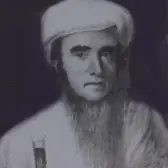
Ayya Vaikundar begins his mission
Ayya Vaikundar began the teachings that gave rise to Ayyavazhi, a movement that challenged caste rules in southern Travancore.

1843
Indian Slavery Act abolishes legal slavery
Under Act V of 1843, slavery lost legal recognition in Company territories, agrestic slavery in the Tamil districts included.
1891
Rettamalai Srinivasan founds the Paraiyar Mahajana Sabha
Rettamalai Srinivasan set up the Paraiyar Mahajana Sabha, an early Dalit body, and launched the Tamil paper Paraiyan in 1893.

Iyothee Thass founds the Dravida Mahajana Sabha
Iyothee Thass founded the Dravida Mahajana Sabha and urged Dalits to record themselves in the census as casteless Dravidians rather than Hindus.
1893
Rettamalai Srinivasan launches the Paraiyan newspaper
Dalit leader Rettamalai Srinivasan started the Tamil paper Paraiyan in October 1893 to speak for the Paraiyar community.
1897
Nadars entered the Meenakshi Sundareswarar temple at Kamudi in 1897; the courts, and in 1908 the Privy Council, ruled against their right of entry.
1898
Iyothee Thass founds the Sakya Buddhist Society
After embracing Buddhism in Ceylon, Iyothee Thass founded the Sakya Buddhist Society in Madras, launching a Tamil Buddhist revival among Dalits.
1899
In and near Sivakasi, Maravar-Nadar clashes killed 22 people and burnt hundreds of houses until troops stepped in.
1907
Iyothee Thass launches Oru Paisa Tamizhan
Iyothee Thass launched the Tamil weekly Oru Paisa Tamizhan, an anti-caste journal that later became The Tamilan.
1910
The Nadar Mahajana Sangam was formed in 1910 through the efforts of T. Ratnasamy Nadar to work for the uplift of the Nadar community.
1912
Madras Dravidian Association formed
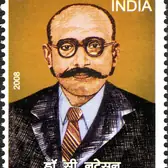
The Madras United League, founded by C. Natesa Mudaliar in 1912, was renamed the Madras Dravidian Association, an early non-Brahmin political body.
1916
South Indian Liberal Federation (Justice Party) founded
Non-Brahmin leaders including C. Natesa Mudaliar, T. M. Nair and P. Theagaraya Chetty founded the South Indian Liberal Federation, later known as the Justice Party.
Non-Brahmin Manifesto published
The new non-Brahmin federation issued a manifesto criticising Brahmin dominance in public services and politics, drawing sharp criticism from The Hindu.
1917
Madras Presidency Association formed
The Madras Presidency Association was set up by non-Brahmin Congressmen to press for non-Brahmin representation inside the national movement.
1920
Police fired on Piramalai Kallar villagers at Perungamanallur near Madurai who resisted registration under the Criminal Tribes Act.
1921
First Communal Government Order on reservation
The Justice Party government issued the first Communal Government Order, reserving government posts for different communities.
Nadar Bank founded at Thoothukudi
Founded at Thoothukudi, the Nadar Bank was later renamed Tamilnad Mercantile Bank.
Buckingham and Carnatic Mills strike
Workers of the Buckingham and Carnatic Mills in Madras went on a prolonged strike against Binny and Co. over wages and conditions.
1922
Council adopts the term Adi Dravida
Acting on a resolution by M. C. Rajah, the Madras Legislative Council adopted Adi-Dravida officially in place of terms like Paraiya and Panchama.
1924
Cheranmadevi Gurukulam controversy
Separate dining for Brahmin and non-Brahmin students at a Congress-funded gurukulam at Cheranmadevi caused a major controversy.
1930
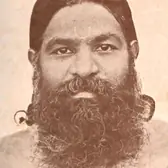
Rettamalai Srinivasan at the Round Table Conference
Dalit leader Rettamalai Srinivasan represented the depressed classes alongside B. R. Ambedkar at the Round Table Conferences in London.
1932
M. C. Rajah and the Rajah-Moonje Pact
Dalit leader M. C. Rajah of Madras agreed with B. S. Moonje to reserved seats within joint electorates for the depressed classes.
1934
Abhiramam convention against the Criminal Tribes Act
Muthuramalinga Thevar organised a convention at Abhiramam demanding repeal of the Criminal Tribes Act.

1937
Muthuramalinga Thevar defeats the Raja of Ramnad
As the Congress candidate, Muthuramalinga Thevar beat the Raja of Ramnad in Ramanathapuram in the 1937 election.
1942
N. Sivaraj becomes first president of the Scheduled Castes Federation
At Nagpur, Madras Dalit leader N. Sivaraj was elected first president of the new All-India Scheduled Castes Federation founded with Ambedkar.

1953
Rajaji's Modified Scheme of Elementary Education
Rajaji's two-shift school scheme, criticised as Kula Kalvi Thittam (hereditary education), triggered protests and was later dropped.

1957
Violent caste clashes broke out in Ramanathapuram district between Thevar and Dalit communities after the 1957 elections.
Dalit leader Immanuel Sekaran murdered
Immanuel Sekaran, a Dalit activist and former soldier, was murdered amid caste tensions in Ramanathapuram district.

1963
Death of Muthuramalinga Thevar
Forward Bloc leader U. Muthuramalinga Thevar, an influential figure in southern Tamil Nadu, died on the eve of his birthday.
1968
Around 44 Dalit agricultural labourers' family members, mostly women and children, were burnt to death at Kilvenmani in Thanjavur district.

1969
Sattanathan Backward Classes Commission
The first Backward Classes Commission of Tamil Nadu, headed by A. N. Sattanathan, recommended a separate Most Backward Class category.

1970
Order allowing people of all castes to become temple priests
A 1970 order of the Karunanidhi government opened priesthood in public temples to all castes; in 1972 the Supreme Court struck it down.
1979
Income ceiling introduced for backward class reservation
The MGR government introduced an annual income ceiling to exclude better-off families from backward class reservation.
1980
Income ceiling withdrawn, backward class quota raised to 50%
After electoral setbacks, the MGR government withdrew the income ceiling and raised the backward class quota from 31% to 50%.
1981
Meenakshipuram mass conversion
Several hundred Dalits in Meenakshipuram village in Tirunelveli district converted from Hinduism to Islam, citing caste discrimination.
1987
Vanniyar reservation agitation
The Vanniyar Sangam led a road blockade agitation in northern Tamil Nadu demanding separate reservation for the Vanniyar community.
1989
Separate 20% quota for Most Backward Classes
The DMK government split the 50% backward class quota into 30% for Backward Classes and 20% for Most Backward Classes and Denotified Communities.
Uthapuram caste violence and the 'untouchability wall'
After caste violence in Uthapuram near Madurai in 1989, caste Hindus built a wall separating the Dalit area of the village.
S. Ramadoss founded the Pattali Makkal Katchi, a party rooted in the Vanniyar Sangam and the 1987 reservation agitation.

1994
69% reservation Act placed in the Ninth Schedule
Through the 76th Amendment, the Constitution's Ninth Schedule came to include Tamil Nadu's 1993 law that kept reservation at 69%.
1995
About 600 policemen raided the Dalit village of Kodiyankulam in Thoothukudi district, destroying property amid caste clashes in southern Tamil Nadu.
1997
Dalit panchayat president K. Murugesan and six other Dalit men were murdered at Melavalavu near Madurai by members of a dominant caste.
K. Krishnasamy founds Puthiya Tamilagam
Former MLA K. Krishnasamy founded Puthiya Tamilagam, a regional political party in Tamil Nadu.
2009
Internal reservation for Arunthathiyars
Tamil Nadu set aside 3 percent within the Scheduled Caste quota for the Arunthathiyar community.
2011
Police opened fire on Dalits protesting at Paramakudi on the Immanuel Sekaran memorial day, and the death toll rose to seven.
2012
Mobs burned Dalit homes in three villages near Dharmapuri after an inter-caste marriage.
2013
At Marakkanam, PMK cadres heading to a Vanniyar youth festival clashed with Dalit villagers, setting off violence in the northern districts.
2015
Murder of Dalit engineering student Gokulraj
Dalit engineering student V. Gokulraj was abducted from a temple in Tiruchengode and murdered, in a case treated as an honour killing.
Seshasamudram violence over a Dalit temple car procession
A dominant-caste mob attacked the Dalit colony of Seshasamudram and burned a temple car on the eve of its procession.
2016
Udumalaipettai honour killing of Shankar
Dalit youth Shankar was hacked to death in a busy street in Udumalaipettai for marrying Kausalya, a woman from a dominant caste.
2021
Priests of all castes appointed to state temples
The government appointed trained archakas from many castes, including non-Brahmins, to temples under the HR and CE department.
2022
Vengaivayal drinking water tank contamination
Human faeces were found in an overhead water tank serving Dalit families in Vengaivayal village of Pudukkottai district.
2023
Nanguneri attack on Dalit student and his sister
A 17-year-old Dalit student and his sister were attacked with sickles at home in Nanguneri by schoolmates from dominant castes.
2025
Kalaignar Kaivinai Thittam for artisans
Tamil Nadu launched its own credit-linked subsidy scheme for artisans in about 25 trades after declining to join the PM Vishwakarma scheme.
