Freedom Struggle
62 events, 1800 to 1959; 12 marked as turning points.
1800
One year after Kattabomman was executed, a broad coalition of Tamil palayakkarars and their allies revolted against the East India Company.
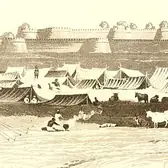
1801
Jambudweep proclamation of the Maruthu brothers
The Maruthu brothers issued a proclamation calling on all people of the peninsula, whatever their religion, to fight the British.
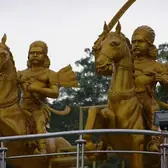
Execution of the Maruthu brothers
Periya Marudhu and Chinna Marudhu, rulers of Sivaganga and leaders of the 1800-01 rising, were hanged at Tiruppathur fort.
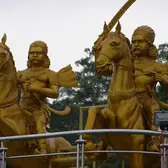
Oomaithurai, brother of Kattabomman, was captured and hanged at Panchalankurichi with Sevathaiah, ending the Second Polygar War.
1805
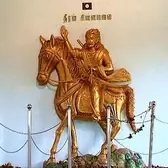
Execution of Dheeran Chinnamalai
Dheeran Chinnamalai, a Kongu chieftain who fought the Company for several years, was hanged at Sankagiri Fort.
1852
Madras Native Association founded
One of India's earliest Indian political bodies, the Madras Native Association, was set up by Gazulu Lakshminarasu Chetty.
1872
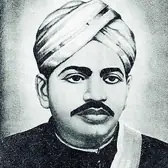
Birth of V. O. Chidambaram Pillai
V. O. Chidambaram Pillai, later the founder of the Swadeshi Steam Navigation Company, was born at Ottapidaram in Tirunelveli district.
1878
Founded in Madras as a weekly, The Hindu was started by the Triplicane Six, among them G. Subramania Iyer and M. Veeraraghavachariar.
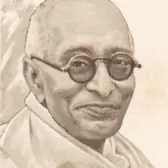
C. Rajagopalachari (Rajaji), later Chief Minister of Madras and the last Governor-General of India, was born at Thorapalli.
1882
Swadesamitran Tamil newspaper launched
G. Subramania Iyer started Swadesamitran, the first Tamil newspaper owned and run by Indians, in Madras.
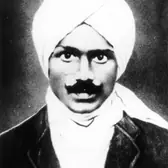
Birth of poet Subramania Bharati
Subramania Bharati, a pioneer of modern Tamil poetry and a nationalist journalist, was born at Ettayapuram.
1884
The Madras Mahajana Sabha, an early political association of educated Indians in the Madras Presidency, was formed in 1884.
Subramania Siva, independence activist, writer and associate of V. O. Chidambaram Pillai, was born at Batlagundu.
1885
Madras delegates at the first Indian National Congress
Of the 72 delegates at the first session of the Indian National Congress in Bombay, 22 came from the Madras Presidency.
1887
Indian National Congress holds first Madras session
The third session of the Indian National Congress met in Madras under the presidency of Badruddin Tyabji.

1894
Congress session in Madras presided by Alfred Webb
In December 1894 Madras hosted the tenth Indian National Congress session, presided over by Alfred Webb, an Irish nationalist MP.

1898
Congress session in Madras presided by Ananda Mohan Bose
The fourteenth session of the Indian National Congress met in Madras in December 1898 under Ananda Mohan Bose.

1903
Congress session in Madras presided by Lalmohan Ghosh
The nineteenth Congress session met in Madras in December 1903; president Lalmohan Ghosh called for compulsory primary education.
1905
Kasturi Ranga Iyengar acquires The Hindu
S. Kasturi Ranga Iyengar bought The Hindu in 1905; it has remained with his family since.

1906
V. O. Chidambaram Pillai founds the Swadeshi Steam Navigation Company
To compete with British lines on the Tuticorin-Colombo route, V. O. Chidambaram Pillai registered an Indian-owned shipping firm.
1908
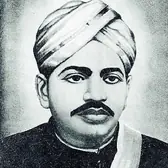
Subramania Bharati goes into exile in Pondicherry
Facing an arrest warrant, the poet and journalist Subramania Bharati moved to French-ruled Pondicherry, where he lived for about ten years.
Coral Mill strike in Tuticorin
Led by V. O. Chidambaram Pillai and Subramania Siva, Coral Mill workers in Tuticorin struck against poor pay and harsh conditions.
Arrest of V. O. Chidambaram Pillai and Tirunelveli unrest
The arrest of V. O. Chidambaram Pillai and Subramania Siva on sedition charges set off unrest in Tirunelveli and Tuticorin.
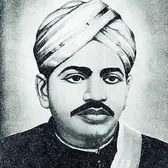
Congress session in Madras after the Surat split
A year after the Congress split at Surat, the moderate-led Congress met in Madras in December 1908 under Rash Behari Ghosh.

1910
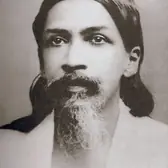
Sri Aurobindo settles in Pondicherry
Facing continued British repression, Bengali nationalist Aurobindo Ghose moved to French Pondicherry in April 1910.
1911
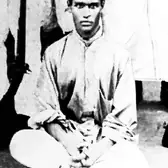
Assassination of Collector Robert Ashe
Vanchinathan shot dead Robert Ashe, Collector of Tinnevelly, at Maniyachchi railway station and then killed himself.
1914
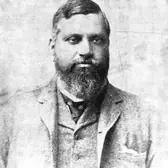
Congress session in Madras presided by Bhupendra Nath Bose
The Indian National Congress held its 1914 annual session in Madras under Bhupendra Nath Bose, months after the First World War began.
1916
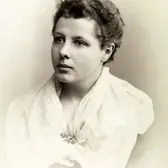
Annie Besant launches the Home Rule League at Adyar
Annie Besant founded the All India Home Rule League at Adyar, Madras, to campaign for self-government within the British Empire.
1917
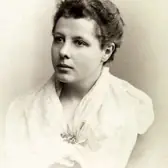
The Madras government interned Annie Besant at a hill station for her Home Rule activities, provoking protests across India.
1919
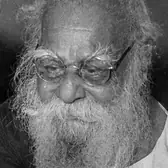
Periyar joins the Indian National Congress
E. V. Ramasamy of Erode, later known as Periyar, joined the Indian National Congress, beginning a political career that later led to the Self-Respect Movement.
Gandhi conceives the Rowlatt hartal in Madras
While staying with C. Rajagopalachari in Madras, Gandhi conceived a nationwide hartal against the Rowlatt Act, observed on 6 April 1919.

1920
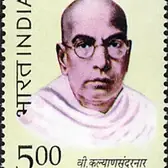
Thiru. Vi. Ka. launches Navasakthi
Tamil scholar and labour leader Thiru. V. Kalyanasundaram started the Tamil weekly Navasakthi.
1921
Gandhi adopts the loincloth at Madurai
During a tour of the Madras Presidency, Mahatma Gandhi gave up his full attire and began wearing only a loincloth at Madurai.
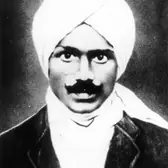
The poet and nationalist Subramania Bharati died in Madras, leaving a body of work central to modern Tamil literature.
1925
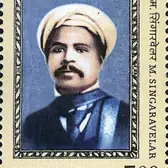
Singaravelar chairs first Communist conference at Kanpur
M. Singaravelu, a labour leader from Madras, presided over the founding convention of the Communist Party of India in Kanpur.
1926
S. Srinivasa Iyengar presides over Gauhati Congress
S. Srinivasa Iyengar, a Swarajist leader from Madras, was president of the Indian National Congress at its Gauhati session.

1927
Nationalists in Madras campaigned for the removal of the statue of Colonel James Neill from Mount Road.

Madras session of the Indian National Congress
The annual Congress session held in Madras under M. A. Ansari called for complete independence and a boycott of the Simon Commission.

1928
Simon Commission boycott in Madras
Protesters in Madras demonstrated against the Simon Commission, and T. Prakasam famously defied police during the protest.

1930
Muthulakshmi Reddy resigns over Gandhi's arrest
Muthulakshmi Reddy resigned from the Madras Legislative Council in protest against the arrest of Mahatma Gandhi during civil disobedience.

C. Rajagopalachari led a march from Tiruchirappalli to Vedaranyam to break the salt law, the Tamil counterpart of the Dandi March.

1932
The Indian Express founded in Madras
P. Varadarajulu Naidu started the English daily The Indian Express in Madras; it was later taken over by Ramnath Goenka.
Freedom fighter Tiruppur Kumaran died of injuries from a police assault during a protest march, holding the national flag.

1933
Death of Annie Besant at Adyar
Annie Besant, Theosophical Society president and Home Rule leader, died at Adyar in Madras.

1934
The Tamil daily Dinamani published its first edition on 11 September; it later became part of the Indian Express group.
1936
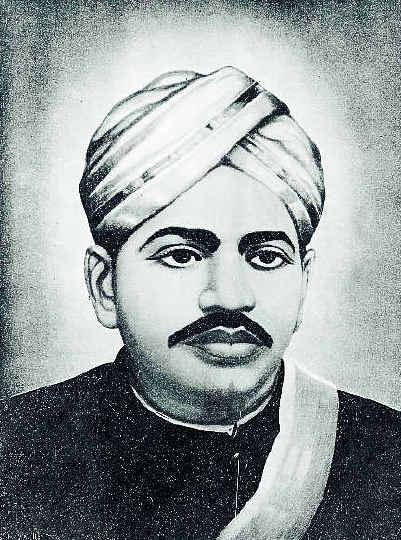
Death of V. O. Chidambaram Pillai
Nationalist pioneer V. O. Chidambaram Pillai, who had started the Swadeshi Steam Navigation Company, died in Thoothukudi.
1939
Thyaga Bhoomi released and banned
Thyaga Bhoomi, K. Subramanyam's nationalist film adapted from a Kalki story, was banned by the British administration after release.
Subhas Chandra Bose received in Madurai
After launching the Forward Bloc, Subhas Chandra Bose visited Madurai, where Muthuramalinga Thevar organised his reception.

Congress ministry resigns over the Second World War
The Rajagopalachari ministry resigned in protest against the Viceroy declaring India at war without consultation, and Governor's rule followed.
1940
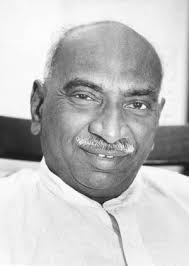
K. Kamaraj becomes TNCC president
K. Kamaraj was elected president of the Tamil Nadu Congress Committee, beginning his rise as the leading Congress organiser in the region.
1941
Writer R. Krishnamurthy (Kalki) and T. Sadasivam launched the Tamil weekly Kalki, which serialised popular historical novels.
Kamaraj elected Virudhunagar municipal chairman while in jail
While imprisoned for opposing war contributions, K. Kamaraj was elected chairman of the Virudhunagar municipality.
1942
Rajagopalachari resigns from Congress over Pakistan resolution
C. Rajagopalachari left the Congress after his proposals to negotiate with the Muslim League were rejected, and opposed Quit India.

Quit India Movement in the Tamil districts
Congress leaders in the Tamil region were arrested as the Quit India Movement began, followed by strikes, sabotage and police firing.

1943
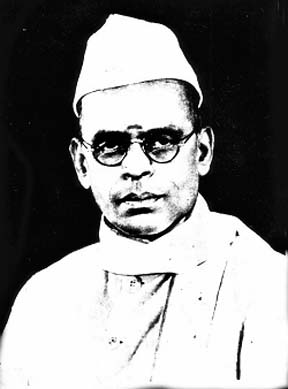
Congress leader S. Satyamurti, a former Mayor of Madras and mentor of K. Kamaraj, died in Madras.
Lakshmi Swaminathan leads Rani of Jhansi Regiment
Madras-born doctor Lakshmi Swaminathan was appointed to lead the women's Rani of Jhansi Regiment of Subhas Chandra Bose's Indian National Army.

1944
Rajagopalachari's C. R. formula
C. Rajagopalachari's proposal to resolve the Congress and Muslim League deadlock became the basis of the 1944 Gandhi and Jinnah talks.
1946
Gandhi presides over Hindi Prachar Sabha silver jubilee
Gandhi came to Madras to preside at the Dakshina Bharat Hindi Prachar Sabha's silver jubilee.
Royal Indian Navy mutiny reaches Madras
A revolt by Indian ratings of the Royal Indian Navy that began in Bombay spread to ships and shore establishments including Madras.
1947
India becomes independent; Madras Province
India gained independence and the Madras Presidency became Madras Province of the Dominion of India; Periyar called it a day of mourning.

1954
Death of writer Kalki Krishnamurthy
Kalki R. Krishnamurthy, journalist and author of popular Tamil historical novels, died in Madras.

1959
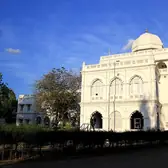
Gandhi Memorial Museum opens in Madurai
Jawaharlal Nehru inaugurated the Gandhi Memorial Museum in the Rani Mangammal palace at Madurai.
