Legislation
21 events, 1813 to 2021; 5 marked as turning points.
1813
Renewing the Company's charter, Parliament abolished its India trade monopoly, admitted missionaries and funded education.
1817
Madras Regulation VII of 1817 on temple endowments
The Madras government passed Regulation VII of 1817, the first explicit Company legislation on the management of temple endowments.
1833
Charter Act of 1833 centralises lawmaking
The Government of India Act 1833 removed the Madras government's power to make its own laws and centralised it in Calcutta.
1843
Indian Slavery Act abolishes legal slavery
Under Act V of 1843, slavery lost legal recognition in Company territories, agrestic slavery in the Tamil districts included.
1861
Indian Councils Act restores Madras legislative powers
Through the Indian Councils Act 1861, the Madras Presidency regained law-making powers and gained an advisory Madras Legislative Council.
1909
The Indian Councils Act 1909 introduced elections to the legislative councils, including Madras, and admitted Indians to the Madras executive council.
1919
Government of India Act 1919 introduces dyarchy
Based on the Montagu-Chelmsford Report, the Act introduced dyarchy in the provinces, including Madras, transferring some subjects to elected ministers.
1921
First Communal Government Order on reservation
The Justice Party government issued the first Communal Government Order, reserving government posts for different communities.
1925
Madras Hindu Religious Endowments Act
A law passed under the Justice Party government placed Hindu temple endowments under the oversight of a statutory board.
1937
Prohibition introduced in Salem district
The Rajaji ministry introduced prohibition of liquor in Salem district, the first such experiment in the Presidency.
1938
Madras Agriculturists Relief Act eases peasant debt
A law to reduce the debts of indebted farmers in the Madras Presidency was brought in by the Rajagopalachari ministry.
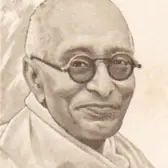
1939
Madras Temple Entry Authorization and Indemnity Act
A law passed by the Rajagopalachari ministry lifted the bars on Dalits and Shanars entering Hindu temples across the Presidency.
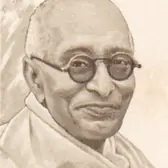
1947
Madras Devadasis (Prevention of Dedication) Act enacted
The Madras legislature outlawed the dedication of girls to temples as devadasis, ending a long reform campaign.
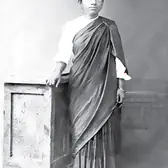
1951
First Amendment enables reservation for backward classes
Parliament passed the First Amendment, allowing special provisions for socially and educationally backward classes.
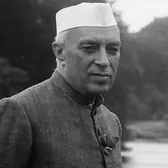
1969
Agricultural Labourer Fair Wages Act
Under a 1969 law, Cauvery delta farm labourers had to be paid fair wages, and landowners who exploited them faced penalties.

1970
Land ceiling reduced to 15 standard acres
A 1970 Tamil Nadu law halved the family land ceiling, cutting it from 30 to 15 standard acres.
1986
Tamil Nadu Legislative Council abolished
The upper house of the Tamil Nadu legislature, in existence since 1921, was abolished at the request of the MGR government.
1989
Equal property rights for women and 30% job quota
Tamil Nadu amended Hindu succession law to give daughters equal rights in family property and reserved 30% of government jobs for women.
1994
69% reservation Act placed in the Ninth Schedule
Through the 76th Amendment, the Constitution's Ninth Schedule came to include Tamil Nadu's 1993 law that kept reservation at 69%.
2002
Tamil Nadu anti-conversion law
The AIADMK government introduced a law against forcible religious conversion, which was withdrawn after the 2004 Lok Sabha election and formally repealed in 2006.
2021
Assembly passes NEET exemption bill
The Assembly passed a bill to admit students to medical courses on Class 12 marks instead of NEET, and re-passed it after the Governor returned it.