Chennai City
217 events, 1802 to 2024; 12 marked as turning points.
1802
Astronomer John Goldingham of the Madras Observatory fixed Madras time at 5 hours 21 minutes ahead of Greenwich.
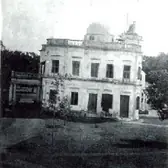
Great Trigonometrical Survey begins at Madras
Measuring a baseline close to Madras, William Lambton set the Great Trigonometrical Survey of India in motion.
1806
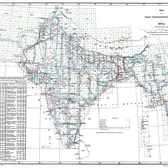
First segment of the Buckingham Canal opens
In 1806 a saltwater canal linking Madras with Ennore was finished; it would later form part of the Buckingham Canal.
1812
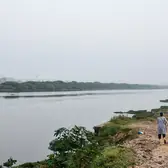
College of Fort St. George founded
Francis Whyte Ellis founded the College of Fort St. George in Madras to train officials in South Indian languages.
1814
John Binny establishes Binny & Co in Madras
Merchant John Binny, in Madras since 1797, established the firm of Binny & Co, one of the city's oldest mercantile houses.
Church Missionary Society begins work in Madras
After the Charter Act of 1813 allowed missionaries into India, the Church Missionary Society placed its first missionaries at Madras in 1814.
1815
St. George's Church built in Madras
St. George's Church on the Choultry Plain was opened in 1815 and later became the cathedral of the Diocese of Madras.
1817
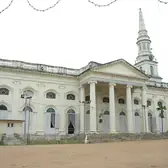
Madras Literary Society founded
In 1817 a learned society and library, the Madras Literary Society, was established in Madras.
1818
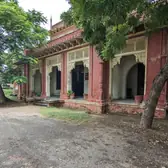
Ellis orders new wells during the Madras water shortage
During a severe drinking water shortage in Madras, Collector Francis Whyte Ellis had 27 wells dug, one bearing a Tamil inscription honouring Thiruvalluvar.
1819
Madras Eye Infirmary established
The Madras Eye Infirmary, now the Egmore Eye Hospital, was founded and is regarded as the oldest eye hospital in Asia.
1821
St. Andrew's Church (the Kirk) consecrated
Built in Egmore for the Scots of Madras, St. Andrew's Church was consecrated in 1821.
1830
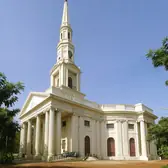
Thomas Glanville Taylor takes charge of the Madras Observatory
T. G. Taylor came to Madras as head of the observatory, where he compiled the Madras Catalogue of Stars.
1831
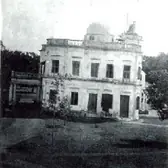
The first census of the city of Madras was taken in 1831.
1832
Founded for Europeans only, the Madras Club is among the oldest gentlemen's clubs in India.
1835
Madras Medical College founded
A medical school was opened in Madras that grew into Madras Medical College, one of the oldest in Asia.
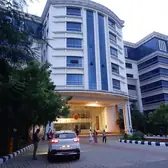
Anglican Diocese of Madras created
Daniel Corrie was consecrated the first Bishop of Madras, and St. George's Church became the cathedral of the new diocese.

1836
Red Hill Railway carries granite to Madras
Built by Arthur Cotton as an early experiment, the Red Hill Railway hauled granite from Red Hills into Madras for road works.
Madras Chamber of Commerce founded
The Madras Chamber of Commerce was set up at the Binny & Co. office by merchants from the Parry, Binny and Arbuthnot firms.
1837
General Assembly's School, origin of Madras Christian College
Scottish missionary John Anderson opened the General Assembly's School in Madras, which grew into Madras Christian College.
1839
Equestrian statue of Thomas Munro unveiled
Francis Chantrey's bronze equestrian statue of Governor Thomas Munro was ceremonially opened on the Island in Madras.

1840
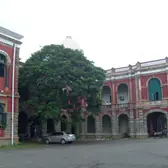
Madras Preparatory School, forerunner of Presidency College
A government preparatory school opened in Madras in 1840; it grew into the High School and eventually Presidency College.
1842
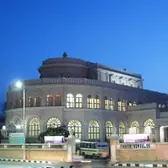
Ice House built on the Madras beach
Frederic Tudor built the Ice House facing the sea at Madras to store ice shipped from America; it is now Vivekanandar Illam.
Madras General Hospital opens to Indians
Once reserved for Europeans, the Madras General Hospital moved to a new H-shaped building and admitted Indians.
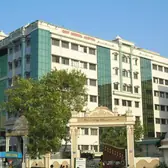
Pachaiyappa's Central Institution opens
Funded by the bequest of merchant Pachaiyappa Mudaliar, Pachaiyappa's Central Institution opened in Madras.
1843
The Bank of Madras, one of the three Presidency banks, came into being through the merger of several banks in Madras.

1844
Higginbotham's bookshop founded in Madras
Abel Joshua Higginbotham founded Higginbotham's on Mount Road, regarded as India's oldest bookshop still in existence.
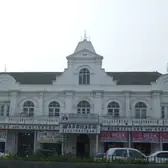
Madras's first standalone lighthouse begins operation
A granite Doric column built north of Fort St. George began working as Madras's lighthouse on 1 January 1844.
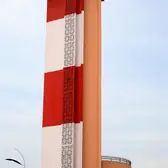
The Crescent, first Indian-owned newspaper in Madras
The Crescent, launched by Gazulu Lakshminarasu Chetty, was the Madras Presidency's first newspaper under Indian ownership.
1845
The Madras Railway was established to build the first main line railways of South India.
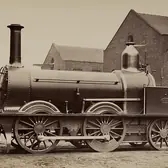
1850
Surgeon Alexander Hunter founded a private art school in Madras, today's Government College of Fine Arts.
1851
Government Museum, Madras founded
Built on collections donated by the Madras Literary Society, the Madras Government Museum, India's second oldest, was founded.
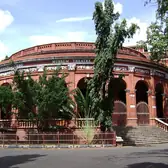
1852
Madras Native Association founded
One of India's earliest Indian political bodies, the Madras Native Association, was set up by Gazulu Lakshminarasu Chetty.
1853
Railway construction begins at Royapuram
Work on South India's first main railway line, from Madras towards Arcot, began at Royapuram in 1853.
1854
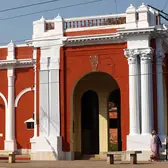
Imperial Hotel opens in Madras
The Imperial Hotel, later the Connemara, opened in 1854 and is the oldest functioning hotel in Chennai.
1855
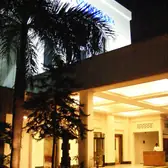
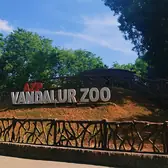
Madras Zoo begins at the Government Museum
Edward Balfour started a zoological park in the Government Museum premises, the origin of today's Vandalur zoo.
Carnatic Nawabship abolished under the Doctrine of Lapse
On the death of the last Nawab, Ghulam Muhammad Ghouse Khan, the Company abolished the Carnatic Nawabship.
1856
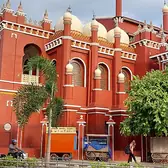
First train in South India, Royapuram to Wallajah Road
The Madras Railway opened South India's first railway line, from Royapuram in Madras to Wallajah Road near Arcot.
1857
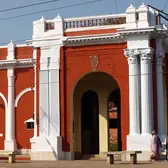
An act of the Legislative Council incorporated the University of Madras, among the first three modern universities in India.
1862
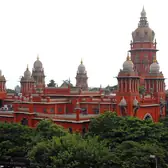
Crown Letters Patent created the High Court of Judicature at Madras in place of the Supreme Court of Madras.
1864
Spencer's begins trading in Madras
Spencer's started as a small business in Madras in 1864 and grew into what was then the largest department store in Asia.
1868
Agricultural school opens at Saidapet
An agricultural school was started at Saidapet, Madras, the institution that later became the agricultural college at Coimbatore.
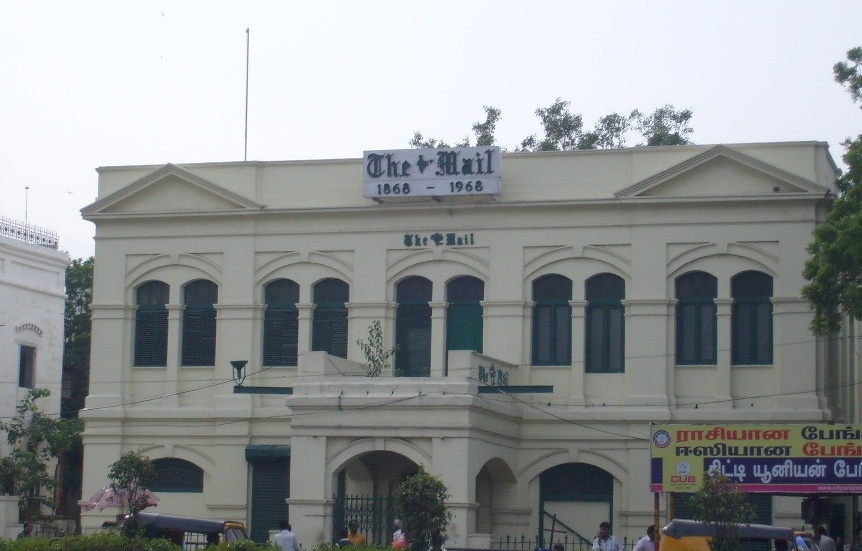
The Madras Mail newspaper founded
Charles Lawson and Henry Cornish started The Madras Mail, an English-language evening daily that was published until 1981.
1869
Napier Bridge built over the Cooum
Planned by Governor Lord Napier, a cast iron lattice bridge went up over the Cooum's mouth, joining Fort St. George to the Marina side.
1870
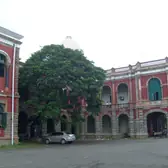
Presidency College moves to its Marina building
Presidency College, Madras moved into its new building opposite Marina Beach, on today's Kamaraj Salai.
1873
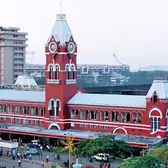
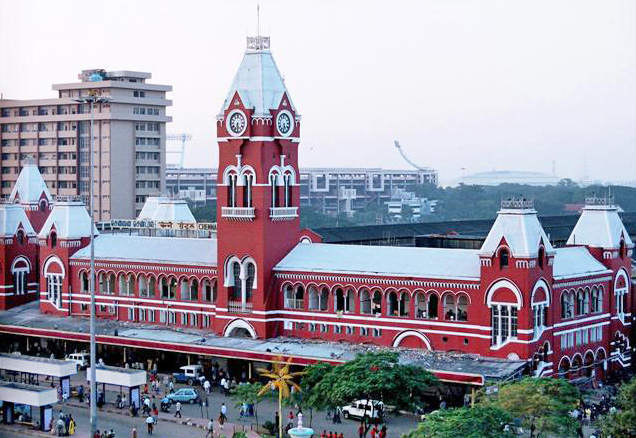
Madras Central railway station built
Designed by George Harding and later altered by Robert Chisholm, Madras Central station was put up by the Madras Railway as its terminus in the city.
1874
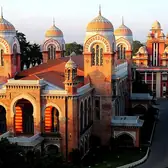
Senate House of the University of Madras completed
Built from 1874 to 1879 to a design by Robert Chisholm, the Senate House on the Marina was an early Indo-Saracenic landmark.
1875
Madras Observatory begins daily weather reports
The Madras Observatory started issuing daily weather reports, an early step in organised weather forecasting in south India.
1876
Red Hills (Puzhal) reservoir built for Madras
The Puzhal reservoir at Red Hills was built to supply water to Madras, and remains one of the city's main reservoirs.
1877
Buckingham Canal extended as famine relief
A section of the coastal canal linking the Adyar and Cooum rivers was dug as famine relief work, and the canal was renamed the Buckingham Canal.
1878
Binny's Buckingham Mill begins production in Madras
Registered in 1876, Binny and Co.'s Buckingham Mill went into operation in 1878, and the Carnatic Mills came three years later in 1881.
Founded in Madras as a weekly, The Hindu was started by the Triplicane Six, among them G. Subramania Iyer and M. Veeraraghavachariar.
1881
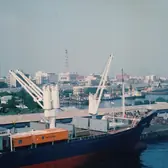
Madras Harbour begins operations
An artificial harbour at Madras began handling ships in 1881, though a cyclone the same year wrecked much of the breakwater.
1882
Swadesamitran Tamil newspaper launched
G. Subramania Iyer started Swadesamitran, the first Tamil newspaper owned and run by Indians, in Madras.
Theosophical Society moves headquarters to Adyar
Helena Blavatsky and Henry Steel Olcott moved the headquarters of the Theosophical Society to Adyar in Madras.
1883
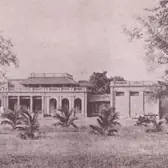
Victoria Public Hall built in Madras
The foundation stone of Victoria Public Hall, the town hall of Madras, was laid in 1883; it was named after Queen Victoria in 1888.
1884
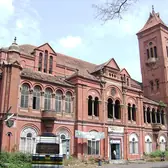
The Madras Mahajana Sabha, an early political association of educated Indians in the Madras Presidency, was formed in 1884.
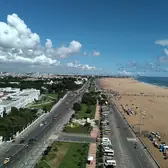
Governor Grant Duff creates the Marina promenade
Governor Mountstuart Elphinstone Grant Duff laid out a promenade along the Madras beach in 1884 and named it the Marina.
1887
Indian National Congress holds first Madras session
The third session of the Indian National Congress met in Madras under the presidency of Badruddin Tyabji.

1888
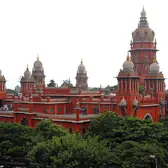
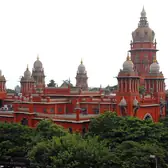
Construction of the Madras High Court building begins
Construction started in George Town, Madras, on the Indo-Saracenic High Court complex, designed by J. W. Brassington and opened in 1892.
1889
The Hindu becomes a daily newspaper
The Hindu, founded as a weekly in 1878 by the 'Triplicane Six', began publishing daily in 1889.
Victoria Technical Institute opens in Madras
Marking Queen Victoria's golden jubilee, the Victoria Technical Institute opened on Pantheon Road in Egmore.
1891
Suguna Vilasa Sabha theatre company founded
Pammal Sambandha Mudaliar founded the Suguna Vilasa Sabha in Madras to revive and reform Tamil drama.
1892
Madras High Court building inaugurated
After three decades in temporary quarters, the Madras High Court moved into its Indo-Saracenic complex, inaugurated on 12 July 1892.
1894
Congress session in Madras presided by Alfred Webb
In December 1894 Madras hosted the tenth Indian National Congress session, presided over by Alfred Webb, an Irish nationalist MP.

1895
Electric trams begin in Madras
The Madras Electric Tramways began service, the first electric tram system in India.
Brahmavadin journal launched in Madras
Brahmavadin, a journal of Vedanta, was launched by Alasinga Perumal and fellow Madras followers of Swami Vivekananda.
1896
Connemara Public Library opens
The Connemara Public Library, founded in 1890 by Governor Lord Connemara, opened to the public in Madras in 1896.
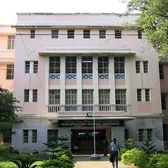
San Thome Cathedral rebuilt and consecrated
The church over the traditional tomb of St Thomas at Santhome, Madras, was rebuilt in neo-Gothic style and consecrated on 1 April 1896.
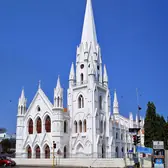
Prabuddha Bharata journal founded in Madras
Started in Madras in July 1896 on Swami Vivekananda's encouragement, Prabuddha Bharata was an English-language journal of the Ramakrishna movement.
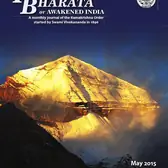
1897
Swami Vivekananda visits Madras
Returning from the West, Swami Vivekananda stayed at the Ice House on the Madras beach from 6 to 14 February 1897.
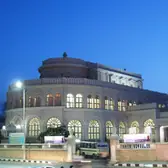
1898
Congress session in Madras presided by Ananda Mohan Bose
The fourteenth session of the Indian National Congress met in Madras in December 1898 under Ananda Mohan Bose.

1899
King Institute of Preventive Medicine established
Set up at Guindy in Madras, the King Institute of Preventive Medicine was created to fight infectious diseases.
1900
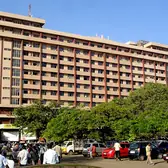
Moore Market completed in Madras
Completed in 1900 beside Madras Central, Moore Market was an Indo-Saracenic building meant to accommodate the hawkers of Broadway.
1903
Madras Veterinary College established
Housed at first in a modest building called Doblin Hall, the Madras Veterinary College opened its doors on 1 October 1903.
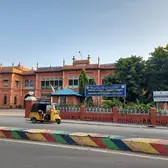
Congress session in Madras presided by Lalmohan Ghosh
The nineteenth Congress session met in Madras in December 1903; president Lalmohan Ghosh called for compulsory primary education.
1905
Kasturi Ranga Iyengar acquires The Hindu
S. Kasturi Ranga Iyengar bought The Hindu in 1905; it has remained with his family since.

1906
The failure of the Madras banking firm Arbuthnot & Co caused the worst financial crisis in the city's history and fuelled support for Indian-owned banks.
1907
Inspired by the Swadeshi movement, the Indian-owned Indian Bank opened in Madras following the failure of Arbuthnot & Co.
1908
Madras Egmore station building opens
The Indo-Saracenic terminal of Egmore station, Madras terminus of the South Indian Railway, was opened on 11 June 1908.
Congress session in Madras after the Surat split
A year after the Congress split at Surat, the moderate-led Congress met in Madras in December 1908 under Rash Behari Ghosh.

1912
R. Venkaiah opens the Gaiety cinema in Madras
Film pioneer Raghupathi Venkaiah Naidu built the Gaiety in 1912, one of the first permanent cinema theatres in Madras.
1913
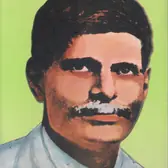
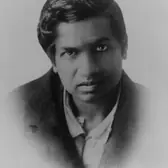
Ramanujan writes to G. H. Hardy
Srinivasa Ramanujan, a clerk at the Madras Port Trust, began corresponding with G. H. Hardy, who arranged for him to travel to Cambridge in 1914.
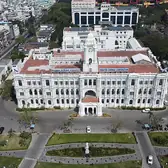
Ripon Building becomes home of the Madras Corporation
The Madras Municipal Corporation moved into the newly completed Ripon Building in 1913; Lord Minto had laid its foundation stone in 1909.
1914
Madras College for Women (Queen Mary's College) founded
In 1914 Dorothy de la Hey opened the Madras College for Women on the Marina, the first women's college in the city, which took the name Queen Mary's in 1917.
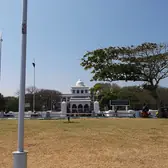
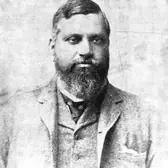
Congress session in Madras presided by Bhupendra Nath Bose
The Indian National Congress held its 1914 annual session in Madras under Bhupendra Nath Bose, months after the First World War began.
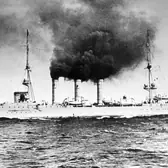
German cruiser Emden shells Madras
Early in the First World War, the German light cruiser SMS Emden shelled Madras, setting fire to oil tanks in the harbour area.
1915
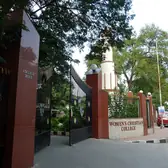
Women's Christian College founded in Madras
Twelve missionary societies from Britain, Canada and the USA jointly founded the Women's Christian College in Madras in 1915.
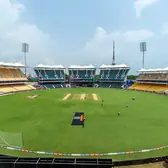
First Madras Presidency cricket match
The Madras Presidency Match, a yearly cricket contest between Europeans and Indians also called the Pongal match, started on the final day of 1915.
1916
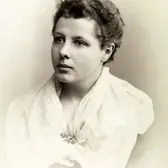
Annie Besant launches the Home Rule League at Adyar
Annie Besant founded the All India Home Rule League at Adyar, Madras, to campaign for self-government within the British Empire.
1917
Keechaka Vadham, the first South Indian film
R. Nataraja Mudaliar's silent film Keechaka Vadham, the first film made in South India, was released in 1917 or 1918.
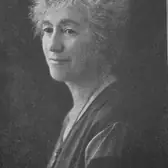
Women's Indian Association founded at Adyar
Margaret Cousins, Annie Besant, Dorothy Jinarajadasa and others founded the Women's Indian Association at Adyar to campaign for women's rights.
1918
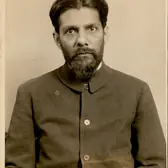
B. P. Wadia and Thiru. V. Kalyanasundaram founded the Madras Labour Union, among the first organised trade unions in India.
Influenza pandemic reaches Madras
The 1918 influenza pandemic reached Madras by the end of June 1918 and caused heavy mortality across the presidency.
1919
Gandhi conceives the Rowlatt hartal in Madras
While staying with C. Rajagopalachari in Madras, Gandhi conceived a nationwide hartal against the Rowlatt Act, observed on 6 April 1919.
1920
Madras Corporation starts a school meal scheme
At a corporation school in Thousand Lights, the Madras Corporation started a breakfast scheme that foreshadowed Tamil Nadu's noon meal programmes.
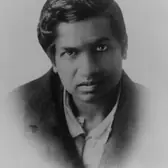
The self-taught mathematician Srinivasa Ramanujan died in Madras at the age of 32, a year after returning from Cambridge.
1921
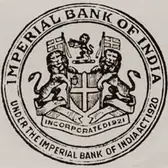
Bank of Madras merged into the Imperial Bank of India
The Bank of Madras, one of three Presidency banks, was amalgamated with the banks of Bengal and Bombay to form the Imperial Bank of India.
Buckingham and Carnatic Mills strike
Workers of the Buckingham and Carnatic Mills in Madras went on a prolonged strike against Binny and Co. over wages and conditions.
1923
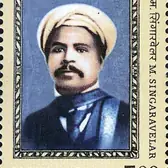
First May Day celebration in India
Singaravelar organised the first May Day celebration in India at Madras and launched the Labour Kisan Party of Hindustan.
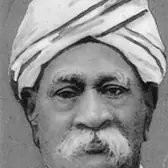
1925
P. Theagaraya Chetty, a founder and leader of the Justice Party and of the non-Brahmin movement, died in Madras.
Loyola College founded in Madras
Loyola College in Madras, affiliated to the University of Madras, was established by the French Jesuit Francis Bertram.
1927
Nationalists in Madras campaigned for the removal of the statue of Colonel James Neill from Mount Road.

Madras session of the Indian National Congress
The annual Congress session held in Madras under M. A. Ansari called for complete independence and a boycott of the Simon Commission.

1928
The Music Academy was founded in Madras following the 1927 Congress session and became a leading institution for Carnatic music.

1930
Madras aerodrome and Madras Flying Club begin operations
The Madras Flying Club came into existence and the Madras aerodrome, ancestor of Chennai airport, was commissioned.

1931
Muthulakshmi Reddy starts Avvai Home
Muthulakshmi Reddy founded the Avvai Home in Madras to shelter and educate orphaned and destitute girls.

First electric suburban trains in Madras
The first electric suburban rail service in Madras began between Madras Beach and Tambaram.

1932
The Indian Express founded in Madras
P. Varadarajulu Naidu started the English daily The Indian Express in Madras; it was later taken over by Ramnath Goenka.
Tata air mail service reaches Madras
Tata Air Lines' inaugural air mail run from Karachi through Bombay went on to Madras, the first scheduled flight to touch down there.

Madras and Southern Mahratta Railway strike
Railway workshop workers at Perambur began a strike against retrenchment that spread across the Madras and Southern Mahratta Railway.
1933
Office of Mayor of Madras created
The post of Mayor of Madras was revived and M. A. Muthiah Chettiar became the first holder of the modern office.

Death of Annie Besant at Adyar
Annie Besant, Theosophical Society president and Home Rule leader, died at Adyar in Madras.

1934
First Test match in Madras at Chepauk
Chepauk in Madras hosted its first Test match, between India and England.

First Ranji Trophy match played at Chepauk
The opening match of the first Ranji Trophy, India's national first-class cricket championship, was played at Chepauk in Madras.
1936
Kalakshetra founded by Rukmini Devi Arundale
Rukmini Devi Arundale founded Kalakshetra at Adyar, Madras, an academy for Bharatanatyam and the arts.
1937
Madras Christian College moves to Tambaram
After a century in the city centre, Madras Christian College moved to a large new campus at Tambaram.

M. Ct. M. Chidambaram Chettiar founded Indian Overseas Bank to serve overseas trade, opening at Karaikudi, Madras and Rangoon.

1938
Tambaram World Missionary Conference
Madras Christian College at Tambaram hosted the International Missionary Council's world conference, a landmark in the ecumenical movement.
1939
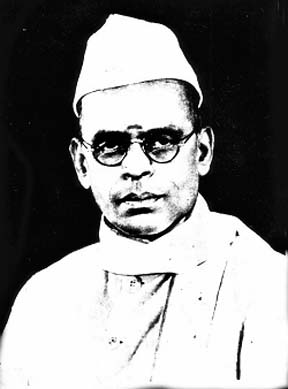
S. Satyamurti becomes Mayor of Madras
Congress leader S. Satyamurti served as Mayor of Madras and pressed for the Poondi reservoir to improve the city's water supply.
1940
S. S. Vasan founds Gemini Studios
S. S. Vasan acquired a studio in Madras and established Gemini Studios, which became one of India's major film studios.

1943
Six days of continuous northeast monsoon rain caused the Cooum and Adyar rivers to overflow, flooding slums across Madras.
1944
Alagappa College of Technology founded
Funded by Alagappa Chettiar, the University of Madras set up the Alagappa College of Technology for courses such as chemical engineering.
Haridas, a Tamil film with M. K. Thyagaraja Bhagavathar in the lead, played at one Madras theatre across three Diwalis in a row, a record that stood for years.
Film stars M. K. Thyagaraja Bhagavathar and N. S. Krishnan were convicted in the murder of journalist C. N. Lakshmikanthan, later freed on appeal.

1946
Gandhi presides over Hindi Prachar Sabha silver jubilee
Gandhi came to Madras to preside at the Dakshina Bharat Hindi Prachar Sabha's silver jubilee.
1947
India becomes independent; Madras Province
India gained independence and the Madras Presidency became Madras Province of the Dominion of India; Periyar called it a day of mourning.

1948
Central Leather Research Institute founded in Madras
The Central Leather Research Institute was founded in Madras as a laboratory of the Council of Scientific and Industrial Research.

Ashok Motors (later Ashok Leyland) founded in Madras
Raghunandan Saran founded Ashok Motors in Madras to assemble cars; it became Ashok Leyland in 1955.

1951
Standard Motor Products begins car production in Madras
Standard Motor Products of India completed its first locally built Standard Vanguard cars at Vandalur near Madras.
1952
India's first Test cricket victory at Chepauk
At Chepauk in Madras, India defeated England by an innings and 8 runs, winning a Test for the first time in its 25th match.
Potti Sriramulu dies fasting for Andhra State
Potti Sriramulu died in Madras after a long fast demanding a separate Telugu-speaking state, prompting the creation of Andhra State.

1953
Andhra State carved out of Madras State
The Telugu-speaking northern districts were separated from Madras State to form Andhra State, with Madras city remaining in Madras State.

1954
First passenger terminal built at Meenambakkam airport
Meenambakkam got the first passenger terminal of Madras airport, which then served as a customs airport handling a few international flights.
Cancer Institute (WIA) established at Adyar
The Women's Indian Association, led by Muthulakshmi Reddy, set up the Cancer Institute at Adyar in Madras.

1955
Enfield India set up to build the Bullet in Madras
Enfield India was formed with Madras Motors to assemble the Royal Enfield Bullet motorcycle in Madras.

Integral Coach Factory founded at Perambur
The Integral Coach Factory, a railway coach manufacturing unit of Indian Railways, was established at Perambur in Madras.

1959
Indian Institute of Technology Madras founded
Classes started at IIT Madras in Guindy, the third IIT, which was set up with West German help.

1960
Madras Rubber Factory incorporated to make tyres
Madras Rubber Factory, begun as a balloon maker at Tiruvottiyur, was incorporated to manufacture tyres.

1961
Madras State Housing Board formed
The City Improvement Trust of 1947 was expanded into a statewide housing board, later the Tamil Nadu Housing Board.
Manuel Aaron becomes India's first International Master
Madras chess player Manuel Aaron became the first Indian to earn the FIDE title of International Master.

1965
Madras Refineries formed as a joint venture
Madras Refineries Limited was formed by the Government of India, Amoco and the National Iranian Oil Company to build a refinery at Manali.
1968
Statues of Tamil literary figures erected on the Marina
Statues of Tamil poets and scholars, including Kambar, Bharathiyar and Robert Caldwell, were unveiled on Marina Beach for the World Tamil Conference.

1970
Ennore Thermal Power Station commissioned
The coal-fired Ennore Thermal Power Station north of Madras began generating electricity, with units added through 1975.

Tamil Nadu Slum Clearance Board created
The Karunanidhi government created the Slum Clearance Board to replace slums with tenements, later backed by a 1971 Act.
1971
Madras Institute of Development Studies founded
Economist Malcolm Adiseshiah and Elizabeth Adiseshiah founded the Madras Institute of Development Studies.
1972
Madras Metropolitan Development Authority constituted
A metropolitan development authority was set up to plan Madras city and its suburbs, becoming a statutory body in 1974.
Madras Snake Park moves to Guindy
On land leased from the Forest Department in Guindy, herpetologist Romulus Whitaker established an enlarged snake park, run by a trust he set up.
Pallavan Transport Corporation formed for Madras buses
The Pallavan Transport Corporation took over city bus services in the Madras metropolitan area with 1,029 buses.

1973
Anna (Gemini) Flyover opened in Madras
The Anna Flyover on Mount Road, the first flyover in Madras and then the longest in India, was opened to traffic.

1975
Television arrives in Madras with Doordarshan Kendra
Doordarshan began television broadcasts from Madras, the first TV station in South India.
1976
The Madras Crocodile Bank was founded on the East Coast Road by Romulus Whitaker, Zai Whitaker and others to protect India's crocodile species.
1977
Krishna water supply (Telugu Ganga) project agreed for Madras
Tamil Nadu and the Krishna basin states agreed on a scheme to carry Krishna river water to Madras city, later built as the Telugu Ganga project.

Organised by the Booksellers and Publishers Association of South India, the first Madras Book Fair later developed into the yearly Chennai Book Fair.

1978
Guindy declared a national park
What was left of the forest on the old Guindy estate in Chennai was made a national park, among the smallest in India and one of only a few within a city.

Anna University was established in Madras as a technical university, named after former Chief Minister C. N. Annadurai.

Sankara Nethralaya eye hospital founded in Madras
Led by S. S. Badrinath, a group in Madras founded Sankara Nethralaya, a charitable eye hospital run on a not-for-profit basis.

1983
Apollo Hospitals founded in Madras
Prathap C. Reddy founded Apollo Hospitals in Madras, India's first corporate healthcare provider.
Sunil Gavaskar scores record 236 not out at Madras
In the sixth Test against the West Indies at Madras, Sunil Gavaskar scored 236 not out, his 30th Test century and then the highest Test score by an Indian.

1984
Madras Export Processing Zone set up at Tambaram
The Union government set up the Madras Export Processing Zone on GST Road at Tambaram to attract foreign investment and boost exports.
Meenambakkam airport bomb blast
A bomb exploded at Meenambakkam airport in Madras, killing several people.
1985
Madras zoo moves to Vandalur as Arignar Anna Zoological Park
The Madras Zoo, founded in 1855, moved to a large new site at Vandalur as the Arignar Anna Zoological Park.

1986
India and Australia play the tied Test at Madras
The India-Australia Test at Chepauk ended in a tie, only the second tied Test in cricket history.
1987
MRF Pace Foundation set up in Madras
MRF Limited set up a fast-bowling academy in Madras with the help of Australian bowler Dennis Lillee.
1988
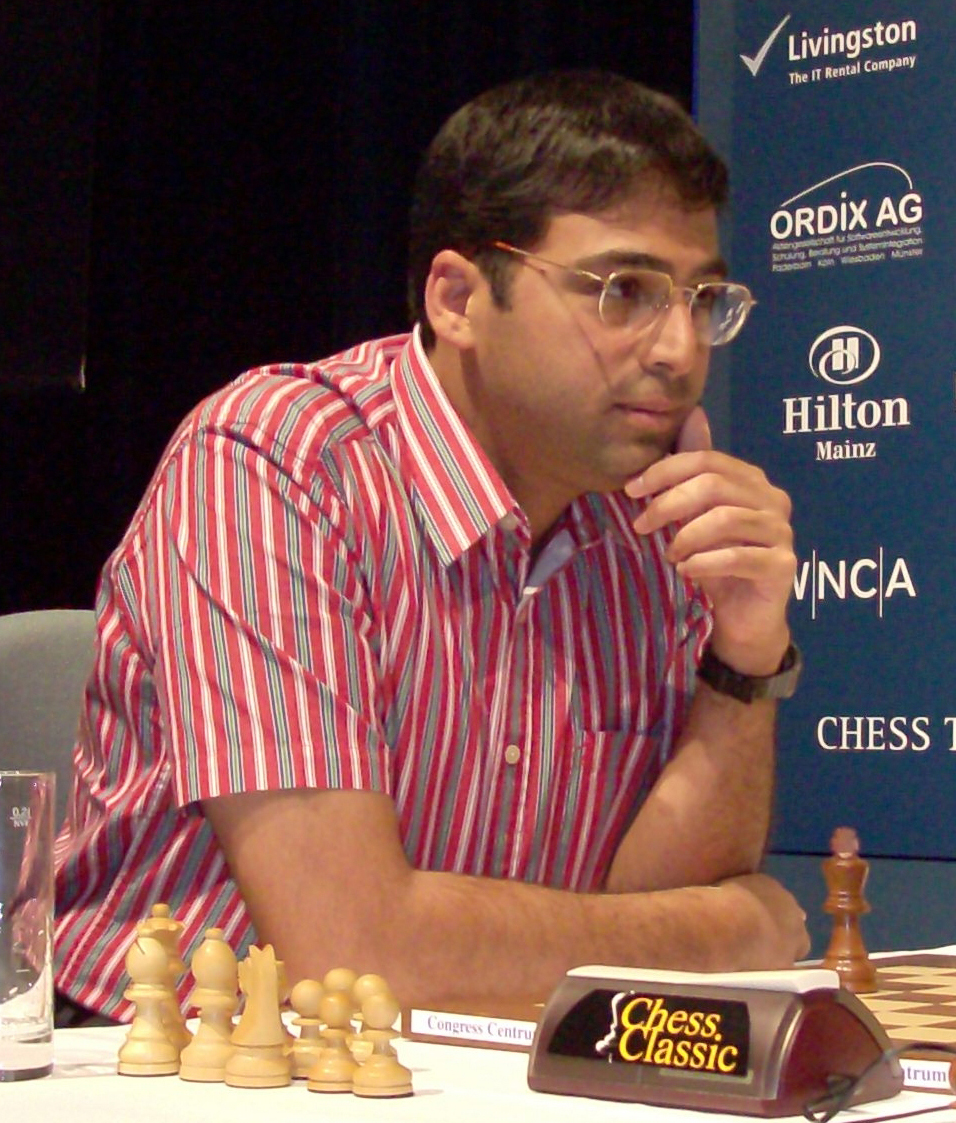
Viswanathan Anand becomes India's first grandmaster
Chess player Viswanathan Anand of Madras became India's first grandmaster.

1989
SPIC Science Foundation founds the school that became Chennai Mathematical Institute
The SPIC Science Foundation founded a School of Mathematics in Madras, which grew into the Chennai Mathematical Institute.

1990
MGR memorial on the Marina inaugurated
The memorial to M. G. Ramachandran on Marina Beach, begun in 1988, was inaugurated by his widow V. N. Janaki Ramachandran.

EPRLF leader K. Pathmanabha killed in Madras
EPRLF leader K. Pathmanabha and others were shot dead by gunmen in a Kodambakkam flat in Madras, in killings attributed to the LTTE.
1993
Bombing of RSS office in Chennai
A bomb destroyed the Rashtriya Swayamsevak Sangh office in Chetpet, Chennai, killing several people.
1994
Cyclone crosses the coast near Madras
A cyclonic storm made landfall near Madras on 31 October 1994, causing about 115 million US dollars in damage and some 304 deaths.
1995
Chennai MRTS opens, India's first elevated railway
India's first elevated urban railway came into service when the opening section of Chennai's Mass Rapid Transit System, linking Beach and Chepauk, began running.

Madras hosts the 7th South Asian Games
The 7th South Asian Federation Games were held in Madras, with the rebuilt Jawaharlal Nehru Stadium as the main venue; India topped the medal table.
1996
Koyambedu wholesale market complex opens
On Chennai's western side, the Koyambedu Wholesale Market Complex, one of the largest perishable goods markets in Asia, was opened.

Madras officially renamed Chennai
The Tamil Nadu government officially changed the capital's name from Madras to Chennai.
1997
ATP tennis tournament moves to Chennai as the Gold Flake Open
India's only ATP Tour event moved from New Delhi to Chennai, where it was held every January until 2017 before shifting to Pune.
1999
Pakistan win a close Test against India at Chepauk
Pakistan beat India by 12 runs at Chepauk in the first Test of their first tour of India in 12 years, despite Sachin Tendulkar's 136.
2000
TIDEL Park inaugurated in Chennai
TIDEL Park, one of the largest IT parks in South Asia at the time, was inaugurated in Chennai by Prime Minister Vajpayee.

Viswanathan Anand wins the FIDE World Chess Championship
Chennai's Viswanathan Anand defeated Alexei Shirov in Tehran to become FIDE World Chess Champion, the first Indian world chess champion.
2002
Tamil Nadu Open University established
Through the Tamil Nadu Open University Act, 2002, the state set up an open university in Chennai offering distance higher education.
Chennai Mofussil Bus Terminus opens at Koyambedu
The Chennai Mofussil Bus Terminus at Koyambedu was opened to the public, becoming the city's main hub for long-distance buses.

2003
Rainwater harvesting made mandatory for all buildings
After severe drought, a 2003 ordinance required every building in Tamil Nadu to install rainwater harvesting structures by 31 August.

2004
New Veeranam water supply project completed
A project to pipe water from Veeranam Lake to Chennai, first conceived in 1967, was completed during a severe water shortage.

Madras Day, held each 22 August, was first celebrated in Chennai, recalling the 1639 acquisition of the land where the city developed.

2005
2005 Chennai floods and relief camp stampedes
Heavy north-east monsoon rain flooded Chennai, and two stampedes at relief distribution camps killed more than 50 people.
2007
First Chennai Sangamam folk arts festival
Chennai Sangamam, an open-air festival of Tamil folk and traditional arts around Pongal, was held for the first time with state government backing.

Pallikaranai marsh notified as a reserve forest
To stop the shrinking of Chennai's last large freshwater marsh, 317 hectares of Pallikaranai were declared a reserve forest.

India win the Hockey Asia Cup in Chennai
Chennai hosted the men's Hockey Asia Cup, and India beat South Korea 7-2 in the final to win the title.
Viswanathan Anand becomes undisputed world chess champion
Chennai-born grandmaster Viswanathan Anand won the World Chess Championship tournament in Mexico City without losing a game.
2008
Kathipara cloverleaf grade separator opens
The Kathipara cloverleaf interchange near Guindy, one of the largest in South Asia at the time, was fully opened to traffic.

2009
Construction of the Chennai Metro begins
Work started on the first phase of the Chennai Metro, approved by the state government in November 2007, with an elevated viaduct at Koyambedu.

2010
New Assembly-Secretariat complex inaugurated
A new legislature and secretariat building on Anna Salai was opened, but the next government moved back to Fort St. George and turned it into a hospital.

Chennai Super Kings win their first IPL title
Founded in 2008, the Chennai Super Kings defeated Mumbai Indians in the final to take their first Indian Premier League title.
Anna Centenary Library opens in Kotturpuram
A large public library named after C. N. Annadurai opened in Chennai on his birth anniversary.

2011
Tholkappia Poonga eco-park opens on the Adyar estuary
A park restoring the ecology of the Adyar creek in Chennai opened and was named in honour of the Tamil grammarian Tholkappiar.

2013
Amma Unavagam subsidised canteens open
The Chennai Corporation opened low-cost canteens selling idli for one rupee, later expanded across the state.

Chennai hosts the Anand-Carlsen World Chess Championship
Playing in his home city, Viswanathan Anand put his world title on the line against Magnus Carlsen and lost it to the Norwegian.
2014
An eleven-storey apartment block under construction collapsed at Moulivakkam in Chennai, killing 61 people, mostly construction workers.
Chennai Outer Ring Road phase I opens
The first phase of the Chennai Outer Ring Road, built to divert traffic around the city, was opened to the public.

2015
The first stretch of Chennai Metro, between Koyambedu and Alandur, opened to passengers.
Extremely heavy north-east monsoon rains flooded Chennai, Kancheepuram, Tiruvallur and Cuddalore, killing hundreds of people.

Chennaiyin FC win the Indian Super League
Chennaiyin FC beat FC Goa 3-2 in the final in Goa to win the Indian Super League in only its second season.
2016
Free bus rides for senior citizens in Chennai
Senior citizens in Chennai were allowed ten free rides a month on ordinary city buses, using tokens issued by the transport corporation.
Cyclone Vardah made landfall near Chennai, uprooting thousands of trees and cutting power and communication across the city.

2017
Tamil Thalaivas join the Pro Kabaddi League
When the Pro Kabaddi League grew to twelve teams for its fifth season, Tamil Nadu gained a franchise of its own.
Ennore oil spill after tanker collision
Two tankers collided off Kamarajar Port in Ennore, and the resulting oil spill spread along the north Chennai coast.
2018
Chennai Super Kings win the IPL on return from suspension
In their first season back after a two-year suspension, Chennai Super Kings beat Sunrisers Hyderabad by eight wickets in the IPL final.
2019
After a failed monsoon, Chennai's main reservoirs dried up, forcing heavy reliance on tankers and water brought by train from Jolarpet.
2020
COVID-19 pandemic reaches Tamil Nadu
Tamil Nadu reported its first COVID-19 case in March 2020; the pandemic brought lockdowns and two severe waves.
Cyclone Nivar makes landfall near Marakkanam
Cyclone Nivar crossed the north Tamil Nadu coast near Marakkanam, flooding parts of Chennai during the COVID-19 pandemic.

2022
Several Tamil Nadu wetlands designated Ramsar sites
Pallikaranai marsh, Karikili and Vedanthangal bird sanctuaries and other Tamil Nadu wetlands were added to the list of Ramsar sites.

44th Chess Olympiad in Mamallapuram
India hosted the Chess Olympiad for the first time, at Mamallapuram near Chennai, with Tamil Nadu organising it at short notice.
2023
India win the Asian Champions Trophy hockey in Chennai
India won a record fourth men's Asian Champions Trophy at home in Chennai, beating Malaysia 4-3 in the final.
Cyclone Michaung floods Chennai
Very heavy rain from Cyclone Michaung flooded large parts of Chennai and neighbouring districts.

Ammonia leaked from a subsea pipeline of a fertiliser plant at Ennore, sending dozens of residents of fishing villages to hospital.
Kalaignar Centenary Bus Terminus opens at Kilambakkam
To ease pressure on Koyambedu, a new long-distance bus terminus was opened at Kilambakkam on the southern fringe of Chennai.

2024
Murder of BSP state president K. Armstrong
Prominent Dalit leader K. Armstrong, who headed the Bahujan Samaj Party in Tamil Nadu, was hacked to death near his house in Chennai.
Night street race on the Chennai Formula Racing Circuit
A street circuit around Island Grounds in Chennai staged a round of the Indian Racing League alongside the F4 Indian Championship.
D. Gukesh becomes world chess champion
Chennai's Gukesh Dommaraju defeated Ding Liren in Singapore to become the youngest undisputed world chess champion.
