East India Company
58 events, 1800 to 1858; 8 marked as turning points.
1800
One year after Kattabomman was executed, a broad coalition of Tamil palayakkarars and their allies revolted against the East India Company.
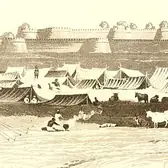
Pudukkottai comes under Company protection
Through a subsidiary alliance, the Tondaiman state of Pudukkottai came under the protection of the East India Company.
1801
Jambudweep proclamation of the Maruthu brothers
The Maruthu brothers issued a proclamation calling on all people of the peninsula, whatever their religion, to fight the British.
After a lengthy siege and heavy shelling, Colonel Agnew's Company troops took the rebuilt fort of Panchalankurichi.
Carnatic Treaty transfers the Carnatic to the Company
Nawab Azim-ud-Daula signed the Carnatic Treaty, handing the civil and military administration of the Carnatic to the East India Company.

Execution of the Maruthu brothers
Periya Marudhu and Chinna Marudhu, rulers of Sivaganga and leaders of the 1800-01 rising, were hanged at Tiruppathur fort.
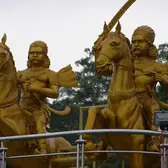
Oomaithurai, brother of Kattabomman, was captured and hanged at Panchalankurichi with Sevathaiah, ending the Second Polygar War.
1802
Permanent Settlement extended to Madras Presidency
The zamindari Permanent Settlement, first applied in Bengal, was introduced in parts of the Madras Presidency.
Astronomer John Goldingham of the Madras Observatory fixed Madras time at 5 hours 21 minutes ahead of Greenwich.
Great Trigonometrical Survey begins at Madras
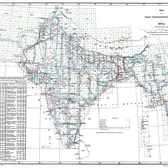
Measuring a baseline close to Madras, William Lambton set the Great Trigonometrical Survey of India in motion.
1803
Sivaganga settled on Gowri Vallaba Thevar
After the Maruthu brothers were executed, Sivaganga was settled in 1803 as a permanent estate on Gowri Vallaba Thevar.
1804
Village Settlement revenue experiment
A Village Settlement system of land revenue was tried in several Tamil districts before ryotwari became the norm.
Company engineers begin remodelling the Grand Anicut
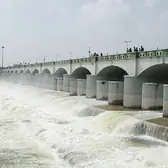
Captain Caldwell was appointed in 1804 to study the Kaveri and raised the ancient Grand Anicut to send more water to the delta.
Coimbatore district formed with Coimbatore as its capital
Coimbatore district was formed by the Company, with Coimbatore town as its headquarters.
1805
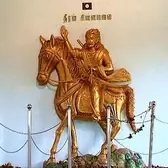
Execution of Dheeran Chinnamalai
Dheeran Chinnamalai, a Kongu chieftain who fought the Company for several years, was hanged at Sankagiri Fort.
1806
First segment of the Buckingham Canal opens
In 1806 a saltwater canal linking Madras with Ennore was finished; it would later form part of the Buckingham Canal.
Indian sepoys of the Madras Army rose against the East India Company at Vellore Fort over new dress regulations.
1812
College of Fort St. George founded
Francis Whyte Ellis founded the College of Fort St. George in Madras to train officials in South Indian languages.
1813
Renewing the Company's charter, Parliament abolished its India trade monopoly, admitted missionaries and funded education.
1814
John Binny establishes Binny & Co in Madras
Merchant John Binny, in Madras since 1797, established the firm of Binny & Co, one of the city's oldest mercantile houses.
Hugh Elliot becomes Governor of Madras
Diplomat Hugh Elliot, earlier Governor of the Leeward Islands, governed the Madras Presidency from 1814 to 1820.
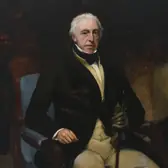
Church Missionary Society begins work in Madras
After the Charter Act of 1813 allowed missionaries into India, the Church Missionary Society placed its first missionaries at Madras in 1814.
1816
Abbe Dubois's account of south Indian customs published
Abbe J. A. Dubois's account of south Indian customs and institutions appeared in London in an English translation.
1817
Madras Regulation VII of 1817 on temple endowments
The Madras government passed Regulation VII of 1817, the first explicit Company legislation on the management of temple endowments.
1819
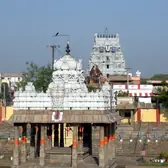
Madras Eye Infirmary established
The Madras Eye Infirmary, now the Egmore Eye Hospital, was founded and is regarded as the oldest eye hospital in Asia.
John Sullivan explores the Nilgiris
Coimbatore Collector John Sullivan set out to explore the Nilgiri hills, leading to the founding of Ootacamund.

Tamil scholar F. W. Ellis dies at Ramnad
Francis Whyte Ellis, Collector of Madras and founder of the College of Fort St. George, died of cholera on 10 March 1819 at Ramnad.
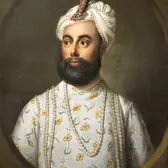
Death of Nawab Azim-ud-Daula; Azam Jah succeeds
Azim-ud-Daula, the Nawab of the Carnatic who had signed away his civil administration to the Company in 1801, died and was succeeded by Azam Jah.
1820
Thomas Munro becomes Governor of Madras
Thomas Munro served as Governor of Madras, establishing revenue and administrative systems that lasted into the twentieth century.
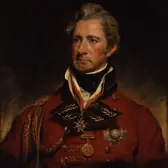
Ryotwari system adopted in Madras Presidency
Under Thomas Munro the ryotwari land revenue system, dealing directly with cultivators, became the main settlement in Madras.
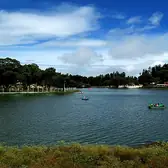
Coffee planting begins at Yercaud
Salem Collector M. D. Cockburn helped start coffee estates at Yercaud in the Shevaroy Hills during the 1820s.
1825
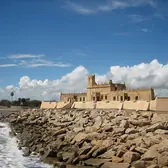
Dutch possessions on the Coromandel Coast pass to Britain
Under the Anglo-Dutch Treaty of 1824, the Dutch ceded their Coromandel settlements, including Pulicat, to the British on 1 June 1825.

1826
Board of Public Instruction set up in Madras
The Madras government founded a Board of Public Instruction in 1826 to oversee education in the Presidency.
1827
Ootacamund becomes a sanatorium of the Madras Presidency
By 1827 Ootacamund in the Nilgiris had been established as a sanatorium of the Madras Presidency.

Governor Thomas Munro dies of cholera
Sir Thomas Munro, Governor of Madras and architect of the ryotwari system, died of cholera at Pattikonda while on tour.
1830
Porto Novo iron works established
With a loan from the government, Josiah Marshall Heath set up iron and steel works at Porto Novo (Parangipettai) in South Arcot.
Thomas Glanville Taylor takes charge of the Madras Observatory
T. G. Taylor came to Madras as head of the observatory, where he compiled the Madras Catalogue of Stars.
1831
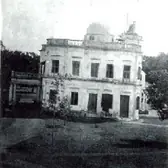
The first census of the city of Madras was taken in 1831.
Madras Pioneers renamed the Madras Sappers and Miners
The Madras Pioneers, raised in 1780, were renamed the Corps of Madras Sappers and Miners in 1831.
1832
Guntur famine strikes the Madras Presidency
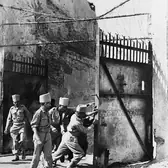
Crop failures led to a famine that took roughly 150,000 lives in Guntur district and spread as far south as Madras.
Shivaji II becomes Raja of Thanjavur
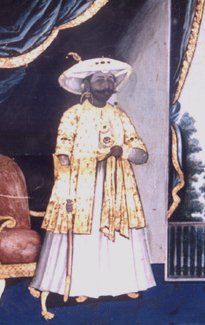
Shivaji, son of Serfoji II, was crowned at the Durbar Hall of Tanjore Fort and became the last Raja of Thanjavur.
1833
Charter Act of 1833 centralises lawmaking
The Government of India Act 1833 removed the Madras government's power to make its own laws and centralised it in Calcutta.
1835
Madras Medical College founded
A medical school was opened in Madras that grew into Madras Medical College, one of the oldest in Asia.
1836
Madras Chamber of Commerce founded
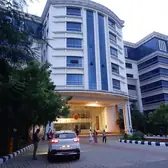
The Madras Chamber of Commerce was set up at the Binny & Co. office by merchants from the Parry, Binny and Arbuthnot firms.
1840
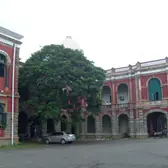
Madras Preparatory School, forerunner of Presidency College
A government preparatory school opened in Madras in 1840; it grew into the High School and eventually Presidency College.
1842
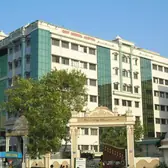
Madras General Hospital opens to Indians
Once reserved for Europeans, the Madras General Hospital moved to a new H-shaped building and admitted Indians.
1843
First emigrant ship from Madras reaches Mauritius
Britain allowed emigration from Madras to Mauritius again in December 1842, and the first ship from Madras reached the island in April 1843.
The Bank of Madras, one of the three Presidency banks, came into being through the merger of several banks in Madras.

1845
Denmark sells Tranquebar to the British
Denmark sold its settlement of Tranquebar (Tharangambadi) to the East India Company, ending Danish rule on the Tamil coast.
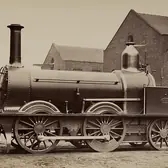
The Madras Railway was established to build the first main line railways of South India.
1848
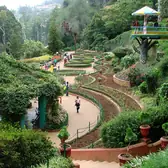
Government Botanical Garden laid out at Ooty
William Graham McIvor of Kew laid out the Government Botanical Garden at Ootacamund.
1852
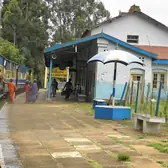
Wellington cantonment established in the Nilgiris
The military station of Jakkatalla in the Nilgiris was renamed Wellington and construction of its barracks began.
1853
Railway construction begins at Royapuram
Work on South India's first main railway line, from Madras towards Arcot, began at Royapuram in 1853.
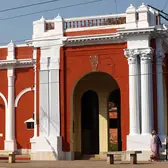
Madras Native Association petition read in the House of Lords
The Earl of Ellenborough read the Madras Native Association's catalogue of grievances in the House of Lords.
1855
Carnatic Nawabship abolished under the Doctrine of Lapse
On the death of the last Nawab, Ghulam Muhammad Ghouse Khan, the Company abolished the Carnatic Nawabship.
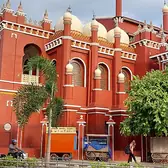
Thanjavur annexed under the Doctrine of Lapse
After Raja Shivaji died without a male heir, the Company annexed the titular Maratha principality of Thanjavur.
1856
First train in South India, Royapuram to Wallajah Road
The Madras Railway opened South India's first railway line, from Royapuram in Madras to Wallajah Road near Arcot.
1858
Crown takes over the government of India
Following the Government of India Act 1858, a proclamation by Queen Victoria declared direct Crown rule over British India, the Madras Presidency included.