AgricultureEast India Company rule

Village Settlement revenue experiment

· Tiruchirappalli

A Village Settlement system of land revenue was tried in several Tamil districts before ryotwari became the norm.

When revenue from existing arrangements fell short of expectations, the Company introduced a system known as the Village Settlement. Between 1804 and 1814 it was applied in the districts of Tinnevelly, Trichinopoly, Coimbatore, North Arcot and South Arcot. Under it, revenue was assessed on villages as a whole and collected through village heads or leaseholders. The experiment was abandoned in favour of the ryotwari system associated with Thomas Munro.


Related events

  1. 1801

    1. 1801TiruchirappalliPolitics

      Jambudweep proclamation of the Maruthu brothers

      The Maruthu brothers issued a proclamation calling on all people of the peninsula, whatever their religion, to fight the British.

    2. 31 Jul 1801ChennaiGovernance

      Carnatic Treaty transfers the Carnatic to the Company

      Nawab Azim-ud-Daula signed the Carnatic Treaty, handing the civil and military administration of the Carnatic to the East India Company.

  2. 1802

    1. 1802ChennaiAgriculture

      Permanent Settlement extended to Madras Presidency

      The zamindari Permanent Settlement, first applied in Bengal, was introduced in parts of the Madras Presidency.

    2. 10 Apr 1802St. Thomas MountScience Technology

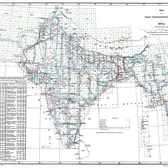
      Great Trigonometrical Survey begins at Madras

      Measuring a baseline close to Madras, William Lambton set the Great Trigonometrical Survey of India in motion.

  3. 1804

    1. 24 Nov 1804CoimbatoreGovernance

      Coimbatore district formed with Coimbatore as its capital

      Coimbatore district was formed by the Company, with Coimbatore town as its headquarters.

  4. 1820

    1. 1820ChennaiAgriculture

      Ryotwari system adopted in Madras Presidency

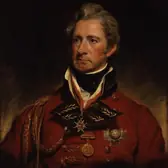
      Under Thomas Munro the ryotwari land revenue system, dealing directly with cultivators, became the main settlement in Madras.

Open in the timeline explorer