Administration
98 events, 1800 to 2026; 13 marked as turning points.
1800
Pudukkottai comes under Company protection
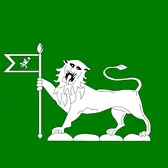
Through a subsidiary alliance, the Tondaiman state of Pudukkottai came under the protection of the East India Company.
1801
Carnatic Treaty transfers the Carnatic to the Company
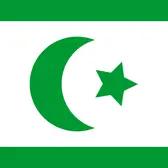
Nawab Azim-ud-Daula signed the Carnatic Treaty, handing the civil and military administration of the Carnatic to the East India Company.
1802
Great Trigonometrical Survey begins at Madras
Measuring a baseline close to Madras, William Lambton set the Great Trigonometrical Survey of India in motion.
1804
Village Settlement revenue experiment
A Village Settlement system of land revenue was tried in several Tamil districts before ryotwari became the norm.
Coimbatore district formed with Coimbatore as its capital
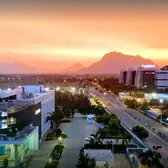
Coimbatore district was formed by the Company, with Coimbatore town as its headquarters.
1814
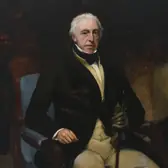
Hugh Elliot becomes Governor of Madras
Diplomat Hugh Elliot, earlier Governor of the Leeward Islands, governed the Madras Presidency from 1814 to 1820.
1817
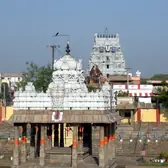
Madras Regulation VII of 1817 on temple endowments
The Madras government passed Regulation VII of 1817, the first explicit Company legislation on the management of temple endowments.
1818
Ellis orders new wells during the Madras water shortage
During a severe drinking water shortage in Madras, Collector Francis Whyte Ellis had 27 wells dug, one bearing a Tamil inscription honouring Thiruvalluvar.
1820
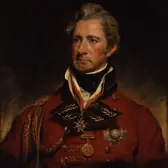
Thomas Munro becomes Governor of Madras
Thomas Munro served as Governor of Madras, establishing revenue and administrative systems that lasted into the twentieth century.
1826
Board of Public Instruction set up in Madras
The Madras government founded a Board of Public Instruction in 1826 to oversee education in the Presidency.
1831
The first census of the city of Madras was taken in 1831.
Madras Pioneers renamed the Madras Sappers and Miners
The Madras Pioneers, raised in 1780, were renamed the Corps of Madras Sappers and Miners in 1831.
1833
Charter Act of 1833 centralises lawmaking
The Government of India Act 1833 removed the Madras government's power to make its own laws and centralised it in Calcutta.
1858
Crown takes over the government of India
Following the Government of India Act 1858, a proclamation by Queen Victoria declared direct Crown rule over British India, the Madras Presidency included.
1860
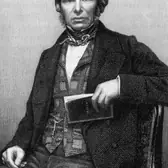
Governor Charles Trevelyan recalled
Madras Governor Sir Charles Trevelyan was recalled after his government publicly opposed James Wilson's new taxation proposals for India.
1861
Indian Councils Act restores Madras legislative powers
Through the Indian Councils Act 1861, the Madras Presidency regained law-making powers and gained an advisory Madras Legislative Council.
1862
Indian Penal Code comes into force
Drafted under Macaulay and enacted in 1860, the Indian Penal Code took effect throughout British India, the Madras Presidency included.

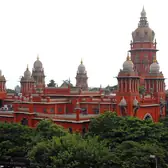
Crown Letters Patent created the High Court of Judicature at Madras in place of the Supreme Court of Madras.
1866
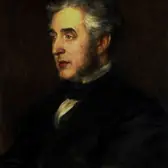
Lord Napier becomes Governor of Madras
Diplomat Francis Napier, 10th Lord Napier, governed the Madras Presidency from 1866 to 1872 and briefly acted as Governor-General.
1868
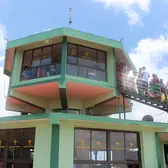
Nilgiris separated from Coimbatore district
In August 1868 the Nilgiri hills were detached from Coimbatore district and given a commissioner of their own.
1875
Governor Lord Hobart dies in office
Lord Hobart, Governor of Madras since May 1872, died unexpectedly of typhoid at Government House, Madras.
1877
T. Muthuswamy Iyer becomes first Indian judge of Madras High Court
T. Muthuswamy Iyer became the first Indian to be appointed a judge of the Madras High Court, a decision that caused controversy at the time.

1910
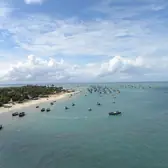
Ramanathapuram district formed
Ramanathapuram (Ramnad) district was created by combining parts of Madurai and Tirunelveli districts.
1913
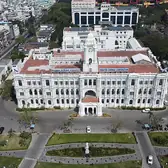
Ripon Building becomes home of the Madras Corporation
The Madras Municipal Corporation moved into the newly completed Ripon Building in 1913; Lord Minto had laid its foundation stone in 1909.
1920
A. Subbarayalu Reddiar becomes first Premier of Madras
A. Subbarayalu Reddiar of the Justice Party took office as the first Chief Minister (Premier) of the Madras Presidency.
1921
Raja of Panagal becomes Premier
Panaganti Ramarayaningar, the Raja of Panagal, succeeded Subbarayalu Reddiar and led two Justice Party ministries until 1926.
1925
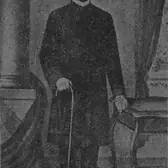
Madras Hindu Religious Endowments Act
A law passed under the Justice Party government placed Hindu temple endowments under the oversight of a statutory board.
1927
V. S. Srinivasa Sastri becomes India's Agent in South Africa
The Union of South Africa received its first Agent from India: V. S. Srinivasa Sastri, a Liberal leader from Madras.

1929
Madras Service Commission set up
Created by a Madras law, the Madras Service Commission was India's first provincial public service commission and the predecessor of TNPSC.

1932
Raja of Bobbili becomes Premier
The Raja of Bobbili, a zamindar, replaced B. Munuswamy Naidu as Premier and led the last Justice Party ministry before 1937.
1933
Office of Mayor of Madras created
The post of Mayor of Madras was revived and M. A. Muthiah Chettiar became the first holder of the modern office.

1936
P. T. Rajan becomes First Minister
For a few months, while the Raja of Bobbili was on leave, Justice Party leader P. T. Rajan was First Minister of the Madras Presidency.

1937
C. Rajagopalachari forms first Congress ministry
C. Rajagopalachari became Premier of Madras at the head of the first Congress government in the Presidency.

1946
A. Ramaswami Mudaliar becomes first ECOSOC president
Arcot Ramaswami Mudaliar, a Justice Party leader from Madras, was the first President of the UN Economic and Social Council.

T. Prakasam becomes Premier of Madras
T. Prakasam was elected Congress legislature leader and formed a ministry, defeating the candidate backed by Rajagopalachari.

1947
O. P. Ramaswamy Reddiyar becomes Premier
O. P. Ramaswamy Reddiyar, backed by Kamaraj, became Premier of Madras and led the province through independence.

Defence Services Staff College re-established at Wellington
After Partition the Indian staff college was re-established at Wellington in the Nilgiris, replacing the Staff College at Quetta.

1948
Pudukkottai princely state merges with the Indian Union
Pudukkottai, the princely state of the Thondaimans, joined India and was made a division of Tiruchirappalli district.

C. Rajagopalachari becomes Governor-General of India
C. Rajagopalachari succeeded Lord Mountbatten as Governor-General, the only Indian to hold the office.
1949
State emblem designed by R. Krishna Rao
Designed in 1949, the Madras government's emblem combined a temple gopuram with the Lion Capital of Ashoka.
P. S. Kumaraswamy Raja becomes Premier of Madras
P. S. Kumaraswamy Raja succeeded O. P. Ramaswamy Reddiyar as Premier and later became the first Chief Minister of Madras State.

1950
Madras State established under the Constitution
With the Constitution of India in force, the Madras Province became Madras State, a Part A state of the Indian Republic.

1953
Andhra State carved out of Madras State
The Telugu-speaking northern districts were separated from Madras State to form Andhra State, with Madras city remaining in Madras State.

1954
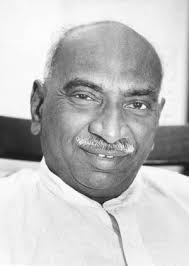
K. Kamaraj becomes Chief Minister
After Rajaji's resignation, K. Kamaraj became Chief Minister of Madras State and served for over nine years.
French India transferred de facto to India after the Kizhoor referendum
After the Kizhoor referendum, Pondicherry, Karaikal, Yanam and Mahe passed de facto from France to the Indian Union.

1956
States Reorganisation redraws Madras State
Malabar and South Canara left Madras State while Kanyakumari district and Shenkottai taluk were added, leaving a Tamil-majority state.

1957
Madras State Electricity Board formed
The Madras State Electricity Board, later the Tamil Nadu Electricity Board, took over power generation and distribution in the state.
1960
Tiruttani transferred from Andhra Pradesh to Madras State
Under the Andhra Pradesh and Madras (Alteration of Boundaries) Act, Tiruttani and nearby areas joined Madras State.

1961
Madras State Housing Board formed
The City Improvement Trust of 1947 was expanded into a statewide housing board, later the Tamil Nadu Housing Board.
1962
De jure transfer of the French settlements to India
Once France ratified the Treaty of Cession, Pondicherry and the other former French settlements legally became part of India.
1963
Kamaraj Plan; M. Bhaktavatsalam becomes Chief Minister
Kamaraj resigned as Chief Minister under his plan for senior leaders to work for the party, and M. Bhaktavatsalam succeeded him.

1965
Dharmapuri district carved out of Salem
Dharmapuri became the first district created in the state after independence, split from Salem district.

1967
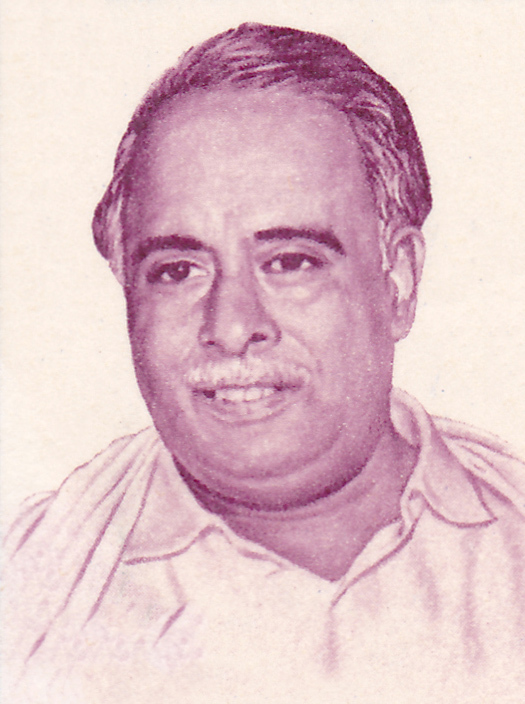
C. N. Annadurai becomes Chief Minister
C. N. Annadurai was sworn in as the first non-Congress Chief Minister of Madras State since independence, heading a DMK government.
1971
Madurai becomes a municipal corporation
Madurai became a municipal corporation, the first one set up in Tamil Nadu since independence.

Prohibition suspended in Tamil Nadu
The Karunanidhi government suspended prohibition and permitted the sale of arrack and toddy, before stopping it again in 1974.
1972
Madras Metropolitan Development Authority constituted
A metropolitan development authority was set up to plan Madras city and its suburbs, becoming a statutory body in 1974.
Tamil Nadu Civil Supplies Corporation founded
The state set up the Civil Supplies Corporation to procure and distribute food grains and essential commodities.
Pallavan Transport Corporation formed for Madras buses
The Pallavan Transport Corporation took over city bus services in the Madras metropolitan area with 1,029 buses.

1973
Women first recruited into the Tamil Nadu Police
The first batch of women police, a sub-inspector, a head constable and 20 constables, was recruited in Tamil Nadu in 1973.

1974
Pudukkottai was made a separate district, combining the former princely state with Aranthangi taluk of Thanjavur district.

1979
Periyar (Erode) district formed
Erode district, first named Periyar district, was carved out of Coimbatore district.

1981
Coimbatore becomes a municipal corporation
Coimbatore, a municipality since 1866, was raised to municipal corporation status, becoming the third such body in Tamil Nadu.

1982
Tamil Nadu Pollution Control Board established
The Tamil Nadu Pollution Control Board was set up as the state body to monitor and control pollution.
1983
TASMAC established to handle liquor trade
Formed by the M. G. Ramachandran government, the Tamil Nadu State Marketing Corporation (TASMAC) handled wholesale liquor trade whenever prohibition was lifted.
1985
Ramanathapuram district split into three
Ramanathapuram district was trifurcated into Ramanathapuram, Sivaganga and Virudhunagar districts.

Dindigul district re-established from Madurai
Dindigul district was carved out of Madurai district in September 1985.

1986
Thoothukudi (Tuticorin) district was carved out of Tirunelveli district on 20 October 1986.

1989
North Arcot district split into Vellore and Tiruvannamalai
North Arcot was divided into the Tiruvannamalai Sambuvarayar and North Arcot Ambedkar districts.

1991
Nagapattinam district carved out of Thanjavur
On 19 October 1991, Nagapattinam district was created by splitting the composite Thanjavur district in two.

1992
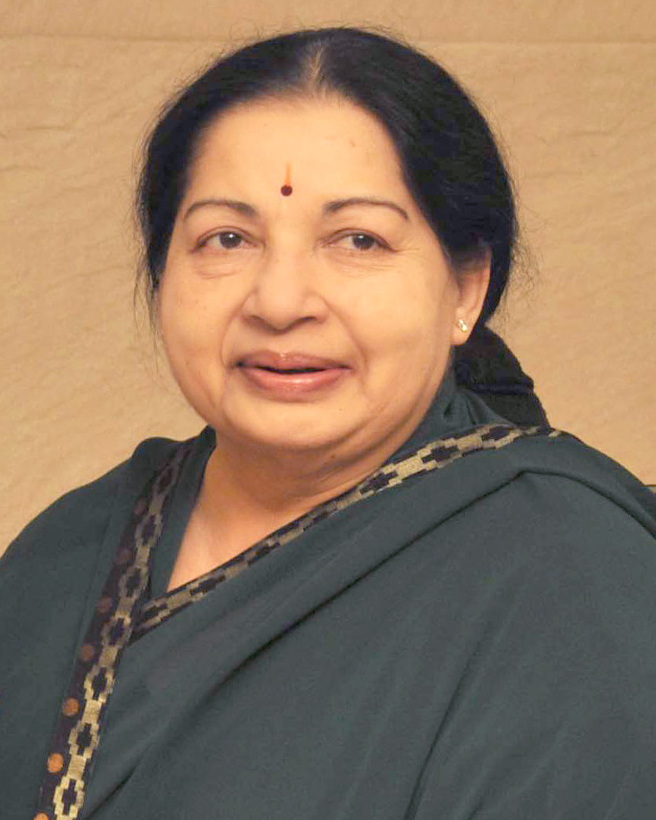
All-women police stations set up
The Jayalalithaa government opened police stations run entirely by women to handle complaints from women, starting in Chennai.
1993
South Arcot divided into Cuddalore and Viluppuram districts
The South Arcot district was bifurcated, creating Viluppuram district on 30 September 1993.

1994
Tiruchirappalli becomes a municipal corporation
Tiruchirappalli was made a municipal corporation by merging the Srirangam and Golden Rock municipalities.

Salem becomes a municipal corporation
Salem municipality was declared the Salem City Municipal Corporation on 1 June 1994.

Tirunelveli becomes a municipal corporation
Merged with the municipalities of Palayamkottai and Melapalayam, Tirunelveli became a corporation.

1995
Perambalur district carved out of Tiruchirappalli
The composite Tiruchirappalli district was split, forming Perambalur district on 1 January 1995.

1996
Theni district carved out of Madurai
A government order of 7 July 1996 split Madurai district to form Theni district.

1997
Chengalpattu district split into Kanchipuram and Tiruvallur
The old Chingleput district was divided into Kanchipuram and Tiruvallur districts in 1997.

Tiruvarur district was formed out of Nagapattinam district, with Valangaiman taluk added from Thanjavur.

Namakkal district begins functioning
Split from Salem district in July 1996, Namakkal district began operating on its own from 1 January 1997.

2001
Ariyalur district carved out of Perambalur
Carved from Perambalur district in 2001, Ariyalur district was formed again on 23 November 2007.

2003
Tamil Nadu bans the sale of lotteries
The Jayalalithaa government banned the sale of all lotteries in Tamil Nadu, including those run by agencies from other states.
2004
Krishnagiri district carved out of Dharmapuri
Krishnagiri became the 30th district of Tamil Nadu, taking in the industrial town of Hosur.

Madurai Bench of the Madras High Court opens
A permanent bench of the Madras High Court began functioning in Madurai to serve the southern districts.

2008
108 free emergency ambulance service begins
The state health department launched the free 108 emergency ambulance service, run in partnership with GVK-EMRI.
Vellore becomes a municipal corporation
Vellore was upgraded from a municipality to a municipal corporation on 1 August 2008.

2009
Tiruppur district was carved out of Coimbatore and Erode districts as the 32nd district of Tamil Nadu.

2014
Jayalalithaa opened the first ten 'Amma' pharmacies to sell quality medicines at fair prices.
2019
Tenkasi district carved out of Tirunelveli
On 22 November 2019, Tenkasi district was carved out of Tirunelveli district.

Kallakurichi, announced on 8 January 2019 as the 33rd district, came into existence on 26 November 2019.

Vellore district trifurcated into Vellore, Ranipet and Tirupattur
Ranipet and Tirupattur districts, carved out of Vellore district, were officially declared on 28 November 2019.

Chengalpattu district carved out of Kanchipuram
Chengalpattu district, taking in Chennai's southern suburbs, came into existence on 29 November 2019.

2020
COVID-19 pandemic reaches Tamil Nadu
Tamil Nadu reported its first COVID-19 case in March 2020; the pandemic brought lockdowns and two severe waves.
Mayiladuthurai district carved out of Nagapattinam
Mayiladuthurai became the 38th district of Tamil Nadu, ending the discontiguous shape of Nagapattinam district.

2021
Ungal Thoguthiyil Muthalamaichar grievance department
The new DMK government set up a department to resolve within 100 days the petitions Stalin had collected during his election campaign.

Kumbakonam upgraded to a municipal corporation
On 24 August 2021, Kumbakonam, which had been a municipality since 1866, became a municipal corporation.

2024
Udhayanidhi Stalin becomes Deputy Chief Minister
Sports Minister Udhayanidhi Stalin, son of M. K. Stalin, was elevated as Deputy Chief Minister of Tamil Nadu.

2025
Ungaludan Stalin service camps
Stalin launched 10,000 camps to deliver over 40 government services and take petitions at people's doorsteps, starting in Chidambaram.
2026
Vijay government's first orders
On taking office, Chief Minister Vijay signed orders on free household electricity, a women's safety task force and anti-narcotics police stations.
