Agriculture
45 events, 1802 to 2026; 3 marked as turning points.
1802
Permanent Settlement extended to Madras Presidency
The zamindari Permanent Settlement, first applied in Bengal, was introduced in parts of the Madras Presidency.
1804
Village Settlement revenue experiment
A Village Settlement system of land revenue was tried in several Tamil districts before ryotwari became the norm.
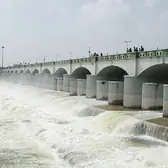
Company engineers begin remodelling the Grand Anicut
Captain Caldwell was appointed in 1804 to study the Kaveri and raised the ancient Grand Anicut to send more water to the delta.
1819
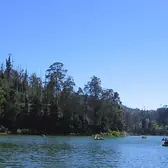
John Sullivan explores the Nilgiris
Coimbatore Collector John Sullivan set out to explore the Nilgiri hills, leading to the founding of Ootacamund.
1820
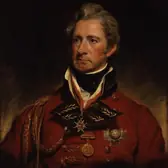
Ryotwari system adopted in Madras Presidency
Under Thomas Munro the ryotwari land revenue system, dealing directly with cultivators, became the main settlement in Madras.
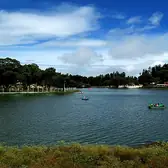
Coffee planting begins at Yercaud
Salem Collector M. D. Cockburn helped start coffee estates at Yercaud in the Shevaroy Hills during the 1820s.
1836
Arthur Cotton builds the Upper Anaicut at Mukkombu
Arthur Cotton built the Upper Anaicut regulator where the Kollidam branches from the Kaveri, between 1836 and 1838.
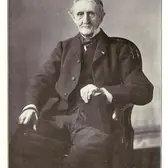
1842
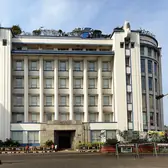
Parry's sugar factory at Nellikuppam
The firm founded by Thomas Parry set up a sugar plant at Nellikuppam, described as the first in India.
1848
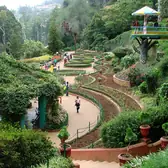
Government Botanical Garden laid out at Ooty
William Graham McIvor of Kew laid out the Government Botanical Garden at Ootacamund.
1860
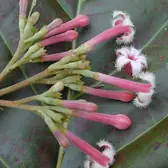
Cinchona introduced to the Nilgiris
Cinchona plants brought from South America by Clements Markham's expedition were planted at Ootacamund as a source of quinine.
1868
Agricultural school opens at Saidapet
An agricultural school was started at Saidapet, Madras, the institution that later became the agricultural college at Coimbatore.
1895
The Periyar dam, built under John Pennycuick between 1887 and 1895, began diverting water east to the Madurai region of the Madras Presidency.
1903
Madras Veterinary College established
Housed at first in a modest building called Doblin Hall, the Madras Veterinary College opened its doors on 1 October 1903.
1906
Madras Agricultural College moves to Coimbatore
The Saidapet agricultural school moved to Coimbatore in 1906, and the Agricultural College and Research Institute opened there in 1909.
1934
The Mettur Dam across the Cauvery was completed, creating the Stanley Reservoir and expanding irrigation in the delta.
1938
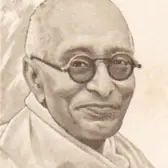
Madras Agriculturists Relief Act eases peasant debt
A law to reduce the debts of indebted farmers in the Madras Presidency was brought in by the Rajagopalachari ministry.
1955
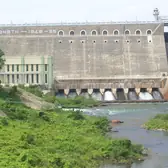
Lower Bhavani (Bhavanisagar) Dam completed
Work was completed on the Bhavanisagar Dam over the Bhavani river, the first major irrigation project of independent India.
1957
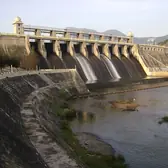
The Amaravathi Dam was built across the Amaravathi river near Udumalpet for irrigation and flood control.
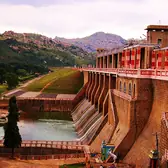
Krishnagiri Reservoir Project dam opened
Chief Minister K. Kamaraj inaugurated the Krishnagiri dam across the Thenpennai river.
1958
The Sathanur Dam across the Thenpennai river near Tiruvannamalai became operational under the Second Five Year Plan.
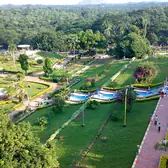
Manimuthar Dam built in Tirunelveli
The Manimuthar Dam was built near Kallidaikurichi in Tirunelveli district to store monsoon water for irrigation.
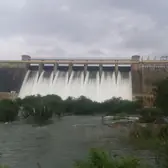
1959
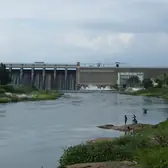
Chief Minister K. Kamaraj inaugurated the Vaigai Dam, which supplies irrigation and drinking water to Madurai and the southern districts.
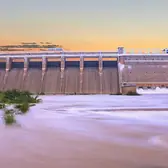
1962
Aliyar Dam of the Parambikulam-Aliyar Project inaugurated
Prime Minister Nehru inaugurated the Aliyar Dam, part of the inter-state Parambikulam-Aliyar irrigation project.
1964
C. Subramaniam becomes Union Food and Agriculture Minister
Under the leadership of C. Subramaniam of Madras, high-yielding seeds were introduced, starting the Green Revolution.
1966
Madras Fertilizers incorporated
A Government of India and Amoco joint venture, Madras Fertilizers, was incorporated to produce fertilisers at Manali.
1969
Agricultural Labourer Fair Wages Act
Under a 1969 law, Cauvery delta farm labourers had to be paid fair wages, and landowners who exploited them faced penalties.

1970
Land ceiling reduced to 15 standard acres
A 1970 Tamil Nadu law halved the family land ceiling, cutting it from 30 to 15 standard acres.
1971
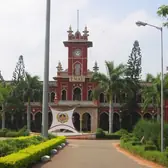
Tamil Nadu Agricultural University established
The Tamil Nadu Agricultural University came into existence with its headquarters in Coimbatore.
1977
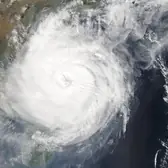
November 1977 cyclone strikes Nagapattinam and the Cauvery delta
A very severe cyclonic storm made landfall at Nagapattinam, killing about 560 people and affecting around 10 lakh people in Tamil Nadu.
1989
Tamil Nadu Veterinary and Animal Sciences University founded
A separate university for veterinary and animal sciences, TANUVAS, was established at Madhavaram Milk Colony in Madras.
1990
Free electricity for farmers announced
The DMK government announced free power for agricultural pump sets, extending a 1984 scheme for small and marginal farmers to all farmers.
1996
Koyambedu wholesale market complex opens
On Chennai's western side, the Koyambedu Wholesale Market Complex, one of the largest perishable goods markets in Asia, was opened.
Theni district carved out of Madurai
A government order of 7 July 1996 split Madurai district to form Theni district.
1997
Namakkal district begins functioning
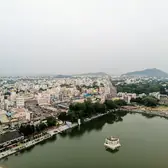
Split from Salem district in July 1996, Namakkal district began operating on its own from 1 January 1997.
1998
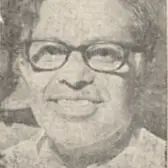
C. Subramaniam awarded the Bharat Ratna
Former Union minister C. Subramaniam, a Congress leader from Tamil Nadu who ushered in the Green Revolution, was awarded the Bharat Ratna.
1999
First Uzhavar Sandhai farmers' market opens in Madurai
Madurai hosted the first market of the DMK government's Uzhavar Sandhai scheme, where farmers could sell their produce straight to buyers.
2011
Chief Minister's Uzhavar Pathukappu Thittam
A farmers' security scheme gave registered landless labourers, small farmers and tenants cash help for education, marriage, death and old age.
Cyclone Thane strikes Cuddalore and Puducherry
Thane, a very severe cyclonic storm, crossed the coast between Cuddalore and Puducherry, wrecking homes, crops and trees.
2013
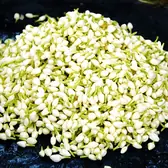
Madurai malli recognised as a geographical indication
Madurai jasmine became the first flower from Tamil Nadu to be given geographical indication status.
2017
Neduvasal protests against hydrocarbon extraction
Villagers of Neduvasal in Pudukkottai district protested against a central plan to extract hydrocarbons from farmland.
2018
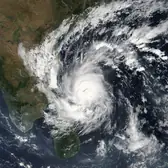
Cyclone Gaja devastates the Cauvery delta
Cyclone Gaja crossed the coast near Vedaranyam, killing dozens and destroying coconut groves, homes and boats in the delta districts.
2019
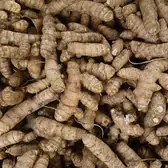
Erode turmeric gets a geographical indication
The Government of India recognised Erode turmeric (Erode manjal) as a geographical indication.
2020
Cauvery delta declared a protected special agricultural zone
Tamil Nadu declared the Cauvery delta a protected special agricultural zone, barring new hydrocarbon and similar projects.
2021
Rs. 12,110 crore cooperative crop loan waiver
Ahead of the 2021 election, Palaniswami waived crop loans from cooperative banks for about 16 lakh farmers after cyclones damaged crops.

2026
TVK government's cooperative crop loan waiver
Cooperative crop loans taken from May 2025 to February 2026 were waived by the Vijay government, a relief that eventually reached 14.43 lakh farmers.