Colonial Policy
38 events, 1800 to 1962; 7 marked as turning points.
1800
Pudukkottai comes under Company protection
Through a subsidiary alliance, the Tondaiman state of Pudukkottai came under the protection of the East India Company.

1801
Carnatic Treaty transfers the Carnatic to the Company
Nawab Azim-ud-Daula signed the Carnatic Treaty, handing the civil and military administration of the Carnatic to the East India Company.

1802
Permanent Settlement extended to Madras Presidency
The zamindari Permanent Settlement, first applied in Bengal, was introduced in parts of the Madras Presidency.
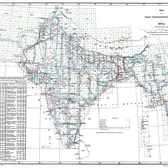
Great Trigonometrical Survey begins at Madras
Measuring a baseline close to Madras, William Lambton set the Great Trigonometrical Survey of India in motion.
1803
Sivaganga settled on Gowri Vallaba Thevar
After the Maruthu brothers were executed, Sivaganga was settled in 1803 as a permanent estate on Gowri Vallaba Thevar.
1804
Village Settlement revenue experiment
A Village Settlement system of land revenue was tried in several Tamil districts before ryotwari became the norm.
Coimbatore district formed with Coimbatore as its capital
Coimbatore district was formed by the Company, with Coimbatore town as its headquarters.

1813
Renewing the Company's charter, Parliament abolished its India trade monopoly, admitted missionaries and funded education.
1814
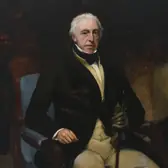
Hugh Elliot becomes Governor of Madras
Diplomat Hugh Elliot, earlier Governor of the Leeward Islands, governed the Madras Presidency from 1814 to 1820.
1815
Tranquebar handed back to Denmark
Britain returned Tranquebar (Tharangambadi), occupied since 1808 during the Napoleonic Wars, to Danish rule on 20 September 1815.

1816
Pondicherry and Karaikal restored to France
After the Napoleonic Wars, Britain returned Pondicherry, Karaikal and the other French settlements in India to France in 1816.

1817
Madras Regulation VII of 1817 on temple endowments
The Madras government passed Regulation VII of 1817, the first explicit Company legislation on the management of temple endowments.

1819
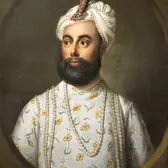
Death of Nawab Azim-ud-Daula; Azam Jah succeeds
Azim-ud-Daula, the Nawab of the Carnatic who had signed away his civil administration to the Company in 1801, died and was succeeded by Azam Jah.
1820
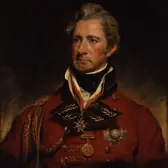
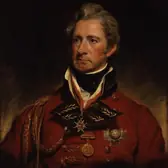
Thomas Munro becomes Governor of Madras
Thomas Munro served as Governor of Madras, establishing revenue and administrative systems that lasted into the twentieth century.
Ryotwari system adopted in Madras Presidency
Under Thomas Munro the ryotwari land revenue system, dealing directly with cultivators, became the main settlement in Madras.
1825
Dutch possessions on the Coromandel Coast pass to Britain
Under the Anglo-Dutch Treaty of 1824, the Dutch ceded their Coromandel settlements, including Pulicat, to the British on 1 June 1825.

1827
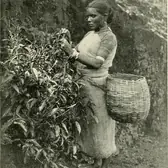
Recruitment of Tamil labourers for Ceylon plantations begins
Labourers from the Tirunelveli, Tiruchi, Madurai and Tanjore areas were recruited for British coffee estates in Ceylon.
1833
Charter Act of 1833 centralises lawmaking
The Government of India Act 1833 removed the Madras government's power to make its own laws and centralised it in Calcutta.
1843
Indian Slavery Act abolishes legal slavery
Under Act V of 1843, slavery lost legal recognition in Company territories, agrestic slavery in the Tamil districts included.
First emigrant ship from Madras reaches Mauritius
Britain allowed emigration from Madras to Mauritius again in December 1842, and the first ship from Madras reached the island in April 1843.
1854
Charles Wood's education despatch called for universities in the presidency towns and a graded school system across India.
Madras Torture Commission appointed
A commission was appointed to investigate the torture of ryots by revenue officials in the Madras Presidency.
1855
Carnatic Nawabship abolished under the Doctrine of Lapse
On the death of the last Nawab, Ghulam Muhammad Ghouse Khan, the Company abolished the Carnatic Nawabship.

Thanjavur annexed under the Doctrine of Lapse
After Raja Shivaji died without a male heir, the Company annexed the titular Maratha principality of Thanjavur.
1858
Crown takes over the government of India
Following the Government of India Act 1858, a proclamation by Queen Victoria declared direct Crown rule over British India, the Madras Presidency included.
1860
Governor Charles Trevelyan recalled
Madras Governor Sir Charles Trevelyan was recalled after his government publicly opposed James Wilson's new taxation proposals for India.
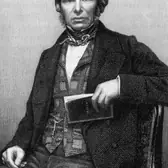
Cinchona introduced to the Nilgiris
Cinchona plants brought from South America by Clements Markham's expedition were planted at Ootacamund as a source of quinine.

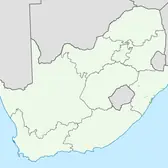
Indentured labourers from Madras arrive in Natal on the Truro
Organised Indian settlement in the British colony of Natal began with the Truro, which brought 342 indentured labourers from Madras.
1861
Indian Councils Act restores Madras legislative powers
Through the Indian Councils Act 1861, the Madras Presidency regained law-making powers and gained an advisory Madras Legislative Council.
1862
Indian Penal Code comes into force
Drafted under Macaulay and enacted in 1860, the Indian Penal Code took effect throughout British India, the Madras Presidency included.

1866
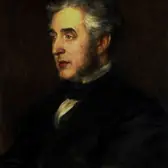
Lord Napier becomes Governor of Madras
Diplomat Francis Napier, 10th Lord Napier, governed the Madras Presidency from 1866 to 1872 and briefly acted as Governor-General.
1868
Nilgiris separated from Coimbatore district
In August 1868 the Nilgiri hills were detached from Coimbatore district and given a commissioner of their own.

1876
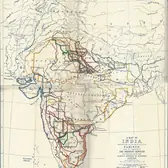
Brought on by drought, a severe famine hit the Madras Presidency and other regions of India, killing millions.
1896
Famine of 1896-1897 reaches the Madras Presidency
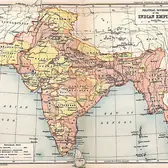
A famine that began in Bundelkhand in 1896 spread across India, including parts of the Madras Presidency, where grain exports continued.
1910
Ramanathapuram district formed
Ramanathapuram (Ramnad) district was created by combining parts of Madurai and Tirunelveli districts.

1934
Abhiramam convention against the Criminal Tribes Act
Muthuramalinga Thevar organised a convention at Abhiramam demanding repeal of the Criminal Tribes Act.

1954
French India transferred de facto to India after the Kizhoor referendum
After the Kizhoor referendum, Pondicherry, Karaikal, Yanam and Mahe passed de facto from France to the Indian Union.

1962
De jure transfer of the French settlements to India
Once France ratified the Treaty of Cession, Pondicherry and the other former French settlements legally became part of India.