Tamil Identity
60 events, 1801 to 2025; 9 marked as turning points.
1801
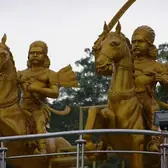
Jambudweep proclamation of the Maruthu brothers
The Maruthu brothers issued a proclamation calling on all people of the peninsula, whatever their religion, to fight the British.
1816
Ellis publishes the Dravidian Proof
Francis Whyte Ellis argued that the South Indian languages form a family separate from Sanskrit.
1856
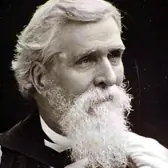
Caldwell's Comparative Grammar of the Dravidian languages
With his Comparative Grammar, Robert Caldwell showed that the Dravidian languages make up a separate language family.
1868
Damodaram Pillai prints Tolkappiyam with Senavaraiyar's commentary
C. W. Damodaram Pillai published the Sollathikaram of the Tolkappiyam with the medieval commentary of Senavaraiyar, an early printed edition of the grammar.

1872
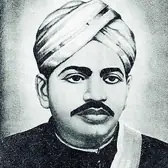
Birth of V. O. Chidambaram Pillai
V. O. Chidambaram Pillai, later the founder of the Swadeshi Steam Navigation Company, was born at Ottapidaram in Tirunelveli district.
1876
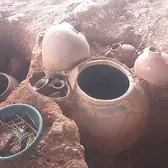
The ancient burial site of Adichanallur near Tirunelveli drew attention in 1876 and was excavated by Alexander Rea between 1899 and 1905.
1885
C. W. Damodaram Pillai publishes Tolkappiyam commentary
C. W. Damodaram Pillai published the Porulatikaram of the Tolkappiyam with Nachinarkiniyar's commentary, part of his revival of ancient Tamil texts.
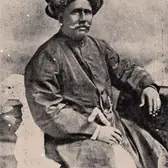
1887
U. V. Swaminatha Iyer publishes Jeevaka Chintamani
U. V. Swaminatha Iyer published Jeevaka Chintamani, the first of his editions of classical Tamil works recovered from palm-leaf manuscripts.
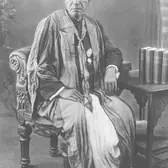
1891
Iyothee Thass founds the Dravida Mahajana Sabha
Iyothee Thass founded the Dravida Mahajana Sabha and urged Dalits to record themselves in the census as casteless Dravidians rather than Hindus.
1894
U. V. Swaminatha Iyer publishes Purananuru
After years of manuscript research, U. V. Swaminatha Iyer published an edition of the Sangam anthology Purananuru with notes.
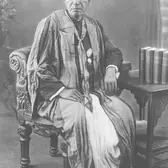
1901
Pandithurai Thevar founds the Fourth Tamil Sangam in Madurai
Pandithurai Thevar, a member of the Ramnad royal family, founded the Madurai Tamil Sangam, known as the Fourth Tamil Sangam, to promote Tamil learning.
1907
Iyothee Thass launches Oru Paisa Tamizhan
Iyothee Thass launched the Tamil weekly Oru Paisa Tamizhan, an anti-caste journal that later became The Tamilan.
1912
Abraham Pandithar's Tamil music conferences at Thanjavur
Abraham Pandithar set up the Sangeetha Vidhyalaya Mahajana Sangam, which held six music conferences between 1912 and 1914.
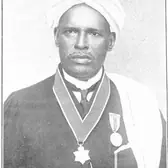
1913
Work begins on the University of Madras Tamil Lexicon
In January 1913 the University of Madras began work on the Tamil Lexicon, the most comprehensive Tamil dictionary, published in 1924-1939.
1916
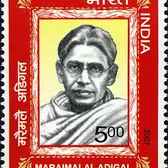
Maraimalai Adigal starts the Pure Tamil movement
Maraimalai Adigal pledged to use Tamil free of Sanskrit loanwords, starting the Tanittamil Iyakkam (Pure Tamil movement).
1917
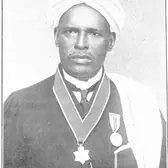
Abraham Pandithar publishes Karunamirdha Sagaram
Abraham Pandithar published Karunamirdha Sagaram, a large study of the history and theory of Tamil music.
1921
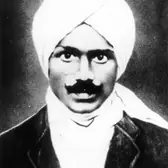
The poet and nationalist Subramania Bharati died in Madras, leaving a body of work central to modern Tamil literature.
1937
Compulsory Hindi order and first anti-Hindi agitation
The Rajaji government's move to make Hindi compulsory in schools triggered a large anti-Hindi agitation led by Periyar, the Justice Party and Tamil scholars.
1938
Tamilar Padai march from Tiruchi to Madras
Known as the Tamilar Padai, anti-Hindi protesters marched from Tiruchirappalli to Madras, addressing meetings in towns and villages en route.
Periyar jailed and elected Justice Party president
E. V. Ramasamy was imprisoned for his role in the anti-Hindi agitation and was elected president of the Justice Party while in jail.
1939
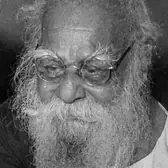
Periyar raises 'Dravida Nadu for Dravidians'
Periyar swapped the slogan 'Tamil Nadu for Tamils' for 'Dravida Nadu for Dravidians', setting the Justice Party on a separatist course.

1943
Tamil Isai Movement and Tamil Isai Sangam
The Tamil Isai Sangam was founded in Madras to promote the singing of Tamil compositions in Carnatic concerts dominated by Telugu and Sanskrit songs.
1947
Periyar calls Independence Day a day of mourning
Periyar called for 15 August 1947 to be kept as a day of mourning, a stand Annadurai rejected, deepening the rift between them.
1948
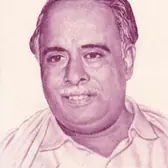
C. Rajagopalachari becomes Governor-General of India
C. Rajagopalachari succeeded Lord Mountbatten as Governor-General, the only Indian to hold the office.
1949
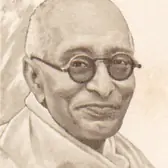
Subramania Bharati's works nationalised
The Madras government nationalised the writings of poet Subramania Bharati, the first such step for any poet in India.
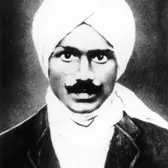
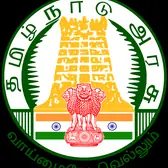
State emblem designed by R. Krishna Rao
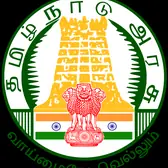
Designed in 1949, the Madras government's emblem combined a temple gopuram with the Lion Capital of Ashoka.
Dravida Munnetra Kazhagam founded
Breaking away from Periyar's Dravidar Kazhagam, C. N. Annadurai and his associates formed the DMK in Madras.

1953
Kallakudi agitation against the name Dalmiapuram
The DMK protested at Kallakudi against the renaming of the town as Dalmiapuram after an industrialist.
1954
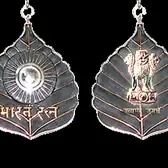
Rajaji and C. V. Raman among first Bharat Ratna recipients
C. Rajagopalachari and the physicist C. V. Raman, both from Tamil Nadu, were among the three first recipients of the Bharat Ratna.
Travancore Tamil agitation for merger with Madras
Tamils in southern Travancore-Cochin campaigned under Marshal Nesamony for the merger of Tamil-majority taluks with Madras State.
1956
Sankaralinganar fasts to death for renaming the state Tamil Nadu
Gandhian Sankaralinganar began a fast in Virudhunagar demanding that Madras State be renamed Tamil Nadu and died after 76 days.
1960
Tiruttani transferred from Andhra Pradesh to Madras State
Under the Andhra Pradesh and Madras (Alteration of Boundaries) Act, Tiruttani and nearby areas joined Madras State.
1961
E. V. K. Sampath leaves the DMK and forms the Tamil National Party
E. V. K. Sampath split from the DMK and founded the Tamil National Party with the poet Kannadasan.
1962
Annadurai demands self-determination in the Rajya Sabha
In his Rajya Sabha speeches, C. N. Annadurai stated the DMK case for the right of self-determination for the Dravidian south.
1964
Sirima-Shastri Pact on people of Indian origin in Ceylon
India and Ceylon agreed that 525,000 stateless people of Indian origin, mostly Tamil plantation workers, would be repatriated to India.
1968
Second World Tamil Conference held in Madras
Madras hosted the second International Tamil Research Conference, known as the World Tamil Conference, under the Annadurai government.
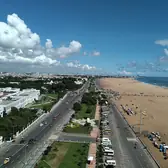
Statues of Tamil literary figures erected on the Marina
Statues of Tamil poets and scholars, including Kambar, Bharathiyar and Robert Caldwell, were unveiled on Marina Beach for the World Tamil Conference.
1969
Madras State renamed Tamil Nadu
With the Madras State (Alteration of Name) Act, 1968 in force, the state officially took the name Tamil Nadu.
1970
Invocation to Tamil Mother adopted for state functions
Chief Minister Karunanidhi announced that verses of Manonmaniam Sundaram Pillai's invocation to Tamil Mother would open state government functions.
1976
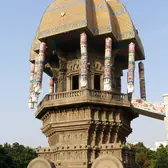
The Valluvar Kottam memorial to the poet Thiruvalluvar, begun under the DMK government, was inaugurated in Madras during President's rule.
1981
Fifth World Tamil Conference held in Madurai
The fifth World Tamil Conference, a gathering of Tamil scholars from many countries, was held in Madurai.
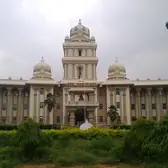
Tamil University founded at Thanjavur
The Tamil University was established in Thanjavur as a research university devoted to the Tamil language and culture.
1983
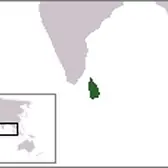
Black July and the arrival of Sri Lankan Tamil refugees
Anti-Tamil pogroms in Sri Lanka in July 1983 sent the first large wave of Sri Lankan Tamil refugees to Tamil Nadu.
1985
Tamil Eelam Supporters Organisation (TESO) formed
TESO was formed in Tamil Nadu to mobilise support for Sri Lankan Tamils, with M. Karunanidhi among its leaders.
1995
Eighth World Tamil Conference held in Thanjavur
The eighth World Tamil Conference was hosted in Thanjavur by the Tamil Nadu government.
1996
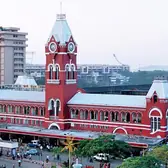
Madras officially renamed Chennai
The Tamil Nadu government officially changed the capital's name from Madras to Chennai.
2000
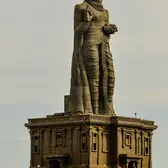
Thiruvalluvar Statue unveiled at Kanyakumari
A 133-foot stone statue of the poet Thiruvalluvar was unveiled on a rock off Kanyakumari on the millennium day.
2001
Tamil Virtual University established
To provide internet-based Tamil learning around the world, the Tamil Nadu government created the Tamil Virtual University, now the Tamil Virtual Academy.
2004
Tamil declared a classical language
The Government of India declared Tamil the first classical language of India.

2007
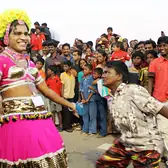
First Chennai Sangamam folk arts festival
Chennai Sangamam, an open-air festival of Tamil folk and traditional arts around Pongal, was held for the first time with state government backing.
2008
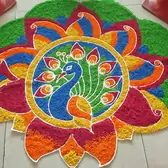
Tamil New Year moved to the first day of Thai
A DMK government law moved Tamil New Year to the first day of the Tamil month of Thai; the change was revoked in 2011.
Central Institute of Classical Tamil moves to Chennai
The Union government's Centre of Excellence for Classical Tamil moved from Mysore to Chennai and became the Central Institute of Classical Tamil.
2010
World Classical Tamil Conference in Coimbatore
The state government hosted the World Classical Tamil Conference in Coimbatore to mark Tamil's classical status.
2017
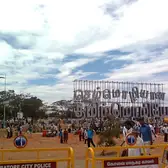
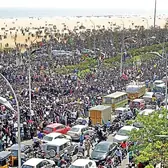
Pro-jallikattu protests at Marina Beach
Mass protests led largely by students and youth at Marina Beach forced an ordinance and then a state law allowing jallikattu.
2019
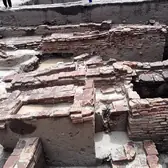
Keezhadi excavation report dates Sangam-era settlement
The Tamil Nadu archaeology department reported that finds at Keezhadi near Madurai date to about the 6th century BCE.
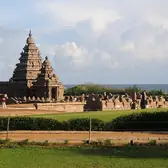
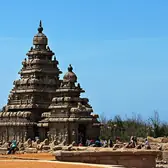
Modi and Xi Jinping hold informal summit at Mamallapuram
Among the Pallava monuments of Mamallapuram, Prime Minister Narendra Modi received Chinese President Xi Jinping for an informal summit.
Tamil Nadu Day first observed on 1 November
The Palaniswami government began observing 1 November as Tamil Nadu Day; in 2022 the DMK government moved it to 18 July.
2023
Keezhadi heritage museum opens
A museum displaying finds from the Keezhadi excavations was opened near the site in Sivaganga district.
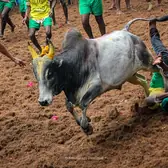
Supreme Court upholds Tamil Nadu's jallikattu law
A five-judge Constitution Bench upheld the Tamil Nadu law that allowed jallikattu to be held after the 2017 protests.
2025
Sivagalai finds push back the dating of iron in Tamil Nadu
Radiometric dates from Sivagalai in a state report pushed iron use in Tamil Nadu back to 3345 BCE, a claim that sparked broad debate.