Backward Classes
17 events, 1910 to 2007; 7 marked as turning points.
1910
The Nadar Mahajana Sangam was formed in 1910 through the efforts of T. Ratnasamy Nadar to work for the uplift of the Nadar community.
1912
Madras Dravidian Association formed
The Madras United League, founded by C. Natesa Mudaliar in 1912, was renamed the Madras Dravidian Association, an early non-Brahmin political body.
1916
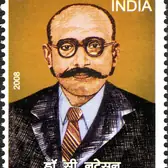
South Indian Liberal Federation (Justice Party) founded
Non-Brahmin leaders including C. Natesa Mudaliar, T. M. Nair and P. Theagaraya Chetty founded the South Indian Liberal Federation, later known as the Justice Party.
1917
Madras Presidency Association formed
The Madras Presidency Association was set up by non-Brahmin Congressmen to press for non-Brahmin representation inside the national movement.
1921
First Communal Government Order on reservation
The Justice Party government issued the first Communal Government Order, reserving government posts for different communities.
1940
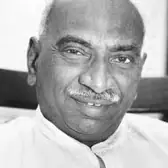
K. Kamaraj becomes TNCC president
K. Kamaraj was elected president of the Tamil Nadu Congress Committee, beginning his rise as the leading Congress organiser in the region.
1951
Supreme Court strikes down the Communal G.O. in Champakam Dorairajan case
Madras State's caste-based Communal Government Order on college admissions was struck down by the Supreme Court.

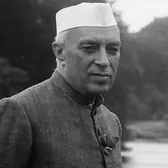
First Amendment enables reservation for backward classes
Parliament passed the First Amendment, allowing special provisions for socially and educationally backward classes.
1969
Sattanathan Backward Classes Commission
The first Backward Classes Commission of Tamil Nadu, headed by A. N. Sattanathan, recommended a separate Most Backward Class category.
1971
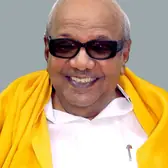
Reservation raised to 49 percent
The DMK government raised the backward classes quota from 25 to 31 percent and the SC/ST quota from 16 to 18 percent.
1979
Income ceiling introduced for backward class reservation
The MGR government introduced an annual income ceiling to exclude better-off families from backward class reservation.
1980
Income ceiling withdrawn, backward class quota raised to 50%
After electoral setbacks, the MGR government withdrew the income ceiling and raised the backward class quota from 31% to 50%.
1987
Vanniyar reservation agitation
The Vanniyar Sangam led a road blockade agitation in northern Tamil Nadu demanding separate reservation for the Vanniyar community.
1989
Separate 20% quota for Most Backward Classes
The DMK government split the 50% backward class quota into 30% for Backward Classes and 20% for Most Backward Classes and Denotified Communities.
S. Ramadoss founded the Pattali Makkal Katchi, a party rooted in the Vanniyar Sangam and the 1987 reservation agitation.

1994
69% reservation Act placed in the Ninth Schedule
Through the 76th Amendment, the Constitution's Ninth Schedule came to include Tamil Nadu's 1993 law that kept reservation at 69%.
2007
Separate reservation for Backward Class Muslims and Christians
Under a 2007 Act, Backward Class Muslims and Christians received their own portion of the backward class quota.