Power
22 events, 1932 to 2026.
1932
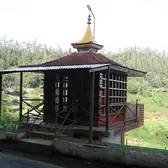
Pykara hydroelectric power station commissioned
The Pykara hydroelectric scheme in the Nilgiris began generating power, the first major hydroelectric project in the Madras Presidency.
1956
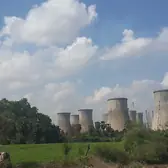
Neyveli Lignite Corporation established
A central public sector company was set up to mine lignite and generate power at Neyveli in South Arcot district.
1957
Madras State Electricity Board formed
The Madras State Electricity Board, later the Tamil Nadu Electricity Board, took over power generation and distribution in the state.
1962
Neyveli lignite thermal power station commissioned
The first units of the Neyveli Thermal Power Station, burning lignite from the Neyveli mines, were commissioned.

1964
BHEL incorporated to run the Tiruchirappalli plant
Bharat Heavy Electricals Limited came into being to set up heavy electrical factories, among them the boiler plant at Tiruchirappalli.

1970
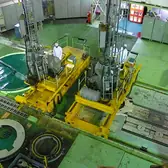
Construction of Madras Atomic Power Station begins at Kalpakkam
Work began on the Madras Atomic Power Station at Kalpakkam, India's first indigenously built nuclear power station.
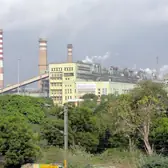
Ennore Thermal Power Station commissioned
The coal-fired Ennore Thermal Power Station north of Madras began generating electricity, with units added through 1975.
1971
Reactor Research Centre set up at Kalpakkam
An order by Vikram Sarabhai set up the Reactor Research Centre at Kalpakkam, which later became the Indira Gandhi Centre for Atomic Research.
1974
Poompuhar Shipping Corporation founded
The state-owned Poompuhar Shipping Corporation was founded; it later ran the ferries to the Vivekananda Rock at Kanyakumari.
1978
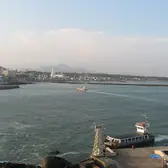
Oru Vilakku one-lamp electricity scheme
Under the 'one lamp' scheme, the MGR government supplied small homes with free electricity and an electric lamp paid for by the state.

1979
First unit of Tuticorin Thermal Power Station commissioned
The first unit of the coal-fired Tuticorin Thermal Power Station was commissioned, with further units added through 1992.
1984
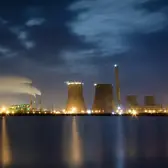
First unit of Madras Atomic Power Station reaches full power
At Kalpakkam, MAPS-1, the first nuclear power reactor India built largely on its own, reached full-power operation.
1985
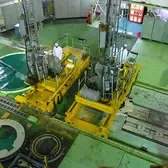
Fast Breeder Test Reactor at Kalpakkam reaches criticality
India's Fast Breeder Test Reactor at Kalpakkam reached first criticality, making India the seventh nation able to build and run a breeder reactor.
1986
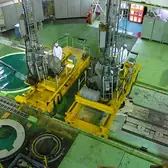
Second unit of Madras Atomic Power Station commissioned
The second 220 MW unit of the Madras Atomic Power Station at Kalpakkam was commissioned, completing the two-unit station.
1987
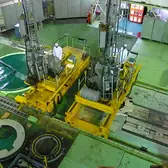
Mettur Thermal Power Station begins generating
The first unit of the Mettur Thermal Power Station, the state utility's first inland coal-fired plant, was commissioned.
1988
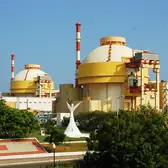
India and the Soviet Union sign the Kudankulam nuclear agreement
Rajiv Gandhi and Mikhail Gorbachev signed an agreement to build two nuclear reactors at Kudankulam in Tirunelveli district.
1990
Free electricity for farmers announced
The DMK government announced free power for agricultural pump sets, extending a 1984 scheme for small and marginal farmers to all farmers.
1999
Ennore's new port, north of Chennai, gained major port status and was incorporated as Ennore Port Limited, the first major port in India run as a company.
2011
Protests against the Kudankulam nuclear plant
Fishing villages around Idinthakarai led a sustained movement against the Kudankulam nuclear plant, which nonetheless began operating in 2013 and 2014.
2013
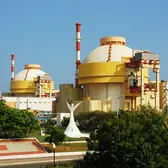
Kudankulam reactor 1 connected to the grid
Following years of delay and protest, the first VVER-1000 reactor at Kudankulam was synchronised with the power grid.
2016
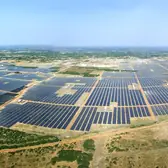
Kamuthi solar power plant completed
A 648 MW solar power plant built by the Adani group at Kamuthi in Ramanathapuram district was completed.
2026
Prototype Fast Breeder Reactor at Kalpakkam reaches criticality
India's 500 MWe Prototype Fast Breeder Reactor at Kalpakkam achieved first criticality on 6 April 2026.