New Delhi
22 events, 1946 to 2025; 5 marked as turning points.
1946
Madras members join the Constituent Assembly
With a sizeable contingent from the Madras Province, the Constituent Assembly of India held its first sitting in New Delhi.

1948
C. Rajagopalachari becomes Governor-General of India
C. Rajagopalachari succeeded Lord Mountbatten as Governor-General, the only Indian to hold the office.

1951
Supreme Court strikes down the Communal G.O. in Champakam Dorairajan case
Madras State's caste-based Communal Government Order on college admissions was struck down by the Supreme Court.

First Amendment enables reservation for backward classes
Parliament passed the First Amendment, allowing special provisions for socially and educationally backward classes.

1954
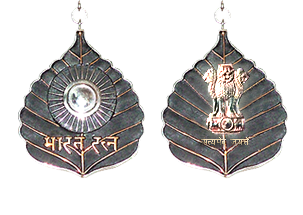
Rajaji and C. V. Raman among first Bharat Ratna recipients
C. Rajagopalachari and the physicist C. V. Raman, both from Tamil Nadu, were among the three first recipients of the Bharat Ratna.
1962
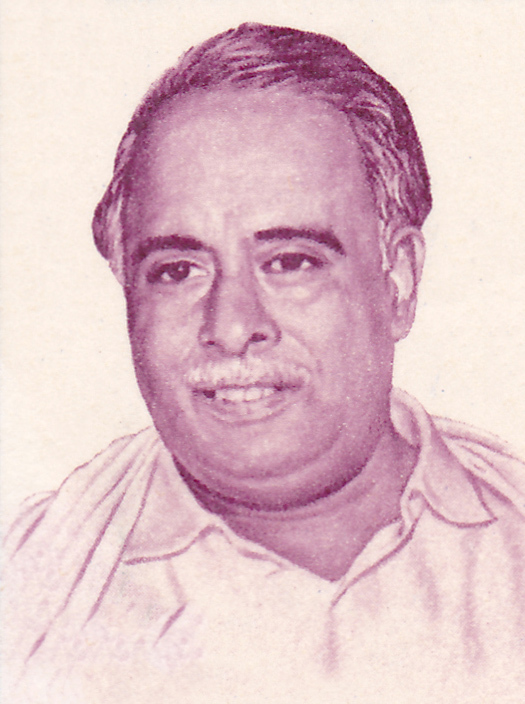
Annadurai demands self-determination in the Rajya Sabha
In his Rajya Sabha speeches, C. N. Annadurai stated the DMK case for the right of self-determination for the Dravidian south.
1963
Parliament passed the Official Languages Act to allow continued use of English alongside Hindi after 1965.
1964
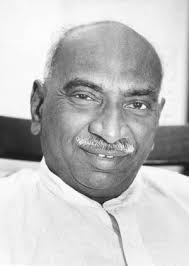
Kamaraj becomes Congress president and 'kingmaker'
As president of the Indian National Congress, K. Kamaraj guided the selection of two Prime Ministers.
C. Subramaniam becomes Union Food and Agriculture Minister
Under the leadership of C. Subramaniam of Madras, high-yielding seeds were introduced, starting the Green Revolution.

Sirima-Shastri Pact on people of Indian origin in Ceylon
India and Ceylon agreed that 525,000 stateless people of Indian origin, mostly Tamil plantation workers, would be repatriated to India.

1968
Official Languages (Amendment) Act guarantees bilingualism
Amid fresh protests in Madras State, Parliament amended the 1963 Act to ensure English would continue in use alongside Hindi.
1974
Sirima-Gandhi Pact on stateless persons of Indian origin
India and Sri Lanka agreed on the future of the 150,000 persons of Indian origin whose status had been left open by the 1964 Sirima-Shastri Pact.
1975
Indira Gandhi's government declared a national Emergency; the DMK government in Tamil Nadu opposed it.

1990
Cauvery Water Disputes Tribunal constituted
On a Supreme Court direction, the Union government set up a tribunal to adjudicate the Kaveri water dispute between Tamil Nadu, Karnataka, Kerala and Puducherry.

1997
Jain Commission interim report on the Rajiv Gandhi assassination
Criticism of the DMK over the LTTE in the Jain Commission's interim report prompted Congress to demand the party's exit, bringing down the Gujral government.
1998
Cauvery River Authority set up
The Union government set up the Cauvery River Authority, chaired by the Prime Minister with the chief ministers of the basin states, to implement the interim award.
1999
AIADMK withdraws support, Vajpayee government falls
The AIADMK's withdrawal of support led to the Vajpayee government losing a confidence vote by a single vote.
Supreme Court verdict in Rajiv Gandhi assassination case
The Supreme Court upheld the convictions of seven accused in the Rajiv Gandhi assassination case and acquitted the other 19 sentenced by a TADA court.
2002
A. P. J. Abdul Kalam becomes President of India
Rameswaram-born scientist A. P. J. Abdul Kalam, backed by both the BJP and the Congress, took office as the 11th President of India.

2011
Former Telecom Minister A. Raja and later Kanimozhi were arrested in the 2G spectrum case; a special court acquitted all accused in 2017.

2018
Supreme Court final verdict on Cauvery waters
The Supreme Court reduced Tamil Nadu's share of Cauvery water slightly and ordered a scheme for implementation, leading to the Cauvery Water Management Authority.
2025
Supreme Court rules against Governor's withholding of bills
The Supreme Court held that Governor R. N. Ravi acted illegally in withholding assent to ten re-passed bills and set timelines for Governors.