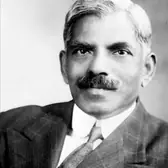
Justice Party
32 events, 1916 to 1946; 5 marked as turning points.
1916
South Indian Liberal Federation (Justice Party) founded
Non-Brahmin leaders including C. Natesa Mudaliar, T. M. Nair and P. Theagaraya Chetty founded the South Indian Liberal Federation, later known as the Justice Party.
Non-Brahmin Manifesto published
The new non-Brahmin federation issued a manifesto criticising Brahmin dominance in public services and politics, drawing sharp criticism from The Hindu.
1919
Government of India Act 1919 introduces dyarchy
Based on the Montagu-Chelmsford Report, the Act introduced dyarchy in the provinces, including Madras, transferring some subjects to elected ministers.
1920
Madras Elementary Education Act
A Madras statute made elementary schooling compulsory for both boys and girls and raised spending on primary schools.
Justice Party wins first Madras Legislative Council election
The Justice Party won the first election held under the Montagu-Chelmsford dyarchy reforms in the Madras Presidency.
A. Subbarayalu Reddiar becomes first Premier of Madras
A. Subbarayalu Reddiar of the Justice Party took office as the first Chief Minister (Premier) of the Madras Presidency.
1921
Madras grants voting rights to women
The Madras Legislative Council resolved to extend the franchise to women, among the first provinces in British India to do so.
First Communal Government Order on reservation
The Justice Party government issued the first Communal Government Order, reserving government posts for different communities.
Buckingham and Carnatic Mills strike
Workers of the Buckingham and Carnatic Mills in Madras went on a prolonged strike against Binny and Co. over wages and conditions.
Raja of Panagal becomes Premier
Panaganti Ramarayaningar, the Raja of Panagal, succeeded Subbarayalu Reddiar and led two Justice Party ministries until 1926.
1922
Madras State Aid to Industries Act
The Justice Party government passed a law to advance state loans for setting up industries in the Presidency.
Council adopts the term Adi Dravida
Acting on a resolution by M. C. Rajah, the Madras Legislative Council adopted Adi-Dravida officially in place of terms like Paraiya and Panchama.
1923
Justice Party wins second council election
The Justice Party retained power in the 1923 Madras Legislative Council election despite internal dissent.
A fresh Madras University Act enlarged the University of Madras's governing bodies and gave them a more representative character.
Panagal ministry survives no-confidence motion
On the first day of the new council, a no-confidence motion against the Raja of Panagal's Justice ministry was defeated 65 to 44.
1925
Madras Hindu Religious Endowments Act
A law passed under the Justice Party government placed Hindu temple endowments under the oversight of a statutory board.
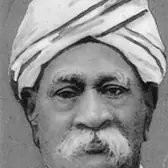
P. Theagaraya Chetty, a founder and leader of the Justice Party and of the non-Brahmin movement, died in Madras.
1926
Andhra University established by Madras Act
After a bill carried with Tamil votes, the Madras legislature set up Andhra University for the Presidency's Telugu districts.
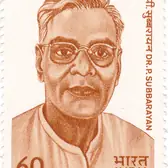
P. Subbarayan forms independent ministry
After the Swaraj Party won the 1926 election but declined office, P. Subbarayan formed a ministry of independents with nominated support.
1928
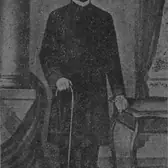
Panaganti Ramarayaningar, the Raja of Panagal and Justice Party First Minister from 1921 to 1926, died in Madras.
1930
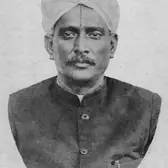
Justice Party returns to power under B. Munuswamy Naidu
The Justice Party won the 1930 election, boycotted by the Congress, and B. Munuswamy Naidu became Premier.
1932
Raja of Bobbili becomes Premier
The Raja of Bobbili, a zamindar, replaced B. Munuswamy Naidu as Premier and led the last Justice Party ministry before 1937.
1934
Abhiramam convention against the Criminal Tribes Act
Muthuramalinga Thevar organised a convention at Abhiramam demanding repeal of the Criminal Tribes Act.
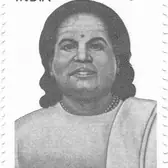
Swarajists largest party in 1934 Madras council election
The Swaraj Party won the most seats in the last dyarchy-era Madras council election but refused office; the Raja of Bobbili stayed on.
1935
Viduthalai began as a Justice Party bi-weekly and became a daily under Periyar in 1937.
1936
P. T. Rajan becomes First Minister
For a few months, while the Raja of Bobbili was on leave, Justice Party leader P. T. Rajan was First Minister of the Madras Presidency.

1937
Congress wins 1937 Madras Presidency election
The Indian National Congress won a large majority in the first Madras Legislative Assembly election under provincial autonomy, routing the Justice Party.
K. V. Reddi Naidu heads interim ministry
When the Congress hesitated to take office after winning the 1937 election, the Governor installed an interim ministry under K. V. Reddi Naidu.

1938
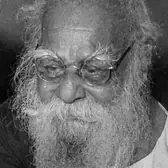
Periyar jailed and elected Justice Party president
E. V. Ramasamy was imprisoned for his role in the anti-Hindi agitation and was elected president of the Justice Party while in jail.
1939
Periyar raises 'Dravida Nadu for Dravidians'
Periyar swapped the slogan 'Tamil Nadu for Tamils' for 'Dravida Nadu for Dravidians', setting the Justice Party on a separatist course.

1944
Justice Party becomes Dravidar Kazhagam at Salem
Meeting at Salem, the Justice Party, now led by Periyar, took the name Dravidar Kazhagam and gave up contesting elections.

1946
A. Ramaswami Mudaliar becomes first ECOSOC president
Arcot Ramaswami Mudaliar, a Justice Party leader from Madras, was the first President of the UN Economic and Social Council.