Science
45 events, 1802 to 2026.
1802
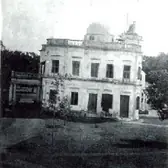
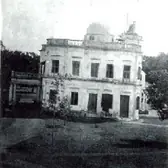
Astronomer John Goldingham of the Madras Observatory fixed Madras time at 5 hours 21 minutes ahead of Greenwich.
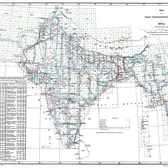
Great Trigonometrical Survey begins at Madras
Measuring a baseline close to Madras, William Lambton set the Great Trigonometrical Survey of India in motion.
1817
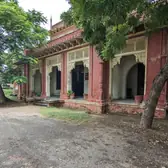
Madras Literary Society founded
In 1817 a learned society and library, the Madras Literary Society, was established in Madras.
1819
Madras Eye Infirmary established
The Madras Eye Infirmary, now the Egmore Eye Hospital, was founded and is regarded as the oldest eye hospital in Asia.
1830
Thomas Glanville Taylor takes charge of the Madras Observatory
T. G. Taylor came to Madras as head of the observatory, where he compiled the Madras Catalogue of Stars.
1848
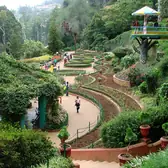
Government Botanical Garden laid out at Ooty
William Graham McIvor of Kew laid out the Government Botanical Garden at Ootacamund.
1851
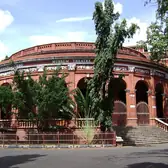
Government Museum, Madras founded
Built on collections donated by the Madras Literary Society, the Madras Government Museum, India's second oldest, was founded.
1863
Robert Bruce Foote finds Palaeolithic tool at Pallavaram
Geologist Robert Bruce Foote discovered a Palaeolithic hand axe at Pallavaram near Madras, the first conclusive find of its kind in India.
1875
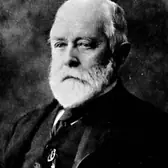
Madras Observatory begins daily weather reports
The Madras Observatory started issuing daily weather reports, an early step in organised weather forecasting in south India.
1887
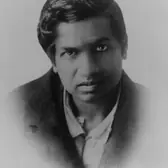
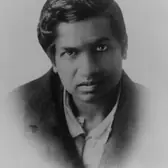
Birth of mathematician Srinivasa Ramanujan
Erode was the birthplace of Srinivasa Ramanujan, the self-taught mathematician famed for his work in number theory and infinite series.
1899
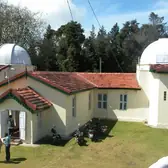
Kodaikanal Solar Observatory founded
Solar research moved from the Madras Observatory to a new observatory at Kodaikanal, where the Evershed effect was discovered in 1909.
King Institute of Preventive Medicine established
Set up at Guindy in Madras, the King Institute of Preventive Medicine was created to fight infectious diseases.
1907
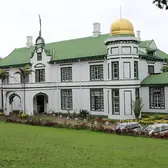
Pasteur Institute of Southern India opens at Coonoor
The Pasteur Institute of Southern India began work at Coonoor in April 1907 and became a major producer of anti-rabies vaccine.
1913
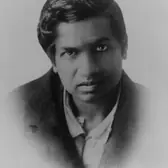
Ramanujan writes to G. H. Hardy
Srinivasa Ramanujan, a clerk at the Madras Port Trust, began corresponding with G. H. Hardy, who arranged for him to travel to Cambridge in 1914.
1920
The self-taught mathematician Srinivasa Ramanujan died in Madras at the age of 32, a year after returning from Cambridge.
1930
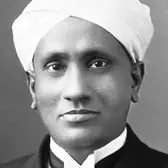
C. V. Raman wins the Nobel Prize in Physics
C. V. Raman, a physicist born in Tiruchirappalli, was awarded the Nobel Prize in Physics for research on light scattering.
1937
G. D. Naidu builds India's first indigenous electric motor
Coimbatore inventor G. D. Naidu, working with D. Balasundaram, developed India's first indigenous electric motor.
1944
Alagappa College of Technology founded
Funded by Alagappa Chettiar, the University of Madras set up the Alagappa College of Technology for courses such as chemical engineering.
1948
Central Leather Research Institute founded in Madras
The Central Leather Research Institute was founded in Madras as a laboratory of the Council of Scientific and Industrial Research.

Central Electrochemical Research Institute founded at Karaikudi
A national laboratory for electrochemistry under the CSIR was founded at Karaikudi in Sivaganga district.

1954
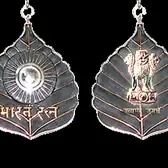
Rajaji and C. V. Raman among first Bharat Ratna recipients
C. Rajagopalachari and the physicist C. V. Raman, both from Tamil Nadu, were among the three first recipients of the Bharat Ratna.
Cancer Institute (WIA) established at Adyar
The Women's Indian Association, led by Muthulakshmi Reddy, set up the Cancer Institute at Adyar in Madras.
1959
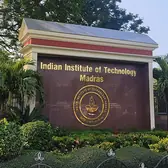
Indian Institute of Technology Madras founded
Classes started at IIT Madras in Guindy, the third IIT, which was set up with West German help.
1964
Regional Engineering College founded at Tiruchirappalli
The Regional Engineering College at Tiruchirappalli, now NIT Tiruchirappalli, was established jointly by the Union and state governments.
1970
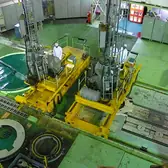
Construction of Madras Atomic Power Station begins at Kalpakkam
Work began on the Madras Atomic Power Station at Kalpakkam, India's first indigenously built nuclear power station.
1971
Tamil Nadu Agricultural University established
The Tamil Nadu Agricultural University came into existence with its headquarters in Coimbatore.
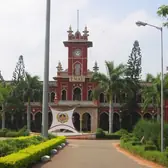
Reactor Research Centre set up at Kalpakkam
An order by Vikram Sarabhai set up the Reactor Research Centre at Kalpakkam, which later became the Indira Gandhi Centre for Atomic Research.
1972
Madras Snake Park moves to Guindy
On land leased from the Forest Department in Guindy, herpetologist Romulus Whitaker established an enlarged snake park, run by a trust he set up.
1976
The Madras Crocodile Bank was founded on the East Coast Road by Romulus Whitaker, Zai Whitaker and others to protect India's crocodile species.
1978
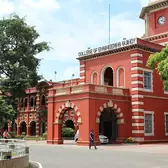
Anna University was established in Madras as a technical university, named after former Chief Minister C. N. Annadurai.
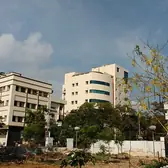
Sankara Nethralaya eye hospital founded in Madras
Led by S. S. Badrinath, a group in Madras founded Sankara Nethralaya, a charitable eye hospital run on a not-for-profit basis.
1984
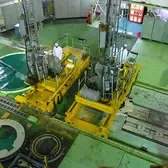
First unit of Madras Atomic Power Station reaches full power
At Kalpakkam, MAPS-1, the first nuclear power reactor India built largely on its own, reached full-power operation.
1985
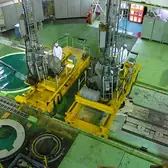
Fast Breeder Test Reactor at Kalpakkam reaches criticality
India's Fast Breeder Test Reactor at Kalpakkam reached first criticality, making India the seventh nation able to build and run a breeder reactor.
1986
First HIV cases in India detected in Madras
India's first documented HIV infections were found among sex workers in Madras by microbiologist Suniti Solomon and her student Sellappan Nirmala.
Second unit of Madras Atomic Power Station commissioned
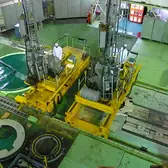
The second 220 MW unit of the Madras Atomic Power Station at Kalpakkam was commissioned, completing the two-unit station.
1989
SPIC Science Foundation founds the school that became Chennai Mathematical Institute
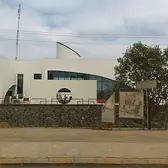
The SPIC Science Foundation founded a School of Mathematics in Madras, which grew into the Chennai Mathematical Institute.
1997
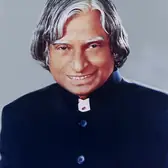
A. P. J. Abdul Kalam awarded the Bharat Ratna
A. P. J. Abdul Kalam, the Rameswaram-born scientist who headed India's missile programme, received the Bharat Ratna.
2002
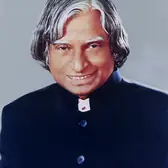
A. P. J. Abdul Kalam becomes President of India
Rameswaram-born scientist A. P. J. Abdul Kalam, backed by both the BJP and the Congress, took office as the 11th President of India.
2015
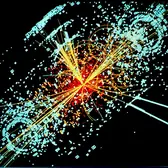
Green tribunal hears challenge to the Theni neutrino observatory
Acting on a petition against the environmental clearance for the India-based Neutrino Observatory in Theni district, the National Green Tribunal issued notices.
2017
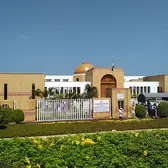
A. P. J. Abdul Kalam memorial opens at Rameswaram
Prime Minister Narendra Modi inaugurated the DRDO-built memorial to A. P. J. Abdul Kalam at Peikarumbu, Rameswaram.
2019
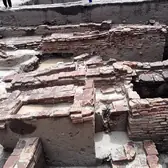
Keezhadi excavation report dates Sangam-era settlement
The Tamil Nadu archaeology department reported that finds at Keezhadi near Madurai date to about the 6th century BCE.
2024
Foundation of ISRO's Kulasekarapattinam launch complex
ISRO's second spaceport, for small satellite launch vehicles, was launched at Kulasekarapattinam in Thoothukudi district.
2025
Sivagalai finds push back the dating of iron in Tamil Nadu
Radiometric dates from Sivagalai in a state report pushed iron use in Tamil Nadu back to 3345 BCE, a claim that sparked broad debate.
2026
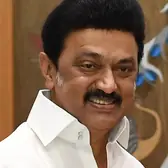
Ulagam Ungal Kaiyil free laptops for college students
Stalin launched a scheme to distribute 20 lakh laptops to students of government colleges, with 10 lakh in the first phase.
Prototype Fast Breeder Reactor at Kalpakkam reaches criticality
India's 500 MWe Prototype Fast Breeder Reactor at Kalpakkam achieved first criticality on 6 April 2026.