Social Justice
45 events, 1823 to 2023; 9 marked as turning points.
1823
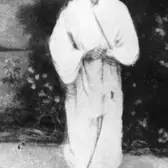
Birth of Ramalinga Swamigal (Vallalar)
Ramalinga Swamigal, the Tamil saint-poet known as Vallalar, was born at Marudur near Chidambaram.
1833
Ayya Vaikundar begins his mission
Ayya Vaikundar began the teachings that gave rise to Ayyavazhi, a movement that challenged caste rules in southern Travancore.

1851
Ayyavazhi tradition records that Ayya Vaikundar's earthly mission ended on 2 June 1851.

1865
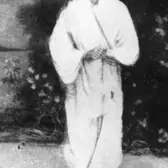
Vallalar starts the Samarasa Vedha Sanmarga Sangam
Vallalar, or Ramalinga Swamigal, formed a fellowship of devotees against caste distinctions, which was later renamed the Samarasa Suddha Sanmarga Sathya Sangam.
1867
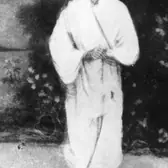
Vallalar opens the Sathya Dharma Salai at Vadalur
At Vadalur, Ramalinga Swamigal opened a free kitchen for the needy of every caste and lit a stove that was never to be put out.
1872
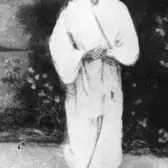
Vallalar opens the Sathya Gnana Sabhai at Vadalur
At Vadalur, Ramalinga Swamigal (Vallalar) opened the Sathya Gnana Sabhai, which taught compassion for every living being regardless of caste.
1886
Iyothee Thass declares Dalits are not Hindus
Anti-caste activist Iyothee Thass declared that the depressed classes were not Hindus, a stand he later carried into the Dravida Mahajana Sabha and the 1891 census.
1891
Rettamalai Srinivasan founds the Paraiyar Mahajana Sabha
Rettamalai Srinivasan set up the Paraiyar Mahajana Sabha, an early Dalit body, and launched the Tamil paper Paraiyan in 1893.

1910
The Nadar Mahajana Sangam was formed in 1910 through the efforts of T. Ratnasamy Nadar to work for the uplift of the Nadar community.
1912
Madras Dravidian Association formed
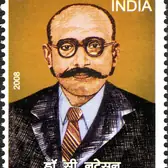
The Madras United League, founded by C. Natesa Mudaliar in 1912, was renamed the Madras Dravidian Association, an early non-Brahmin political body.
1916
South Indian Liberal Federation (Justice Party) founded
Non-Brahmin leaders including C. Natesa Mudaliar, T. M. Nair and P. Theagaraya Chetty founded the South Indian Liberal Federation, later known as the Justice Party.
Non-Brahmin Manifesto published
The new non-Brahmin federation issued a manifesto criticising Brahmin dominance in public services and politics, drawing sharp criticism from The Hindu.
1917
Women's Indian Association founded at Adyar
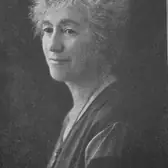
Margaret Cousins, Annie Besant, Dorothy Jinarajadasa and others founded the Women's Indian Association at Adyar to campaign for women's rights.
Madras Presidency Association formed
The Madras Presidency Association was set up by non-Brahmin Congressmen to press for non-Brahmin representation inside the national movement.
1921
First Communal Government Order on reservation
The Justice Party government issued the first Communal Government Order, reserving government posts for different communities.
Raja of Panagal becomes Premier
Panaganti Ramarayaningar, the Raja of Panagal, succeeded Subbarayalu Reddiar and led two Justice Party ministries until 1926.
1922
Council adopts the term Adi Dravida
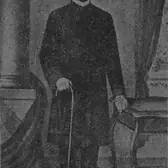
Acting on a resolution by M. C. Rajah, the Madras Legislative Council adopted Adi-Dravida officially in place of terms like Paraiya and Panchama.
1925
Periyar leaves Congress and starts the Self-Respect Movement
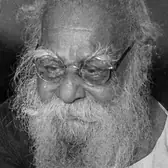
After his resolution on communal representation was not allowed at the Kanchipuram conference, E. V. Ramasamy left the Congress and began the Self-Respect Movement.
1929
First Provincial Self-Respect Conference at Chengalpattu
The first provincial conference of the Self-Respect Movement at Chengalpattu passed resolutions against caste and for women's rights.
1930
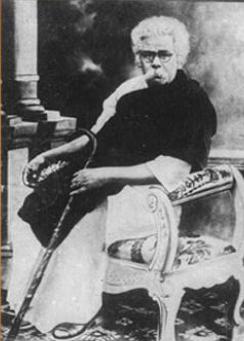
Rettamalai Srinivasan at the Round Table Conference
Dalit leader Rettamalai Srinivasan represented the depressed classes alongside B. R. Ambedkar at the Round Table Conferences in London.
1931
Periyar tours Europe and the Soviet Union
Periyar E. V. Ramasamy toured Europe and spent three months in the Soviet Union, an experience that shaped his later politics.

1932
M. C. Rajah and the Rajah-Moonje Pact
Dalit leader M. C. Rajah of Madras agreed with B. S. Moonje to reserved seats within joint electorates for the depressed classes.
1939
Madras Temple Entry Authorization and Indemnity Act
A law passed by the Rajagopalachari ministry lifted the bars on Dalits and Shanars entering Hindu temples across the Presidency.

1942
N. Sivaraj becomes first president of the Scheduled Castes Federation
At Nagpur, Madras Dalit leader N. Sivaraj was elected first president of the new All-India Scheduled Castes Federation founded with Ambedkar.

1947
Madras Devadasis (Prevention of Dedication) Act enacted
The Madras legislature outlawed the dedication of girls to temples as devadasis, ending a long reform campaign.

1951
Supreme Court strikes down the Communal G.O. in Champakam Dorairajan case
Madras State's caste-based Communal Government Order on college admissions was struck down by the Supreme Court.

First Amendment enables reservation for backward classes
Parliament passed the First Amendment, allowing special provisions for socially and educationally backward classes.

1969
Sattanathan Backward Classes Commission
The first Backward Classes Commission of Tamil Nadu, headed by A. N. Sattanathan, recommended a separate Most Backward Class category.

1970
Order allowing people of all castes to become temple priests
A 1970 order of the Karunanidhi government opened priesthood in public temples to all castes; in 1972 the Supreme Court struck it down.
SC and ST students exempted from tuition fees
A 1970 Government Order exempted Scheduled Caste and Scheduled Tribe students up to the Pre-University Course from paying tuition fees.
1971
Reservation raised to 49 percent
The DMK government raised the backward classes quota from 25 to 31 percent and the SC/ST quota from 16 to 18 percent.
Beggar rehabilitation scheme launched
On his birthday, Chief Minister Karunanidhi launched a beggar rehabilitation scheme and collected funds for it himself.
1979
Income ceiling introduced for backward class reservation
The MGR government introduced an annual income ceiling to exclude better-off families from backward class reservation.
1980
Income ceiling withdrawn, backward class quota raised to 50%
After electoral setbacks, the MGR government withdrew the income ceiling and raised the backward class quota from 31% to 50%.
1989
Separate 20% quota for Most Backward Classes
The DMK government split the 50% backward class quota into 30% for Backward Classes and 20% for Most Backward Classes and Denotified Communities.
S. Ramadoss founded the Pattali Makkal Katchi, a party rooted in the Vanniyar Sangam and the 1987 reservation agitation.

1990
Separate 1 percent reservation for Scheduled Tribes
The Karunanidhi government split the combined SC/ST quota and gave Scheduled Tribes a separate 1 percent reservation.
1994
69% reservation Act placed in the Ninth Schedule
Through the 76th Amendment, the Constitution's Ninth Schedule came to include Tamil Nadu's 1993 law that kept reservation at 69%.
1997
First Samathuvapuram equality village inaugurated
The first Periyar Ninaivu Samathuvapuram, a housing colony where families of different castes live side by side, opened near Madurai.
K. Krishnasamy founds Puthiya Tamilagam
Former MLA K. Krishnasamy founded Puthiya Tamilagam, a regional political party in Tamil Nadu.
1999
Viduthalai Chiruthaigal Katchi contests elections for the first time
The Dalit Panthers movement led by Thol. Thirumavalavan, later the VCK, entered electoral politics for the first time in 1999.
2009
Internal reservation for Arunthathiyars
Tamil Nadu set aside 3 percent within the Scheduled Caste quota for the Arunthathiyar community.
2010
Fee support for first-generation graduates
The state announced a scholarship to pay tuition and other fees of first graduates in a family who join professional courses.
2021
Priests of all castes appointed to state temples
The government appointed trained archakas from many castes, including non-Brahmins, to temples under the HR and CE department.
2023
Udhayanidhi Stalin's remarks on Sanatana Dharma
Minister Udhayanidhi Stalin's call to eradicate Sanatana Dharma drew national controversy and court cases.
