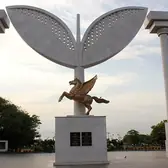
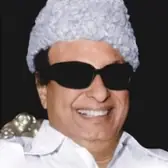
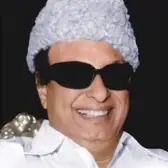
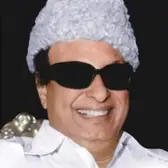
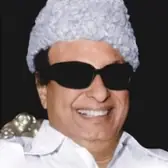
M. G. Ramachandran
34 events, 1936 to 1990; 6 marked as turning points.
1936
Sathi Leelavathi released, M. G. Ramachandran's debut
Ellis R. Dungan's Sathi Leelavathi was released, marking the film debuts of M. G. Ramachandran and other future stars.
1958
M. G. Ramachandran directed, produced and starred in Nadodi Mannan, a major hit that boosted his popularity and DMK symbolism.
1967
M. G. Ramachandran shot by M. R. Radha
Actor M. R. Radha shot M. G. Ramachandran at his home weeks before the 1967 election; MGR survived after surgery.
1972
MGR wins the Bharat Award for Best Actor
M. G. Ramachandran won the national Best Actor (Bharat) award for Rickshawkaran, the first South Indian actor to receive it.
MGR expelled from DMK; AIADMK founded
After demanding that DMK ministers declare their assets, M. G. Ramachandran was expelled and launched the Anna DMK.

1973
AIADMK wins the Dindigul Lok Sabha by-election
K. Maya Thevar won the Dindigul by-election, giving the newly formed AIADMK its first electoral victory.
1976
Sarkaria Commission of Inquiry into the DMK government
A one-man commission under Justice R. S. Sarkaria was appointed to inquire into corruption charges against the dismissed DMK government.
1977
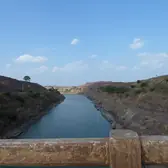
Krishna water supply (Telugu Ganga) project agreed for Madras
Tamil Nadu and the Krishna basin states agreed on a scheme to carry Krishna river water to Madras city, later built as the Telugu Ganga project.
Congress-AIADMK alliance wins 34 Lok Sabha seats in Tamil Nadu
In the post-Emergency Lok Sabha election, the Congress-AIADMK-CPI alliance won 34 of Tamil Nadu's 39 seats even as the Janata Party took power nationally.
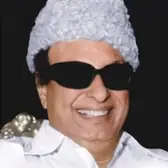
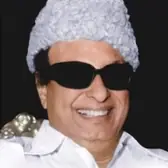
AIADMK wins assembly election, M. G. Ramachandran becomes Chief Minister
The AIADMK-led alliance won the 1977 assembly election and M. G. Ramachandran was sworn in as Chief Minister.
1978
Oru Vilakku one-lamp electricity scheme
Under the 'one lamp' scheme, the MGR government supplied small homes with free electricity and an electric lamp paid for by the state.
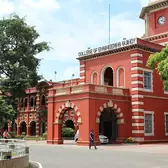
Anna University was established in Madras as a technical university, named after former Chief Minister C. N. Annadurai.
1979
Income ceiling introduced for backward class reservation
The MGR government introduced an annual income ceiling to exclude better-off families from backward class reservation.
1980
DMK-Congress alliance wins 37 of 39 Lok Sabha seats
The Congress (Indira) and DMK alliance won 37 of Tamil Nadu's 39 Lok Sabha seats, a setback for M. G. Ramachandran's ruling AIADMK.
Income ceiling withdrawn, backward class quota raised to 50%
After electoral setbacks, the MGR government withdrew the income ceiling and raised the backward class quota from 31% to 50%.
MGR government dismissed, President's rule imposed
The Union government dismissed the AIADMK ministry and dissolved the Tamil Nadu assembly, imposing President's rule.
AIADMK re-elected, MGR sworn in for second term
Months after the DMK and Congress swept the Lok Sabha polls, the AIADMK won the May 1980 assembly election, bringing MGR back as Chief Minister.
1981
Fifth World Tamil Conference held in Madurai
The fifth World Tamil Conference, a gathering of Tamil scholars from many countries, was held in Madurai.
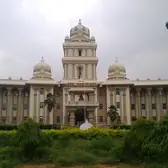
Tamil University founded at Thanjavur
The Tamil University was established in Thanjavur as a research university devoted to the Tamil language and culture.
1982
Bharathidasan University established in Tiruchirappalli
The state government established Bharathidasan University at Tiruchirappalli, named after the Tamil poet Bharathidasan.
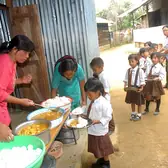
Nutritious Noon Meal Scheme launched
MGR's government expanded the school midday meal into a universal Nutritious Noon Meal Scheme for children across Tamil Nadu.
1983
TASMAC established to handle liquor trade
Formed by the M. G. Ramachandran government, the Tamil Nadu State Marketing Corporation (TASMAC) handled wholesale liquor trade whenever prohibition was lifted.
Free dhoti and saree scheme for Pongal
The state began distributing free saris and dhotis to poor families for Pongal, a scheme that also provides work to handloom and power loom weavers.
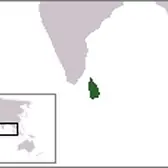
Black July and the arrival of Sri Lankan Tamil refugees
Anti-Tamil pogroms in Sri Lanka in July 1983 sent the first large wave of Sri Lankan Tamil refugees to Tamil Nadu.
1984
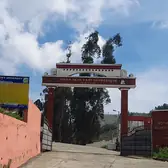
Mother Teresa Women's University founded at Kodaikanal
The Tamil Nadu government established Mother Teresa Women's University at Kodaikanal, a state university dedicated to women's education.
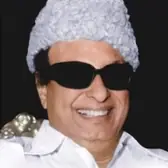
MGR falls ill and is treated in the United States
Kidney failure put Chief Minister M. G. Ramachandran in hospital, and he later had a kidney transplant in New York.
AIADMK wins 1984 election while MGR is in hospital abroad
Contesting from a hospital in the United States, MGR led the AIADMK-Congress alliance to victory in the 1984 assembly election.
1986
Tamil Nadu Legislative Council abolished
The upper house of the Tamil Nadu legislature, in existence since 1921, was abolished at the request of the MGR government.
1987
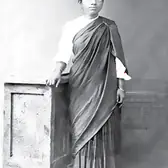
Dr Muthulakshmi Reddy Maternity Benefit Scheme
Tamil Nadu began cash assistance for poor pregnant women, a pioneering state maternity benefit scheme named after Muthulakshmi Reddy.
An accord between India and Sri Lanka on the Tamil issue led to the dispatch of the Indian Peace Keeping Force to the island.
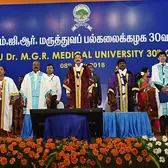
Tamil Nadu Medical University created
Presidential assent was given to the Tamil Nadu Medical University Act; the university opened in Madras in 1988 and later took MGR's name.
Chief Minister M. G. Ramachandran died in office in Madras; he was buried at Marina Beach next to the Anna memorial.
1988
M. G. Ramachandran awarded the Bharat Ratna posthumously
M. G. Ramachandran, the former Chief Minister who had died in December 1987, was honoured posthumously with the Bharat Ratna, India's top civilian award.
1990
MGR memorial on the Marina inaugurated
The memorial to M. G. Ramachandran on Marina Beach, begun in 1988, was inaugurated by his widow V. N. Janaki Ramachandran.