Tamil Nadu in the 1910s
38 events, 1910 to 1919; 5 marked as turning points.
1910
The Nadar Mahajana Sangam was formed in 1910 through the efforts of T. Ratnasamy Nadar to work for the uplift of the Nadar community.
Lakshmi Mills founded in Coimbatore
G. Kuppuswamy Naidu founded Lakshmi Mills, one of the earliest composite textile mills of Coimbatore.
Ramanathapuram district formed
Ramanathapuram (Ramnad) district was created by combining parts of Madurai and Tirunelveli districts.
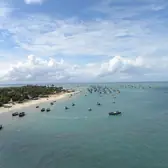
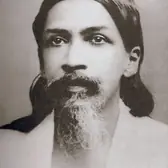
Sri Aurobindo settles in Pondicherry
Facing continued British repression, Bengali nationalist Aurobindo Ghose moved to French Pondicherry in April 1910.
1911
T. V. Sundram Iyengar starts a bus service in Madurai
T. V. Sundram Iyengar began Madurai's first bus service and founded the firm that grew into the TVS Group.
Assassination of Collector Robert Ashe
Vanchinathan shot dead Robert Ashe, Collector of Tinnevelly, at Maniyachchi railway station and then killed himself.
1912
Muthulakshmi Reddy graduates from Madras Medical College
Muthulakshmi Reddy, the first woman admitted to Madras Medical College in 1907, graduated in 1912 and became one of India's first women doctors.
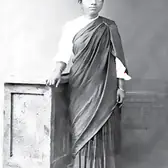
R. Venkaiah opens the Gaiety cinema in Madras
Film pioneer Raghupathi Venkaiah Naidu built the Gaiety in 1912, one of the first permanent cinema theatres in Madras.
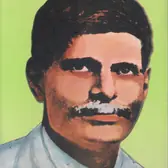
Abraham Pandithar's Tamil music conferences at Thanjavur
Abraham Pandithar set up the Sangeetha Vidhyalaya Mahajana Sangam, which held six music conferences between 1912 and 1914.
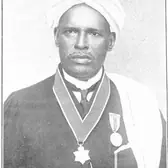
Madras Dravidian Association formed
The Madras United League, founded by C. Natesa Mudaliar in 1912, was renamed the Madras Dravidian Association, an early non-Brahmin political body.
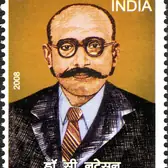
1913
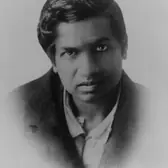
Ramanujan writes to G. H. Hardy
Srinivasa Ramanujan, a clerk at the Madras Port Trust, began corresponding with G. H. Hardy, who arranged for him to travel to Cambridge in 1914.
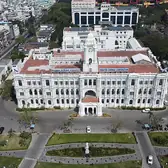
Ripon Building becomes home of the Madras Corporation
The Madras Municipal Corporation moved into the newly completed Ripon Building in 1913; Lord Minto had laid its foundation stone in 1909.
Work begins on the University of Madras Tamil Lexicon
In January 1913 the University of Madras began work on the Tamil Lexicon, the most comprehensive Tamil dictionary, published in 1924-1939.
1914
Madras College for Women (Queen Mary's College) founded
In 1914 Dorothy de la Hey opened the Madras College for Women on the Marina, the first women's college in the city, which took the name Queen Mary's in 1917.
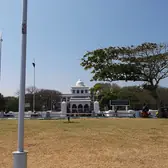
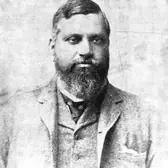
Congress session in Madras presided by Bhupendra Nath Bose
The Indian National Congress held its 1914 annual session in Madras under Bhupendra Nath Bose, months after the First World War began.
Death of the young satyagrahi Thillaiyadi Valliammai
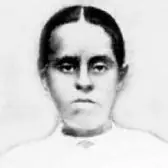
Valliammai, a 16-year-old daughter of Tamil immigrants from Thillaiyadi, died after imprisonment in Gandhi's South African satyagraha.
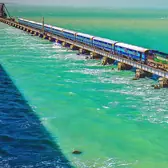
The Pamban Bridge, India's first sea bridge, opened, linking Rameswaram on Pamban Island to the mainland by rail.
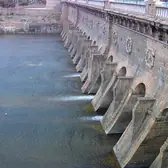
Cauvery arbitration award on the Kannambadi dam
Arbitration under the 1892 agreement let Mysore build a Kannambadi dam smaller than it had planned; an appeal by Madras led to the 1924 agreement.
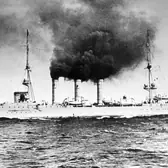
German cruiser Emden shells Madras
Early in the First World War, the German light cruiser SMS Emden shelled Madras, setting fire to oil tanks in the harbour area.
1915
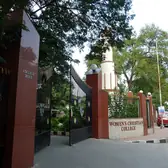
Women's Christian College founded in Madras
Twelve missionary societies from Britain, Canada and the USA jointly founded the Women's Christian College in Madras in 1915.
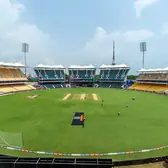
First Madras Presidency cricket match
The Madras Presidency Match, a yearly cricket contest between Europeans and Indians also called the Pongal match, started on the final day of 1915.
1916
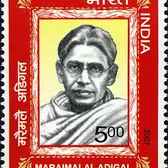
Maraimalai Adigal starts the Pure Tamil movement
Maraimalai Adigal pledged to use Tamil free of Sanskrit loanwords, starting the Tanittamil Iyakkam (Pure Tamil movement).
On 25 July 1916 M. A. Venkatarama Chettiar and Athi Krishna Chettiar started Karur Vysya Bank for the traders and farmers of the Karur area.
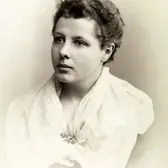
Annie Besant launches the Home Rule League at Adyar
Annie Besant founded the All India Home Rule League at Adyar, Madras, to campaign for self-government within the British Empire.
South Indian Liberal Federation (Justice Party) founded
Non-Brahmin leaders including C. Natesa Mudaliar, T. M. Nair and P. Theagaraya Chetty founded the South Indian Liberal Federation, later known as the Justice Party.
Non-Brahmin Manifesto published
The new non-Brahmin federation issued a manifesto criticising Brahmin dominance in public services and politics, drawing sharp criticism from The Hindu.
1917
Abraham Pandithar publishes Karunamirdha Sagaram
Abraham Pandithar published Karunamirdha Sagaram, a large study of the history and theory of Tamil music.
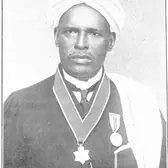
Keechaka Vadham, the first South Indian film
R. Nataraja Mudaliar's silent film Keechaka Vadham, the first film made in South India, was released in 1917 or 1918.
Women's Indian Association founded at Adyar
Margaret Cousins, Annie Besant, Dorothy Jinarajadasa and others founded the Women's Indian Association at Adyar to campaign for women's rights.
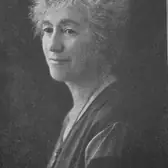
The Madras government interned Annie Besant at a hill station for her Home Rule activities, provoking protests across India.
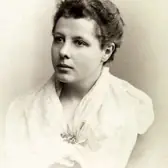
Madras Presidency Association formed
The Madras Presidency Association was set up by non-Brahmin Congressmen to press for non-Brahmin representation inside the national movement.
1918
Saraswathi Mahal Library opened to the public
The manuscript library of the Thanjavur Maratha rulers, enriched by Serfoji II, was opened to the public in 1918.
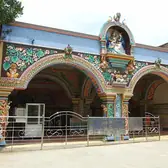
Union Mission Medical School for Women opens at Vellore
Ida Scudder began training women doctors at Vellore with the Union Mission Medical School for Women, opened in 1918.
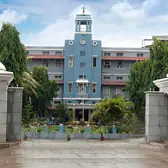
B. P. Wadia and Thiru. V. Kalyanasundaram founded the Madras Labour Union, among the first organised trade unions in India.
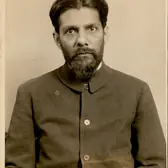
Influenza pandemic reaches Madras
The 1918 influenza pandemic reached Madras by the end of June 1918 and caused heavy mortality across the presidency.
1919
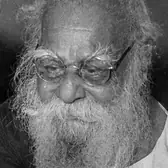
Periyar joins the Indian National Congress
E. V. Ramasamy of Erode, later known as Periyar, joined the Indian National Congress, beginning a political career that later led to the Self-Respect Movement.
Gandhi conceives the Rowlatt hartal in Madras
While staying with C. Rajagopalachari in Madras, Gandhi conceived a nationwide hartal against the Rowlatt Act, observed on 6 April 1919.

Government of India Act 1919 introduces dyarchy
Based on the Montagu-Chelmsford Report, the Act introduced dyarchy in the provinces, including Madras, transferring some subjects to elected ministers.