Tamil Nadu in the 1940s
50 events, 1940 to 1949; 3 marked as turning points.
1940
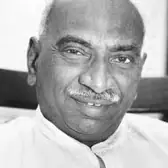
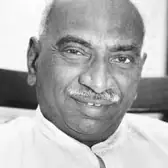
K. Kamaraj becomes TNCC president
K. Kamaraj was elected president of the Tamil Nadu Congress Committee, beginning his rise as the leading Congress organiser in the region.
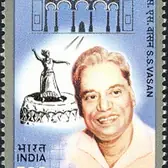
S. S. Vasan founds Gemini Studios
S. S. Vasan acquired a studio in Madras and established Gemini Studios, which became one of India's major film studios.
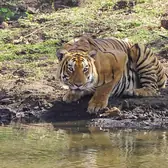
Mudumalai Wildlife Sanctuary established
About 60 square km of forest in the Nilgiris district was set aside as the Mudumalai Wildlife Sanctuary.
Compulsory Hindi order withdrawn
The Governor of Madras, Lord Erskine, withdrew the order making Hindi compulsory in schools, ending the first anti-Hindi agitation.
1941
Writer R. Krishnamurthy (Kalki) and T. Sadasivam launched the Tamil weekly Kalki, which serialised popular historical novels.
Kamaraj elected Virudhunagar municipal chairman while in jail
While imprisoned for opposing war contributions, K. Kamaraj was elected chairman of the Virudhunagar municipality.
1942
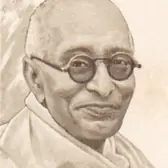
Rajagopalachari resigns from Congress over Pakistan resolution
C. Rajagopalachari left the Congress after his proposals to negotiate with the Muslim League were rejected, and opposed Quit India.
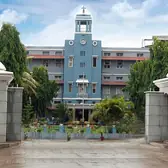
Christian Medical College Vellore begins MBBS course
Ida Scudder's medical school at Vellore became a university-affiliated medical college and began offering the MBBS degree.
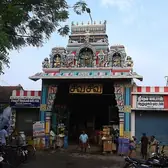
Standard Fireworks founded at Sivakasi
N. R. K. Rajarathnam founded Standard Fireworks at Sivakasi, first making matches and later fireworks.
N. Sivaraj becomes first president of the Scheduled Castes Federation
At Nagpur, Madras Dalit leader N. Sivaraj was elected first president of the new All-India Scheduled Castes Federation founded with Ambedkar.

Quit India Movement in the Tamil districts
Congress leaders in the Tamil region were arrested as the Quit India Movement began, followed by strikes, sabotage and police firing.
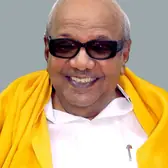
Karunanidhi starts Murasoli at Tiruvarur
An 18-year-old M. Karunanidhi started Murasoli at Tiruvarur as handwritten notices; it later became the DMK's newspaper.
Daily Thanthi founded at Madurai
S. P. Adithanar founded the Tamil daily Dina Thanthi in Madurai; it became the largest-circulating Tamil newspaper.
1943
Tamil Isai Movement and Tamil Isai Sangam
The Tamil Isai Sangam was founded in Madras to promote the singing of Tamil compositions in Carnatic concerts dominated by Telugu and Sanskrit songs.
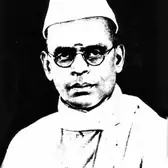
Congress leader S. Satyamurti, a former Mayor of Madras and mentor of K. Kamaraj, died in Madras.
Sivakavi, a Pakshiraja Films production made at Central Studios in Coimbatore with M. K. Thyagaraja Bhagavathar, reached cinemas.
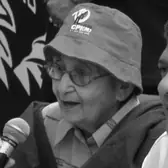
Lakshmi Swaminathan leads Rani of Jhansi Regiment
Madras-born doctor Lakshmi Swaminathan was appointed to lead the women's Rani of Jhansi Regiment of Subhas Chandra Bose's Indian National Army.
Six days of continuous northeast monsoon rain caused the Cooum and Adyar rivers to overflow, flooding slums across Madras.
1944
Alagappa College of Technology founded
Funded by Alagappa Chettiar, the University of Madras set up the Alagappa College of Technology for courses such as chemical engineering.
Rajagopalachari's C. R. formula
C. Rajagopalachari's proposal to resolve the Congress and Muslim League deadlock became the basis of the 1944 Gandhi and Jinnah talks.
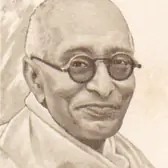
Kalki begins Sivagamiyin Sapatham
Kalki Krishnamurthy began serialising Sivagamiyin Sapatham, a historical novel set in the Pallava period.

Justice Party becomes Dravidar Kazhagam at Salem
Meeting at Salem, the Justice Party, now led by Periyar, took the name Dravidar Kazhagam and gave up contesting elections.

Haridas, a Tamil film with M. K. Thyagaraja Bhagavathar in the lead, played at one Madras theatre across three Diwalis in a row, a record that stood for years.
Film stars M. K. Thyagaraja Bhagavathar and N. S. Krishnan were convicted in the murder of journalist C. N. Lakshmikanthan, later freed on appeal.
1945
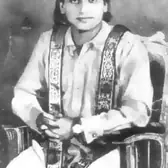
A. V. Meiyappan founded AVM Productions, first working from Karaikudi during the war before moving to Madras.
Meera released with M. S. Subbulakshmi
Meera, directed by Ellis R. Dungan with M. S. Subbulakshmi in the lead and a script by Kalki, reached screens; a Hindi version came later.
1946
1946 Madras Presidency election
The Congress won a majority in the 1946 Madras Legislative Assembly election, ending the period of Governor's rule.
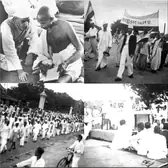
Gandhi presides over Hindi Prachar Sabha silver jubilee
Gandhi came to Madras to preside at the Dakshina Bharat Hindi Prachar Sabha's silver jubilee.
Muhammad Ismail leads the Muslim League opposition in Madras
M. Muhammad Ismail, later called Quaid-e-Millath, became Leader of the Opposition in the Madras Legislative Assembly.
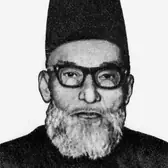
India Cements was started by S. N. N. Sankaralinga Iyer, whose first factory was at Thalaiyuthu near Tirunelveli.
Bharathidasan wins the Golden Parrot Prize
For his play Amaithi-Oomai, the Tamil poet Bharathidasan received the Golden Parrot Prize.
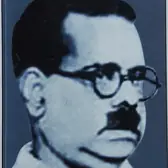
A. Ramaswami Mudaliar becomes first ECOSOC president
Arcot Ramaswami Mudaliar, a Justice Party leader from Madras, was the first President of the UN Economic and Social Council.
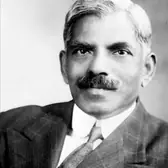
Royal Indian Navy mutiny reaches Madras
A revolt by Indian ratings of the Royal Indian Navy that began in Bombay spread to ships and shore establishments including Madras.
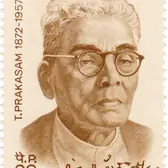
T. Prakasam becomes Premier of Madras
T. Prakasam was elected Congress legislature leader and formed a ministry, defeating the candidate backed by Rajagopalachari.
Madras members join the Constituent Assembly
With a sizeable contingent from the Madras Province, the Constituent Assembly of India held its first sitting in New Delhi.
1947
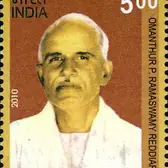
O. P. Ramaswamy Reddiyar becomes Premier
O. P. Ramaswamy Reddiyar, backed by Kamaraj, became Premier of Madras and led the province through independence.
Periyar calls Independence Day a day of mourning
Periyar called for 15 August 1947 to be kept as a day of mourning, a stand Annadurai rejected, deepening the rift between them.
Defence Services Staff College re-established at Wellington
After Partition the Indian staff college was re-established at Wellington in the Nilgiris, replacing the Staff College at Quetta.

India becomes independent; Madras Province
India gained independence and the Madras Presidency became Madras Province of the Dominion of India; Periyar called it a day of mourning.
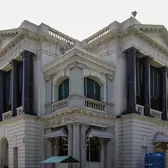
Madras Devadasis (Prevention of Dedication) Act enacted
The Madras legislature outlawed the dedication of girls to temples as devadasis, ending a long reform campaign.
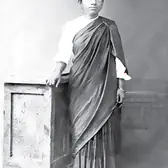
1948
Pudukkottai princely state merges with the Indian Union
Pudukkottai, the princely state of the Thondaimans, joined India and was made a division of Tiruchirappalli district.
Central Leather Research Institute founded in Madras
The Central Leather Research Institute was founded in Madras as a laboratory of the Council of Scientific and Industrial Research.

C. Rajagopalachari becomes Governor-General of India
C. Rajagopalachari succeeded Lord Mountbatten as Governor-General, the only Indian to hold the office.
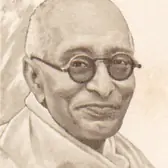
Central Electrochemical Research Institute founded at Karaikudi
A national laboratory for electrochemistry under the CSIR was founded at Karaikudi in Sivaganga district.

Ashok Motors (later Ashok Leyland) founded in Madras
Raghunandan Saran founded Ashok Motors in Madras to assemble cars; it became Ashok Leyland in 1955.
Ceylon Citizenship Act leaves Indian Tamils stateless
Passed soon after Ceylon became independent, a citizenship law shut out most Indian Tamil plantation workers, descendants of migrants from the Madras Presidency.
1949
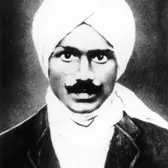
Subramania Bharati's works nationalised
The Madras government nationalised the writings of poet Subramania Bharati, the first such step for any poet in India.
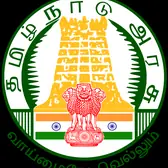
State emblem designed by R. Krishna Rao
Designed in 1949, the Madras government's emblem combined a temple gopuram with the Lion Capital of Ashoka.
P. S. Kumaraswamy Raja becomes Premier of Madras
P. S. Kumaraswamy Raja succeeded O. P. Ramaswamy Reddiyar as Premier and later became the first Chief Minister of Madras State.

Dravida Munnetra Kazhagam founded
Breaking away from Periyar's Dravidar Kazhagam, C. N. Annadurai and his associates formed the DMK in Madras.