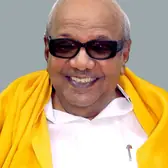
Tamil Nadu in the 1960s
58 events, 1960 to 1969; 9 marked as turning points.
1960
Hindustan Photo Films incorporated at Ooty
The public sector Hindustan Photo Films was incorporated to make photographic and X-ray films at Udhagamandalam.
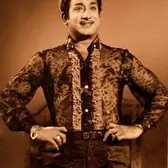
Sivaji Ganesan wins Best Actor at Afro-Asian Film Festival
For Veerapandiya Kattabomman, Sivaji Ganesan was named Best Actor at Cairo's Afro-Asian Film Festival, the first such win by an Indian actor.
Tiruttani transferred from Andhra Pradesh to Madras State
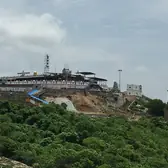
Under the Andhra Pradesh and Madras (Alteration of Boundaries) Act, Tiruttani and nearby areas joined Madras State.
Ramanathan Krishnan reaches the Wimbledon semi-finals
Seeded seventh, Ramanathan Krishnan reached the Wimbledon singles semi-finals, where he lost to the champion Neale Fraser.
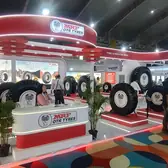
Madras Rubber Factory incorporated to make tyres
Madras Rubber Factory, begun as a balloon maker at Tiruvottiyur, was incorporated to manufacture tyres.
1961
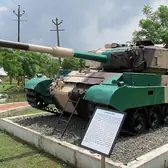
Heavy Vehicles Factory set up at Avadi
Battle tanks became the business of the Heavy Vehicles Factory, which the Ordnance Factory Board set up at Avadi.
Madras State Housing Board formed
The City Improvement Trust of 1947 was expanded into a statewide housing board, later the Tamil Nadu Housing Board.
E. V. K. Sampath leaves the DMK and forms the Tamil National Party
E. V. K. Sampath split from the DMK and founded the Tamil National Party with the poet Kannadasan.
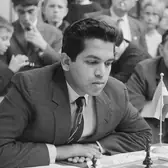
Manuel Aaron becomes India's first International Master
Madras chess player Manuel Aaron became the first Indian to earn the FIDE title of International Master.
1962
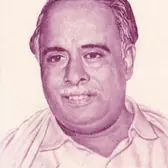
Annadurai demands self-determination in the Rajya Sabha
In his Rajya Sabha speeches, C. N. Annadurai stated the DMK case for the right of self-determination for the Dravidian south.
Sundaram Clayton founded by the TVS group
Formed with the UK firm Clayton Dewandre to build brakes and vehicle components, Sundaram Clayton laid the groundwork for TVS Motor.
DMK becomes main opposition in 1962 election
Congress under Kamaraj retained power in 1962, while the DMK won 50 seats to become the principal opposition party.
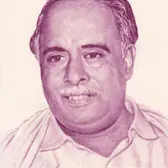
Madras State starts an old-age pension scheme
A monthly pension for destitute old people was introduced by the state, decades ahead of the national old-age pension of 1995.
Neyveli lignite thermal power station commissioned
The first units of the Neyveli Thermal Power Station, burning lignite from the Neyveli mines, were commissioned.

De jure transfer of the French settlements to India
Once France ratified the Treaty of Cession, Pondicherry and the other former French settlements legally became part of India.
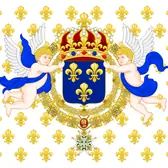
Aliyar Dam of the Parambikulam-Aliyar Project inaugurated
Prime Minister Nehru inaugurated the Aliyar Dam, part of the inter-state Parambikulam-Aliyar irrigation project.
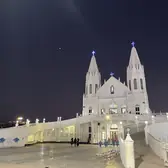
Velankanni shrine raised to a minor basilica
Pope John XXIII raised the Marian shrine of Our Lady of Good Health at Velankanni to a minor basilica.
1963
Parliament passed the Official Languages Act to allow continued use of English alongside Hindi after 1965.
Kamaraj Plan; M. Bhaktavatsalam becomes Chief Minister
Kamaraj resigned as Chief Minister under his plan for senior leaders to work for the party, and M. Bhaktavatsalam succeeded him.
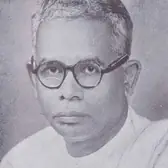
Death of Muthuramalinga Thevar
Forward Bloc leader U. Muthuramalinga Thevar, an influential figure in southern Tamil Nadu, died on the eve of his birthday.
DMK drops demand for a separate Dravida Nadu
After the Sino-Indian War and the anti-secession Sixteenth Amendment, the DMK abandoned its demand for an independent Dravida Nadu.
1964
Kamaraj becomes Congress president and 'kingmaker'
As president of the Indian National Congress, K. Kamaraj guided the selection of two Prime Ministers.
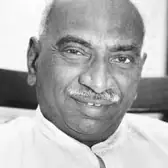
Regional Engineering College founded at Tiruchirappalli
The Regional Engineering College at Tiruchirappalli, now NIT Tiruchirappalli, was established jointly by the Union and state governments.
Exodus of Tamils and other Indians from Burma
More than 300,000 Indians, most of them Tamils, left Burma after General Ne Win's expulsions and the 1964 nationalisation of private business.
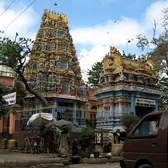
Chinnasamy self-immolates against Hindi imposition
DMK member Chinnasamy set himself on fire at Tiruchi, the first of the language martyrs of the second anti-Hindi struggle.
Bharathidasan, the rationalist Tamil poet influenced by Subramania Bharati and Periyar, died in Madras.
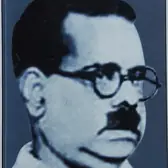
C. Subramaniam becomes Union Food and Agriculture Minister
Under the leadership of C. Subramaniam of Madras, high-yielding seeds were introduced, starting the Green Revolution.
Sirima-Shastri Pact on people of Indian origin in Ceylon
India and Ceylon agreed that 525,000 stateless people of Indian origin, mostly Tamil plantation workers, would be repatriated to India.
BHEL incorporated to run the Tiruchirappalli plant
Bharat Heavy Electricals Limited came into being to set up heavy electrical factories, among them the boiler plant at Tiruchirappalli.
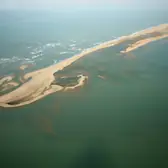
Rameswaram cyclone destroys Dhanushkodi
Pamban Island was hit by a super cyclonic storm whose surge drowned the town of Dhanushkodi and killed many people.
1965
Madras Refineries formed as a joint venture
Madras Refineries Limited was formed by the Government of India, Amoco and the National Iranian Oil Company to build a refinery at Manali.
Student-led protests against Hindi becoming the sole official language turned into statewide riots, with police firing and self-immolations.
Tamil Nadu Industrial Development Corporation established
The state government set up the Industrial Development Corporation (TIDCO) to promote large industrial projects.
Dharmapuri district carved out of Salem
Dharmapuri became the first district created in the state after independence, split from Salem district.
1966
Madurai University, renamed Madurai Kamaraj University in 1978, was established as the main university of southern Tamil Nadu.
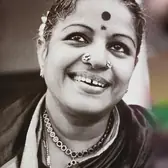
M. S. Subbulakshmi sings at the United Nations
On UN Day 1966, Carnatic vocalist M. S. Subbulakshmi sang at the United Nations General Assembly, the first Indian to do so.
Madras Fertilizers incorporated
A Government of India and Amoco joint venture, Madras Fertilizers, was incorporated to produce fertilisers at Manali.
Krishnan leads India to the Davis Cup Challenge Round
Led by Ramanathan Krishnan, India reached the Davis Cup Challenge Round for the first time and lost to Australia.
1967
Point Calimere Wildlife Sanctuary created
To shelter blackbuck and vast flocks of waterbirds, a sanctuary was established at Point Calimere on the Palk Strait.
Annadurai's rupee-a-measure rice scheme
The first DMK government tried to supply rice at one rupee a measure, an election promise made during an acute rice shortage.
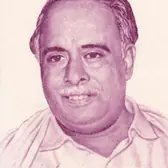
M. G. Ramachandran shot by M. R. Radha
Actor M. R. Radha shot M. G. Ramachandran at his home weeks before the 1967 election; MGR survived after surgery.
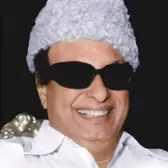
DMK wins the 1967 Assembly election
A DMK-led alliance defeated the Congress, ending Congress rule in Madras State; Kamaraj lost his own seat.
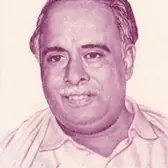
Kamaraj loses his seat to student leader P. Seenivasan
In the 1967 election, Congress president K. Kamaraj was defeated in Virudhunagar by the young DMK candidate P. Seenivasan.
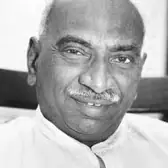
C. N. Annadurai becomes Chief Minister
C. N. Annadurai was sworn in as the first non-Congress Chief Minister of Madras State since independence, heading a DMK government.
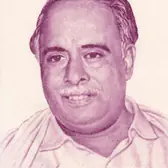
1968
Second World Tamil Conference held in Madras
Madras hosted the second International Tamil Research Conference, known as the World Tamil Conference, under the Annadurai government.
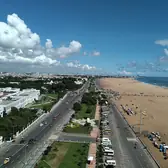
Statues of Tamil literary figures erected on the Marina
Statues of Tamil poets and scholars, including Kambar, Bharathiyar and Robert Caldwell, were unveiled on Marina Beach for the World Tamil Conference.
Official Languages (Amendment) Act guarantees bilingualism
Amid fresh protests in Madras State, Parliament amended the 1963 Act to ensure English would continue in use alongside Hindi.
Self-Respect marriages given legal validity
The Hindu Marriage (Tamil Nadu Amendment) Act, 1967 became law, legalising marriages performed without priests or Vedic rituals.
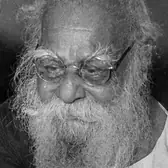
Assembly adopts the two-language policy
The Madras Legislative Assembly scrapped the three-language formula and removed Hindi from the school curriculum, adopting Tamil and English.
Auroville inaugurated near Pondicherry
The experimental international township of Auroville was inaugurated in Viluppuram district with delegates from 124 nations.
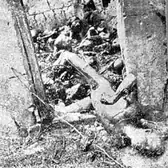
Around 44 Dalit agricultural labourers' family members, mostly women and children, were burnt to death at Kilvenmani in Thanjavur district.
1969
Sattanathan Backward Classes Commission
The first Backward Classes Commission of Tamil Nadu, headed by A. N. Sattanathan, recommended a separate Most Backward Class category.
Agricultural Labourer Fair Wages Act
Under a 1969 law, Cauvery delta farm labourers had to be paid fair wages, and landowners who exploited them faced penalties.
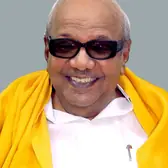
Kannoli Thittam free eye surgeries
The Karunanidhi government provided free eye surgeries for the blind under the Kannoli Thittam during its 1969-76 tenure.
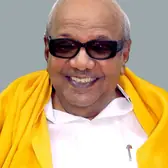
Madras State renamed Tamil Nadu
With the Madras State (Alteration of Name) Act, 1968 in force, the state officially took the name Tamil Nadu.
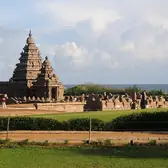
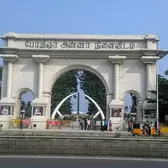
Chief Minister C. N. Annadurai died of cancer; his funeral was recorded as one of the largest ever attended.
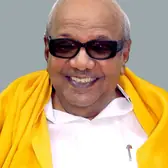
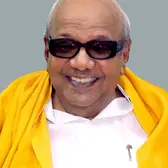
M. Karunanidhi becomes Chief Minister
M. Karunanidhi succeeded Annadurai as Chief Minister of Tamil Nadu and later became president of the DMK.
Rajamannar Committee on Centre-State relations
The DMK government appointed a committee under P. V. Rajamannar to study state autonomy and Centre-State relations.