Trade
47 events, 1806 to 2023; 1 marked as turning points.
1806
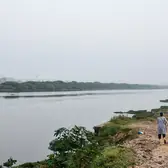
First segment of the Buckingham Canal opens
In 1806 a saltwater canal linking Madras with Ennore was finished; it would later form part of the Buckingham Canal.
1813
Renewing the Company's charter, Parliament abolished its India trade monopoly, admitted missionaries and funded education.
1814
John Binny establishes Binny & Co in Madras
Merchant John Binny, in Madras since 1797, established the firm of Binny & Co, one of the city's oldest mercantile houses.
1815
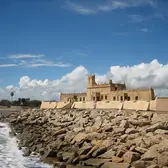
Tranquebar handed back to Denmark
Britain returned Tranquebar (Tharangambadi), occupied since 1808 during the Napoleonic Wars, to Danish rule on 20 September 1815.
1816
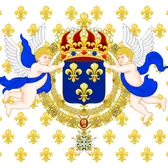
Pondicherry and Karaikal restored to France
After the Napoleonic Wars, Britain returned Pondicherry, Karaikal and the other French settlements in India to France in 1816.
1820
Coffee planting begins at Yercaud
Salem Collector M. D. Cockburn helped start coffee estates at Yercaud in the Shevaroy Hills during the 1820s.
1825
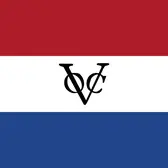
Dutch possessions on the Coromandel Coast pass to Britain
Under the Anglo-Dutch Treaty of 1824, the Dutch ceded their Coromandel settlements, including Pulicat, to the British on 1 June 1825.
1836
Madras Chamber of Commerce founded
The Madras Chamber of Commerce was set up at the Binny & Co. office by merchants from the Parry, Binny and Arbuthnot firms.
1842
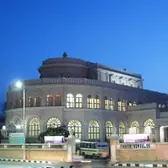
Ice House built on the Madras beach
Frederic Tudor built the Ice House facing the sea at Madras to store ice shipped from America; it is now Vivekanandar Illam.
1843
The Bank of Madras, one of the three Presidency banks, came into being through the merger of several banks in Madras.

1844
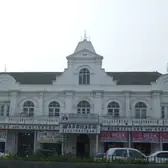
Higginbotham's bookshop founded in Madras
Abel Joshua Higginbotham founded Higginbotham's on Mount Road, regarded as India's oldest bookshop still in existence.
1845
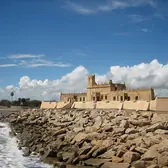
Denmark sells Tranquebar to the British
Denmark sold its settlement of Tranquebar (Tharangambadi) to the East India Company, ending Danish rule on the Tamil coast.
1854
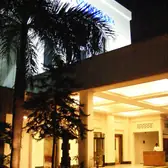
Imperial Hotel opens in Madras
The Imperial Hotel, later the Connemara, opened in 1854 and is the oldest functioning hotel in Chennai.
1862
Madras Railway reaches the west coast at Beypore
The Madras Railway completed its line to Beypore, linking Madras by rail with the west coast; a branch to Bangalore followed in 1864.
1864
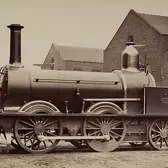
Spencer's begins trading in Madras
Spencer's started as a small business in Madras in 1864 and grew into what was then the largest department store in Asia.
1869
Carnatic Railway Company founded
Founded in 1869, the Carnatic Railway Company combined with the Great Southern of India Railway in 1874 to create the South Indian Railway.
1871
Madras and Bombay linked by rail at Raichur
At Raichur the Madras Railway met the Great Indian Peninsula Railway, opening a through rail route from Madras to Bombay.
1874
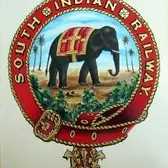
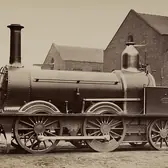
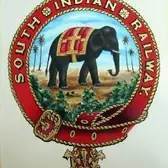
South Indian Railway Company formed
In 1874 the Great Southern of India Railway merged with the Carnatic Railway to create the South Indian Railway Company, later based at Trichinopoly.
1877
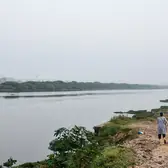
Buckingham Canal extended as famine relief
A section of the coastal canal linking the Adyar and Cooum rivers was dug as famine relief work, and the canal was renamed the Buckingham Canal.
1881
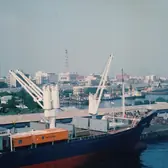
Madras Harbour begins operations
An artificial harbour at Madras began handling ships in 1881, though a cyclone the same year wrecked much of the breakwater.
1900
Moore Market completed in Madras
Completed in 1900 beside Madras Central, Moore Market was an Indo-Saracenic building meant to accommodate the hawkers of Broadway.
1904
Kumbakonam Bank, later City Union Bank, incorporated
Kumbakonam Bank Limited was incorporated on 31 October 1904 as a regional bank; it later became City Union Bank.
1906
V. O. Chidambaram Pillai founds the Swadeshi Steam Navigation Company
To compete with British lines on the Tuticorin-Colombo route, V. O. Chidambaram Pillai registered an Indian-owned shipping firm.
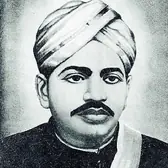
The failure of the Madras banking firm Arbuthnot & Co caused the worst financial crisis in the city's history and fuelled support for Indian-owned banks.
1911
T. V. Sundram Iyengar starts a bus service in Madurai
T. V. Sundram Iyengar began Madurai's first bus service and founded the firm that grew into the TVS Group.
1916
On 25 July 1916 M. A. Venkatarama Chettiar and Athi Krishna Chettiar started Karur Vysya Bank for the traders and farmers of the Karur area.
1921
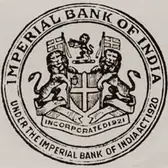
Bank of Madras merged into the Imperial Bank of India
The Bank of Madras, one of three Presidency banks, was amalgamated with the banks of Bengal and Bombay to form the Imperial Bank of India.
Nadar Bank founded at Thoothukudi
Founded at Thoothukudi, the Nadar Bank was later renamed Tamilnad Mercantile Bank.
1926
SS Rajula begins the Madras to Penang and Singapore service
The steamer SS Rajula ran a fortnightly Straits Service from Madras to Penang, Port Klang and Singapore from 1926 to 1972.
Lakshmi Vilas Bank founded at Karur
Lakshmi Vilas Bank was founded at Karur, one of several private banks started by Tamil business communities in the 1920s.
1932
Tata air mail service reaches Madras
Tata Air Lines' inaugural air mail run from Karachi through Bombay went on to Madras, the first scheduled flight to touch down there.
1937
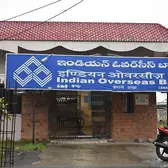
M. Ct. M. Chidambaram Chettiar founded Indian Overseas Bank to serve overseas trade, opening at Karaikudi, Madras and Rangoon.
1954
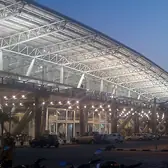
First passenger terminal built at Meenambakkam airport
Meenambakkam got the first passenger terminal of Madras airport, which then served as a customs airport handling a few international flights.
1964
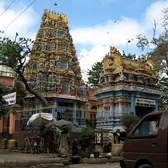
Exodus of Tamils and other Indians from Burma
More than 300,000 Indians, most of them Tamils, left Burma after General Ne Win's expulsions and the 1964 nationalisation of private business.
1974
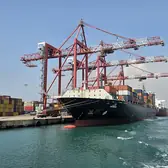
The new all-weather harbour at Tuticorin began operations as a major port, now known as V. O. Chidambaranar Port.
Poompuhar Shipping Corporation founded
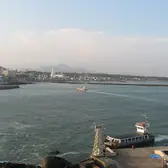
The state-owned Poompuhar Shipping Corporation was founded; it later ran the ferries to the Vivekananda Rock at Kanyakumari.
1984
Madras Export Processing Zone set up at Tambaram
The Union government set up the Madras Export Processing Zone on GST Road at Tambaram to attract foreign investment and boost exports.
1996
Koyambedu wholesale market complex opens
On Chennai's western side, the Koyambedu Wholesale Market Complex, one of the largest perishable goods markets in Asia, was opened.
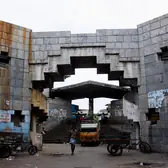
Hyundai Motor India formed, plant at Irungattukottai
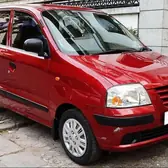
Hyundai established an Indian subsidiary and a car factory at Irungattukottai near Chennai, where the Santro, its first car, was launched in 1998.
1998
Rajinikanth's Muthu becomes a hit in Japan
Shown in Japan as 'Muthu: The Dancing Maharaja', the 1995 Tamil film earned more there than any other Indian film, holding that record for 24 years.
1999
Ennore's new port, north of Chennai, gained major port status and was incorporated as Ennore Port Limited, the first major port in India run as a company.
First Uzhavar Sandhai farmers' market opens in Madurai
Madurai hosted the first market of the DMK government's Uzhavar Sandhai scheme, where farmers could sell their produce straight to buyers.
2005
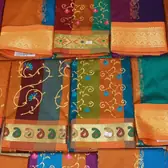
Kanchipuram silk registered as a geographical indication
Kanchipuram silk saris were one of the earliest Tamil Nadu products to gain registration as a geographical indication.
2013
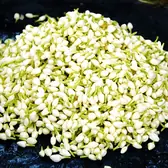
Madurai malli recognised as a geographical indication
Madurai jasmine became the first flower from Tamil Nadu to be given geographical indication status.
2019
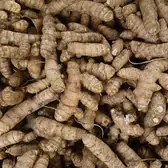
Erode turmeric gets a geographical indication
The Government of India recognised Erode turmeric (Erode manjal) as a geographical indication.
Palani panchamirtham gets geographical indication
Palani Murugan temple's panchamirtham offering was the first temple prasadam in Tamil Nadu to receive a GI tag.

2023
Passenger ferry between Nagapattinam and Kankesanthurai begins
A high-speed passenger ferry began sailing between Nagapattinam in Tamil Nadu and Kankesanthurai in Sri Lanka's Jaffna district.