Legislation
48 events, 1817 to 2021; 8 marked as turning points.
1817
Madras Regulation VII of 1817 on temple endowments
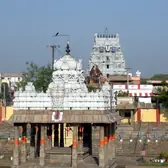
The Madras government passed Regulation VII of 1817, the first explicit Company legislation on the management of temple endowments.
1858
Crown takes over the government of India
Following the Government of India Act 1858, a proclamation by Queen Victoria declared direct Crown rule over British India, the Madras Presidency included.

1861
Indian Councils Act restores Madras legislative powers
Through the Indian Councils Act 1861, the Madras Presidency regained law-making powers and gained an advisory Madras Legislative Council.
1862
Indian Penal Code comes into force
Drafted under Macaulay and enacted in 1860, the Indian Penal Code took effect throughout British India, the Madras Presidency included.

1909
The Indian Councils Act 1909 introduced elections to the legislative councils, including Madras, and admitted Indians to the Madras executive council.

1919
Government of India Act 1919 introduces dyarchy
Based on the Montagu-Chelmsford Report, the Act introduced dyarchy in the provinces, including Madras, transferring some subjects to elected ministers.

1920
Madras Elementary Education Act
A Madras statute made elementary schooling compulsory for both boys and girls and raised spending on primary schools.
1922
Madras State Aid to Industries Act
The Justice Party government passed a law to advance state loans for setting up industries in the Presidency.
Council adopts the term Adi Dravida
Acting on a resolution by M. C. Rajah, the Madras Legislative Council adopted Adi-Dravida officially in place of terms like Paraiya and Panchama.
1923
A fresh Madras University Act enlarged the University of Madras's governing bodies and gave them a more representative character.
1925
Madras Hindu Religious Endowments Act
A law passed under the Justice Party government placed Hindu temple endowments under the oversight of a statutory board.
1926
Muthulakshmi Reddy becomes first woman legislator in India
Doctor and reformer Muthulakshmi Reddy was nominated to the Madras Legislative Council, becoming the first woman legislator in British India.

Andhra University established by Madras Act
After a bill carried with Tamil votes, the Madras legislature set up Andhra University for the Presidency's Telugu districts.
1929
Madras Service Commission set up
Created by a Madras law, the Madras Service Commission was India's first provincial public service commission and the predecessor of TNPSC.

1937
Prohibition introduced in Salem district
The Rajaji ministry introduced prohibition of liquor in Salem district, the first such experiment in the Presidency.
C. Rajagopalachari forms first Congress ministry
C. Rajagopalachari became Premier of Madras at the head of the first Congress government in the Presidency.

1938
Madras Agriculturists Relief Act eases peasant debt
A law to reduce the debts of indebted farmers in the Madras Presidency was brought in by the Rajagopalachari ministry.
1939
Madras Temple Entry Authorization and Indemnity Act
A law passed by the Rajagopalachari ministry lifted the bars on Dalits and Shanars entering Hindu temples across the Presidency.
1947
Madras Devadasis (Prevention of Dedication) Act enacted
The Madras legislature outlawed the dedication of girls to temples as devadasis, ending a long reform campaign.
1948
Ceylon Citizenship Act leaves Indian Tamils stateless
Passed soon after Ceylon became independent, a citizenship law shut out most Indian Tamil plantation workers, descendants of migrants from the Madras Presidency.
1956
States Reorganisation redraws Madras State
Malabar and South Canara left Madras State while Kanyakumari district and Shenkottai taluk were added, leaving a Tamil-majority state.

1960
Tiruttani transferred from Andhra Pradesh to Madras State
Under the Andhra Pradesh and Madras (Alteration of Boundaries) Act, Tiruttani and nearby areas joined Madras State.

1962
De jure transfer of the French settlements to India
Once France ratified the Treaty of Cession, Pondicherry and the other former French settlements legally became part of India.

1963
Parliament passed the Official Languages Act to allow continued use of English alongside Hindi after 1965.
1968
Official Languages (Amendment) Act guarantees bilingualism
Amid fresh protests in Madras State, Parliament amended the 1963 Act to ensure English would continue in use alongside Hindi.
Self-Respect marriages given legal validity
The Hindu Marriage (Tamil Nadu Amendment) Act, 1967 became law, legalising marriages performed without priests or Vedic rituals.

1969
Agricultural Labourer Fair Wages Act
Under a 1969 law, Cauvery delta farm labourers had to be paid fair wages, and landowners who exploited them faced penalties.

Madras State renamed Tamil Nadu
With the Madras State (Alteration of Name) Act, 1968 in force, the state officially took the name Tamil Nadu.

1970
Land ceiling reduced to 15 standard acres
A 1970 Tamil Nadu law halved the family land ceiling, cutting it from 30 to 15 standard acres.
1971
Tamil Nadu Water Supply and Drainage Board given statutory status
Set up in 1969, the TWAD Board was made a statutory body in charge of water supply and sewerage everywhere outside Madras.
1983
TASMAC established to handle liquor trade
Formed by the M. G. Ramachandran government, the Tamil Nadu State Marketing Corporation (TASMAC) handled wholesale liquor trade whenever prohibition was lifted.
1986
Tamil Nadu Legislative Council abolished
The upper house of the Tamil Nadu legislature, in existence since 1921, was abolished at the request of the MGR government.
1987
Tamil Nadu Medical University created
Presidential assent was given to the Tamil Nadu Medical University Act; the university opened in Madras in 1988 and later took MGR's name.

1989
Equal property rights for women and 30% job quota
Tamil Nadu amended Hindu succession law to give daughters equal rights in family property and reserved 30% of government jobs for women.
1994
Construction Workers Welfare Board established
Using its 1982 Manual Workers Act, Tamil Nadu created a construction workers' welfare board financed by a cess on building activity.
1997
Tamil Nadu Dr. Ambedkar Law University inaugurated
Chennai saw the inauguration of a state law university named for B. R. Ambedkar, created by a 1996 Act to place every law college under a single body.
2002
Tamil Nadu Open University established
Through the Tamil Nadu Open University Act, 2002, the state set up an open university in Chennai offering distance higher education.
Tamil Nadu anti-conversion law
The AIADMK government introduced a law against forcible religious conversion, which was withdrawn after the 2004 Lok Sabha election and formally repealed in 2006.
2003
Rainwater harvesting made mandatory for all buildings
After severe drought, a 2003 ordinance required every building in Tamil Nadu to install rainwater harvesting structures by 31 August.

2006
Professional course admissions law and end of entrance tests
With common entrance tests abolished, a 2006 law reorganised professional course admissions and brought reservation to private colleges.
2007
Welfare board and department for persons with disabilities
In 2007 Tamil Nadu enacted a Welfare Board for Disabled Persons Act, and in 2009 it formed a separate Department for the Welfare of the Differently Abled.
2008
Tamil New Year moved to the first day of Thai
A DMK government law moved Tamil New Year to the first day of the Tamil month of Thai; the change was revoked in 2011.

2009
Internal reservation for Arunthathiyars
Tamil Nadu set aside 3 percent within the Scheduled Caste quota for the Arunthathiyar community.
2017
Pro-jallikattu protests at Marina Beach
Mass protests led largely by students and youth at Marina Beach forced an ordinance and then a state law allowing jallikattu.

2019
Tamil Nadu bans single-use plastics
The Tamil Nadu government's ban on plastic carry bags and other single-use plastic items came into force on 1 January 2019.
2020
Cauvery delta declared a protected special agricultural zone
Tamil Nadu declared the Cauvery delta a protected special agricultural zone, barring new hydrocarbon and similar projects.

7.5 percent medical seat quota for government school students
The Governor assented to a law reserving 7.5 percent of medical seats for students who studied in government schools.

2021
Assembly passes NEET exemption bill
The Assembly passed a bill to admit students to medical courses on Class 12 marks instead of NEET, and re-passed it after the Governor returned it.